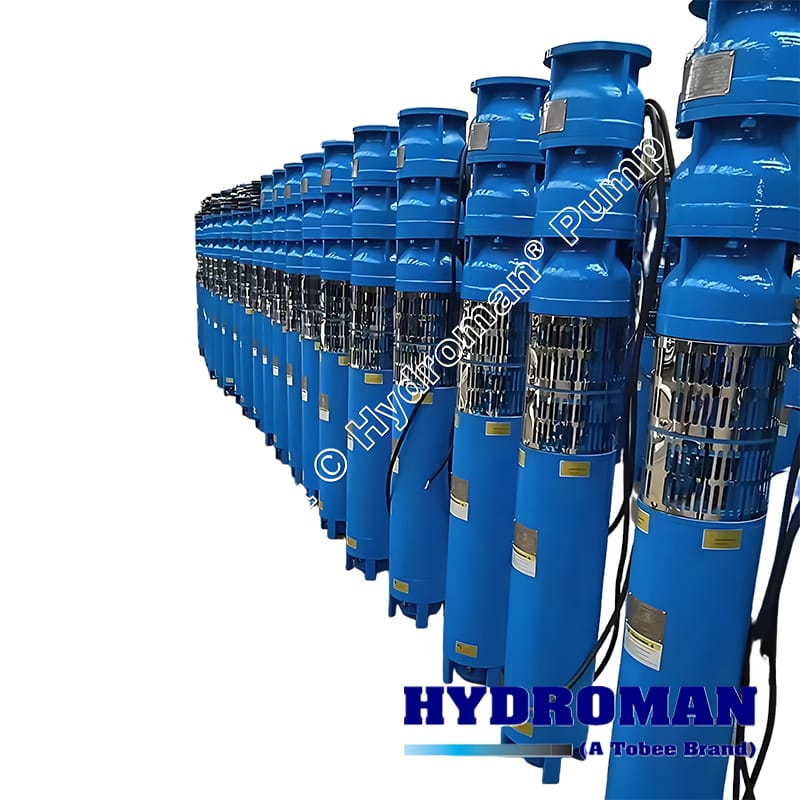


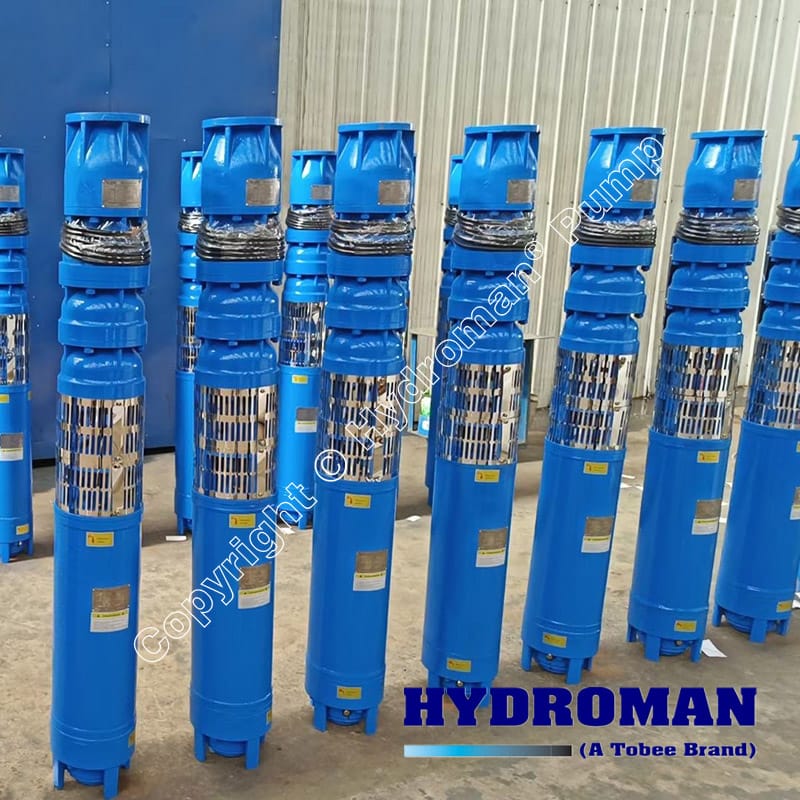

If you're specifying a pump for a municipal water system, you already know the stakes are higher than a typical industrial application. A pump station that comes up short on flow during peak demand, or one that's oversized and burns through electricity for no reason, doesn't just cost money — it becomes the thing your operations team calls you about at 2 a.m. This guide walks you through what a municipal water pump actually needs to do, how to size one correctly, and where the Hydroman TQJ400 large-capacity electric submersible pump fits into a municipal water supply, well field, or treatment plant.
In this guide
Before we get into specifications, it helps to answer the three questions every buyer actually has. What is this pump built to do? What municipal water supply problem is it solving? And what flow and head range does it cover? In short: the TQJ400 is a vertical, multistage electric submersible water pump designed for large-volume water transfer — the kind of duty you see in municipal deep wells, raw water intake stations, and treated-water booster systems, where you need anywhere from 300 to 650 cubic meters of water per hour lifted against heads from 49 to 245 meters. Everything below explains why that range matters and how to land on the right configuration for your project.
If you're comparing this against other municipal pump options, here's the core data sheet. These are the numbers your engineering team will actually use to shortlist a pump.
| Specification | TQJ400 |
|---|---|
| Pump type | Electric submersible water pump, multistage centrifugal |
| Application | Municipal water supply, deep wells, raw water intake |
| Capacity | 300–650 m³/h |
| Total head | 49–245 m |
| Discharge/outlet size | 8" / 10" |
| Motor power | 75–410 kW |
| Voltage | 380 V / 660 V |
| Installation | Vertical, fully submersible |
| Water type | Clean water / raw water, subject to configuration |
Configuration is confirmed against project-specific flow, head and water quality data — see the sizing section below.
A municipal water pump is any pump built to move water at the volumes a town, city, or regional utility actually needs — not the few cubic meters an hour of a residential well pump, but the hundreds of cubic meters an hour that keep a distribution network pressurized around the clock. In practice, that job shows up in several places along the water supply chain: pulling raw water out of a deep well or river intake, moving water through a treatment plant, transferring treated water into storage, and pushing it out into the distribution network that eventually reaches a tap.
A submersible water pump sits below the water line, with the pump and motor assembly lowered into the well or wet well as a single sealed unit. That single design choice solves a handful of problems that surface-mounted pumps struggle with. Because the pump is already submerged, it doesn't rely on suction lift — the U.S. Environmental Protection Agency notes that submersible units, placed inside the well casing and connected to a power source at the surface, are the most common pump type used for deep wells[1], precisely because they avoid the priming and suction-lift limitations that constrain above-ground pumps once the water table drops much below about 8 meters. For a municipal water well pump working 60, 100, or 200 meters down, that's not a minor advantage — it's the only practical option.
The other benefit is footprint. A vertical submersible pump for municipal water supply needs very little surface real estate compared to a horizontal split-case installation of similar output, which matters when you're working inside an existing pump house or a tight urban well site.
It helps to walk through the water's actual path, because that's usually where sizing mistakes get caught early.
Water is drawn in through a strainer at the base of the pump assembly, which keeps sediment and debris out of the impeller stages. This is also where well or wet-well drawdown level matters — the intake needs a minimum submergence to avoid air entrainment.
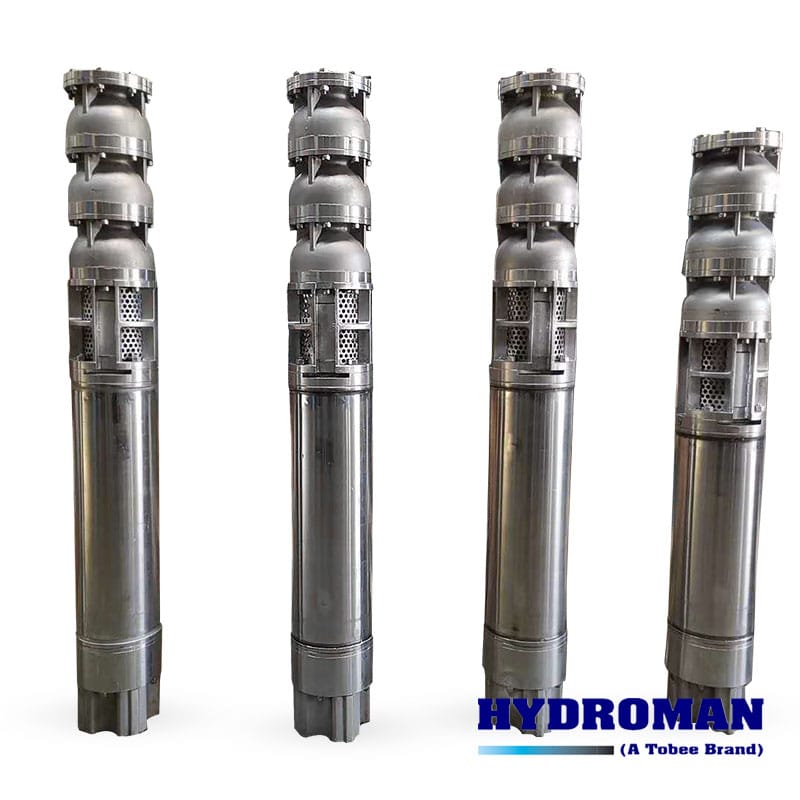
Rather than one large impeller trying to generate the full head in a single stroke, the TQJ400 stacks multiple impeller-and-diffuser stages in series. Each stage adds a fixed increment of head, so the total head output is essentially the per-stage head multiplied by the number of stages — which is exactly how a manufacturer can offer one pump body across a 49–245 m head range: more stages, more head, same basic hydraulic design.
Once pressurized, water travels up the discharge column pipe to the wellhead, then into the surface pipeline that feeds the municipal network — a treatment plant inlet, a storage reservoir, or a distribution main, depending on where the pump sits in your system.
The submersible motor is sealed, oil- or water-filled depending on configuration, and coupled directly below the pump end. Running submerged actually helps motor cooling — the surrounding water carries heat away continuously, which is one reason submersible motors can be built more compactly than an equivalent dry-mounted motor.
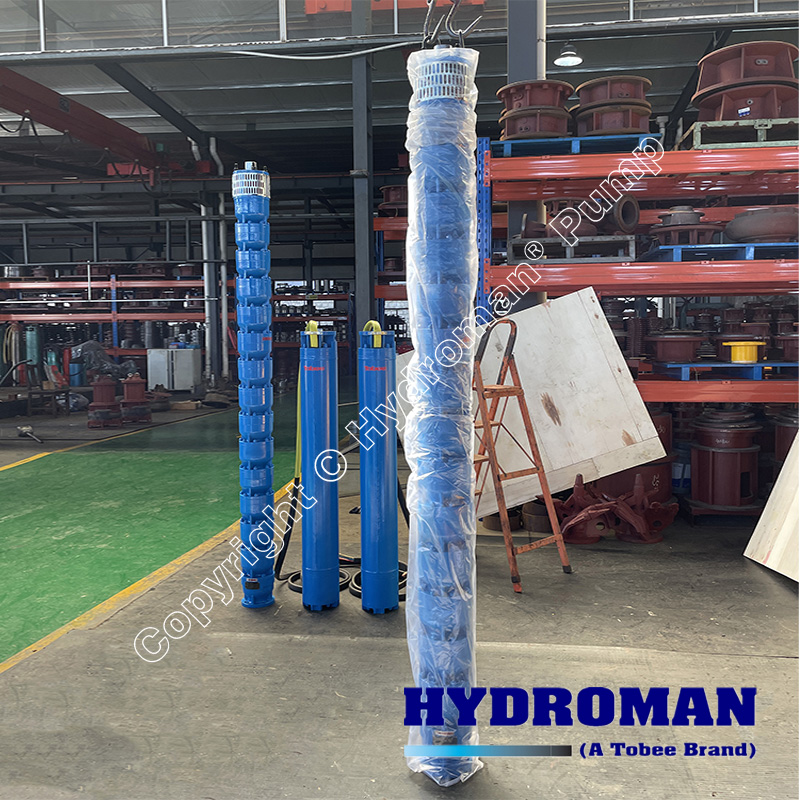 | 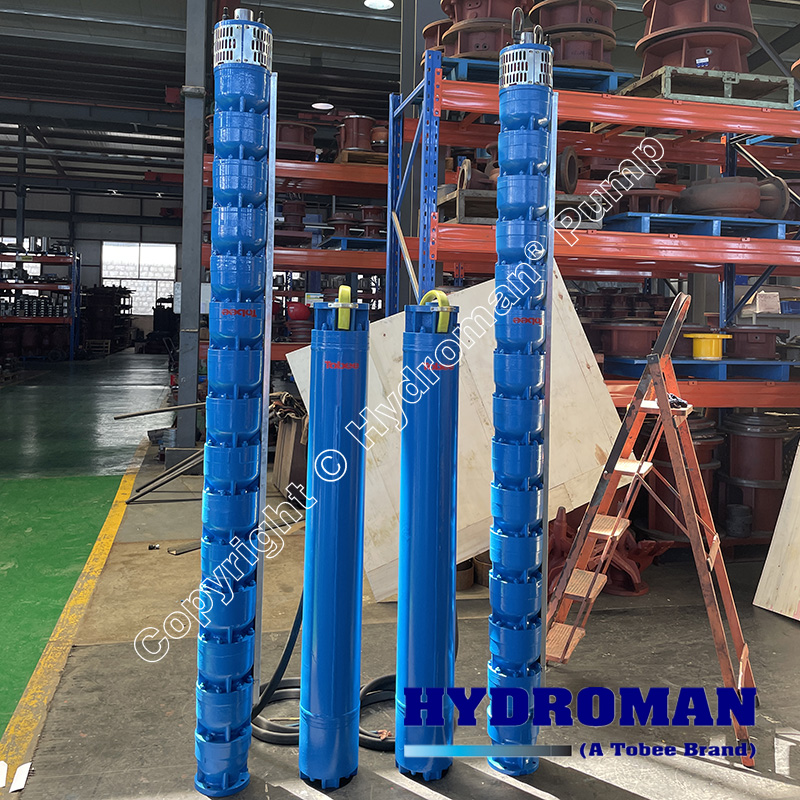 |
The word "large" in large municipal water pump isn't marketing language — it describes a specific engineering trade-off. Here's what that range actually buys you.
At 300–650 m³/h, one TQJ400 unit can cover the peak-hour demand of a mid-sized municipal network on its own, or run as one of several duty units in a larger well field with standby capacity built in. For reference, a well field supplying a city of roughly 50,000–150,000 residents typically needs a combined pumping capacity somewhere in this range once you account for peak-hour factors above average daily demand.
A 49–245 m head range covers everything from a moderately deep well feeding a nearby storage tank to a deep aquifer well pushing water a significant distance uphill to a regional network. Municipal deep-well water supply projects routinely need 100 m or more of head once you add static lift, friction loss through the column pipe, and the residual pressure required at the surface.
Because flow and head both scale, motor power spans 75–410 kW across the range. This isn't a single fixed motor — it's a family of configurations, so you're not overpaying for power you don't need on a smaller station, and you're not undersized for a heavy-duty deep well.
Discharge sizing at 8" or 10" keeps flow velocity in the pipe within a sensible range (generally under about 2.5–3 m/s for municipal transmission mains, to limit friction losses and water hammer risk), and the fully vertical submersible format means the installation footprint at the wellhead stays compact — a real consideration for urban well sites and existing pump houses where space is already accounted for.
Municipal water pump sizing isn't guesswork, and it isn't just picking the biggest number on the spec sheet either. It comes down to five checks.
Start from actual daily water demand, then apply a peak-hour factor (commonly 1.5–2.5x average daily demand for municipal systems, depending on population and industrial load) to get your design flow. Decide early whether you're running one pump full-time or splitting the load across duty/standby units — that decision changes the per-unit capacity you're sizing for.
Total head is static head plus friction loss through the column pipe and discharge line, plus the residual pressure you need at the delivery point. As a rough working formula: Total Head = Static Lift + Pipe Friction Loss + Required Delivery Pressure. Get this number wrong and you'll either starve the network at peak hours or waste energy fighting a head the system doesn't need.
The pump and motor diameter has to clear the well casing with margin for cable and installation tolerance. This is an easy step to skip and an expensive one to get wrong on-site.
Motor power follows directly from flow, head, and overall pump efficiency (typically in the 65–80% range for well-matched multistage submersible pumps at their best efficiency point). Undersizing the motor risks overload trips under peak demand; oversizing wastes energy and money over the pump's service life.
Match to what's actually available at the site — 380 V or 660 V — and confirm your discharge pipe size lines up with the pump's 8" or 10" outlet and your transmission main.
| Project input | Value |
|---|---|
| Required flow | 450 m³/h |
| Required head | 120 m |
| Installation | Deep municipal well |
| Discharge | 8" |
At 450 m³/h and 120 m head, you're sitting comfortably inside the TQJ400's operating window, which means you can select a mid-range stage count and motor configuration rather than pushing the pump to either extreme of its curve — generally the more efficient and durable place to run any centrifugal pump long-term. This is exactly the kind of calculation our engineering team runs through with buyers before confirming a configuration, because "in range" and "well-matched" aren't always the same thing.
Municipal water pump for sale listings tend to lump every use case together, but the duty cycle and water quality demands differ enough that it's worth separating them out.
This is the core application for municipal water well pumps — pulling groundwater from confined or unconfined aquifers to feed a town or city's primary supply. Depth, drawdown, and water chemistry all shape the final configuration.
Before treatment, raw water has to be moved from its source — a deep well, a reservoir, or a river intake — to the plant. Submersible well pumps handle this reliably even where suction-lift pumps can't reach.
Inside a treatment plant, pumps move raw water into the process train and finished water out toward storage, often at different pressure and flow requirements at each stage.
From storage tanks into the distribution network itself, pumping stations maintain the pressure that keeps water flowing to every connection — a duty that runs continuously and rewards a pump built for long service intervals.
Smaller regional utilities and rural water schemes often need the same reliability as a big-city system but with tighter budgets, which is where a manufacturer offering a wide configuration range within one pump family — rather than a custom one-off design — makes procurement genuinely easier.
What actually sits inside a large municipal water pump matters as much as the flow and head numbers on the spec sheet, since it's the construction that determines service life.
Sealed, water- or oil-filled, matched across the 75–410 kW power range with 380/660 V options, built with protection and cooling appropriate for continuous municipal duty rather than intermittent use.
Stacked bowl-and-diffuser stages generate head progressively, with the exact stage count set by the project's required head — this is the mechanism behind the pump's 49–245 m range.
Impeller geometry and material are selected for the water quality involved, balancing hydraulic efficiency against wear resistance where sand or sediment content is a factor.
A correctly aligned shaft and bearing arrangement is what keeps a submersible pump running quietly and efficiently over years of continuous duty rather than needing early rebuilds.
The 8" or 10" outlet connects directly to the column pipe and, from there, to the surface pipeline feeding your municipal system.
Because this pump is built for municipal water supply, the materials in contact with water deserve their own section rather than a footnote.
Wetted components — casing, impeller, shaft, diffuser, and fasteners — are specified according to the water chemistry and abrasiveness at your site, since the right material choice for a clean groundwater source isn't necessarily right for a raw water intake carrying more sediment.
For potable-water applications, wetted materials and coatings should be selected in line with the drinking-water regulations that apply in your jurisdiction. If your project requires a specific compliance standard — such as NSF/ANSI 61, WRAS, or ACS — confirm this with our engineering team during the quotation stage so the correct materials and certification documentation are built into the order from the start, rather than something to be verified in hindsight.
A well-specified pump can still underperform if the installation cuts corners, so it's worth walking through the sequence rather than treating it as an afterthought.
Before lowering anything into the well, confirm the pump, motor, cable, and both intake and discharge connections have been inspected and match the approved configuration. During positioning, vertical alignment and minimum submergence below the drawdown water level are what protect the pump from running dry or drawing in air. The discharge pipe connection should include a check valve and isolation valve sized to the 8"/10" outlet, with adequate support to carry the column weight. Electrical connection needs proper motor protection, overload protection, and grounding tied into a control panel rated for the motor's power draw. Commissioning closes the loop — checking rotation direction, running current against the motor's rated draw, confirming flow and pressure against the design point, and monitoring vibration before signing off on stable operation.
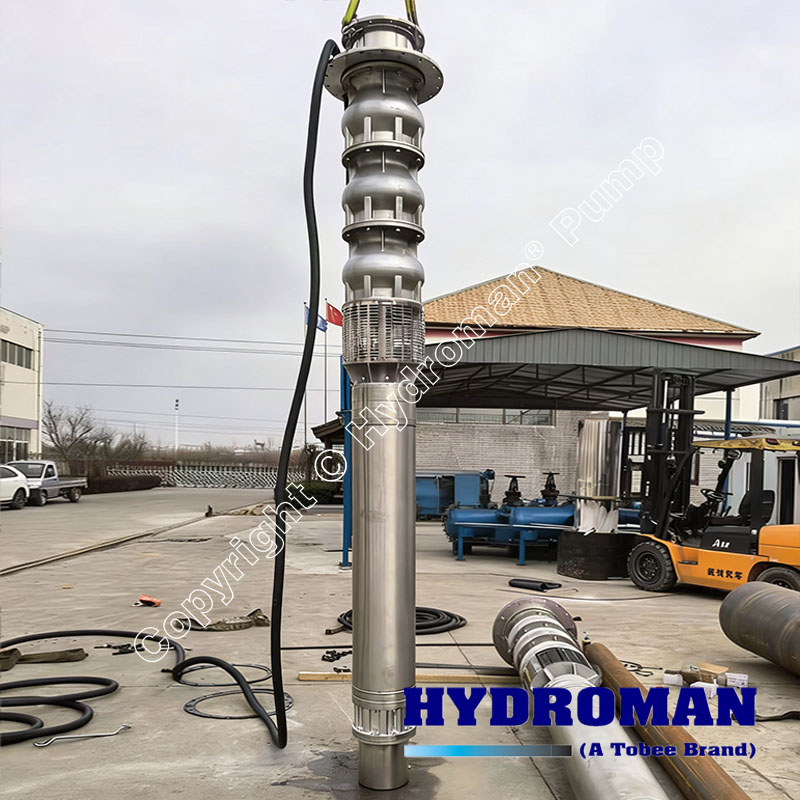 | 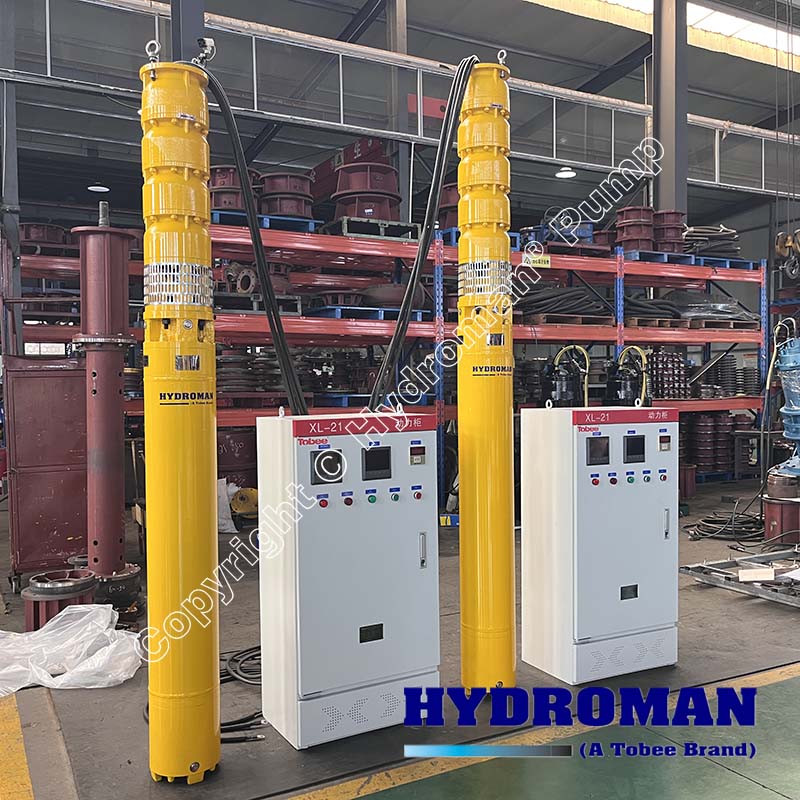 | 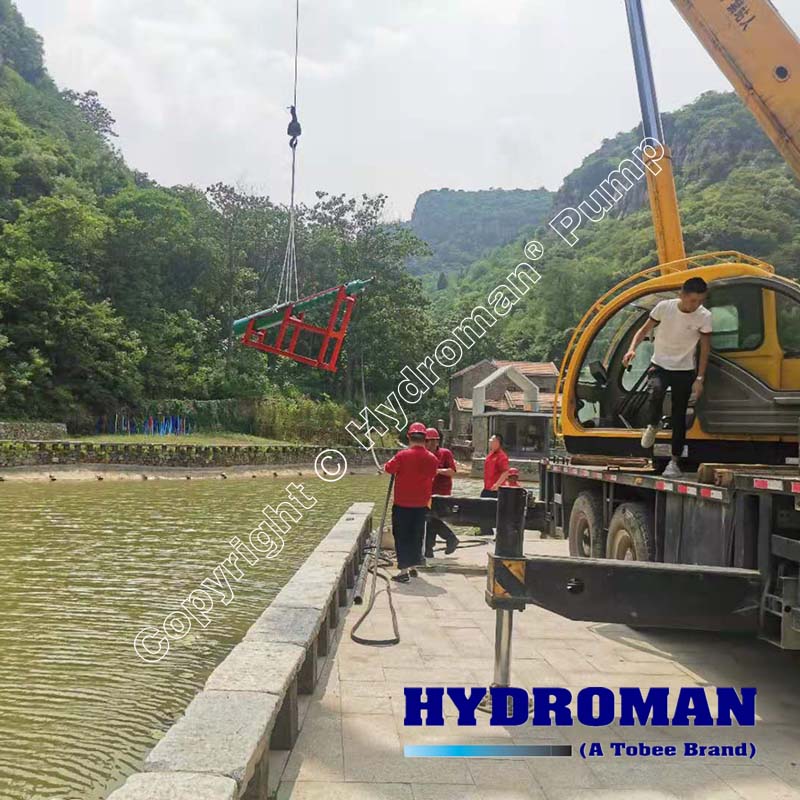 |
Routine inspection, motor and electrical checks, and cable and seal condition are the backbone of a maintenance schedule for any municipal pump running continuous duty. What actually matters day to day is catching the early warning signs before they become a failure: a gradual drop in flow or head at the same operating point, rising current draw for the same output, unusual vibration, or new noise from the pump or motor. Any one of these is worth a maintenance visit rather than waiting for the next scheduled inspection — deferred maintenance on a large submersible pump tends to turn a bearing replacement into a full pump pull.
Neither pump type is universally "better" — the right choice depends on your site conditions, and it's worth laying out honestly rather than as a sales pitch.
| Factor | TQJ400 Submersible Pump | Surface-Mounted Pump |
|---|---|---|
| Installation | Below water level, inside the well or wet well | Above ground, at the surface |
| Deep-well application | Excellent — no suction-lift constraint | Requires a suitable suction arrangement, limited by lift |
| Suction lift | Not a limiting factor | An important design constraint |
| Surface space required | Low | Higher |
| Large flow capability | Available up to 650 m³/h | Available, system-dependent |
| Best fit | Deep wells, raw water intake, compact well sites | Shallow sources, easy-access maintenance sites |
There's no shortage of municipal water pump manufacturers on the market, so it's worth being specific about what actually differentiates Hydroman Pumps for a municipal buyer. Our engineering focus is on large-capacity pump design — the TQJ400 platform is built to cover a genuinely wide flow and head range from one hydraulic family, rather than forcing you into a custom one-off design for every project. That range means we can support multiple flow and head configurations from stock components, which shortens lead times without compromising on heavy-duty construction. Our engineering support doesn't stop at the sale — the sizing process outlined above is one we work through directly with your team, and OEM or customized pump configuration is available where a project needs motor, material, or discharge customization beyond the standard range.
Before requesting a quote, it's worth having these numbers ready — it's the difference between a one-round quotation and three rounds of back-and-forth. You'll want your required flow rate, total dynamic head, well or wet-well diameter, water temperature and quality, installation depth, discharge pipe size, motor power target, available voltage, starting method, control system, and whether you need a duty/standby configuration. Send that set of numbers over and we can typically return a matched configuration on the first pass.
What is a municipal water pump?
It's a pump sized and built to move the large water volumes a town, city, or utility needs — typically hundreds of cubic meters per hour — across extraction, treatment, and distribution stages of a public water supply.
What type of pump is best for municipal water supply?
For deep wells and large-volume transfer, a vertical multistage electric submersible pump is generally the best pump for municipal water because it avoids suction-lift limits and keeps the surface footprint small. Surface pumps still have a place for shallower sources or sites where easy above-ground access matters more.
Can a submersible pump be used for municipal water wells?
Yes — submersible well pumps are the standard choice for municipal deep wells precisely because the pump and motor operate below the water line, which removes the suction-lift constraint that limits how deep a surface pump can practically reach.
How do I size a municipal water pump?
Municipal water pump sizing comes down to five checks: required flow rate (with a peak-demand factor applied), total dynamic head, well or wet-well diameter, matched motor power, and confirmed voltage and discharge size. See the sizing walkthrough above for the full sequence and a worked example.
What flow and head can the TQJ400 provide?
The TQJ400 covers 300–650 m³/h of flow across a 49–245 m head range, with motor power from 75–410 kW depending on the exact configuration.
What motor power is available?
Motor power spans 75–410 kW across the TQJ400 range, sized to match your specific flow and head requirement rather than a single fixed rating.
Is the TQJ400 suitable for drinking water?
It can be configured for potable-water duty. Wetted materials and coatings are selected according to the drinking-water regulations that apply at your site, and specific compliance certificates (such as NSF/ANSI 61 or WRAS) should be confirmed with our team at the quotation stage.
How do I choose the right TQJ400 configuration, or buy a municipal water pump from Hydroman?
Send over your required flow, head, well diameter, voltage, and water type, and our engineering team will confirm the matched configuration — this is the fastest path to a working quote whether you're comparing municipal water pump for sale listings or ready to place an order.
 Sara Liang
 +86 189 3110 6396 (Whatsapp/Wechat)
 Inquiry@tobeepump.com
Sizing benchmarks and peak-demand factors referenced in this guide reflect general municipal water engineering practice; project-specific figures should always be confirmed against your local system data.
[1] U.S. Environmental Protection Agency, "Learn About Private Water Wells," epa.gov/privatewells.
Submitted successfully
Your submission has been received. Thanks for your time

 FR(EUR)
 CN(CNY)
 GB(GBP)
 AU(AUD)





Reviews
0%
0%
0%
0%
0%
Share your thoughts with other customers
Write a Review