

Mining operations, metallurgical plants, and aggregate processing sites share a common headache: moving extremely dense, abrasive, solid-laden slurry without destroying the pump in the process. Mill discharge slurries in copper and iron ore processing routinely reach specific gravities of 1.6 to 1.8. Tailings ponds accumulate settled solids that form near-paste materials at depth. Sand and gravel dredging pushes particle sizes that would seize a conventional centrifugal pump within hours.
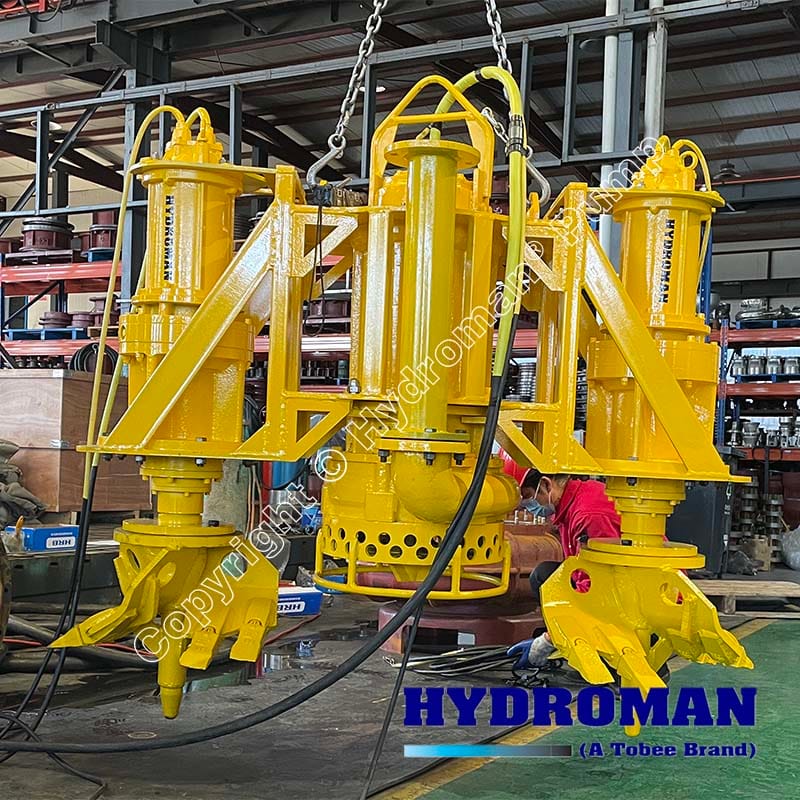
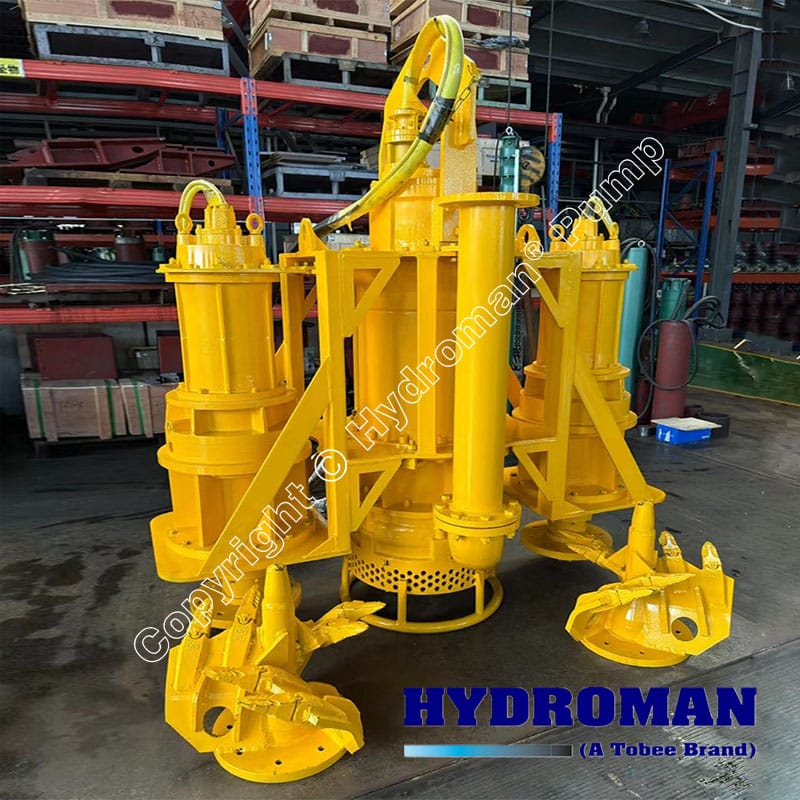
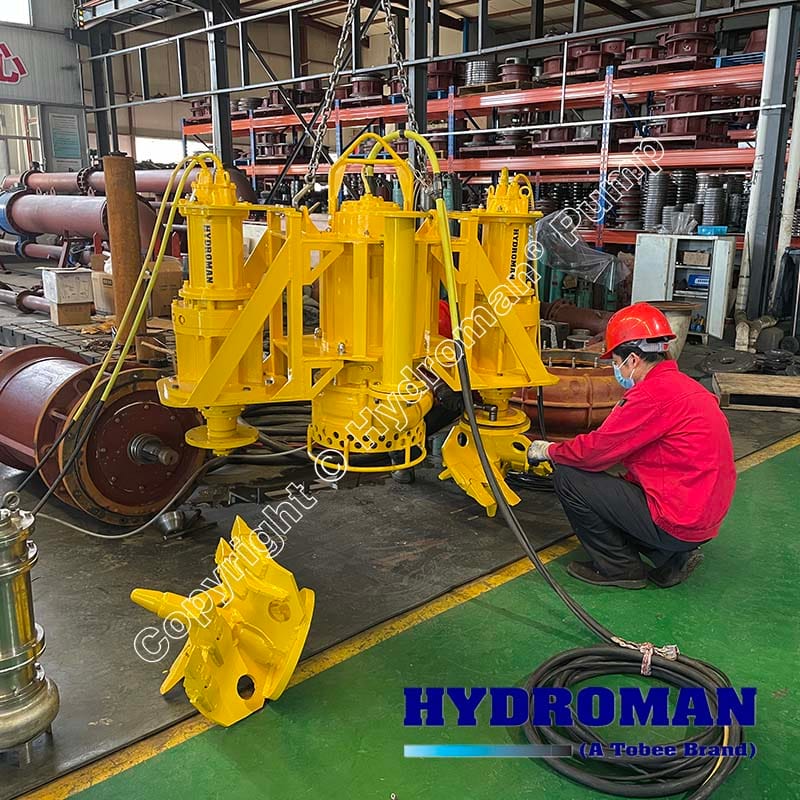
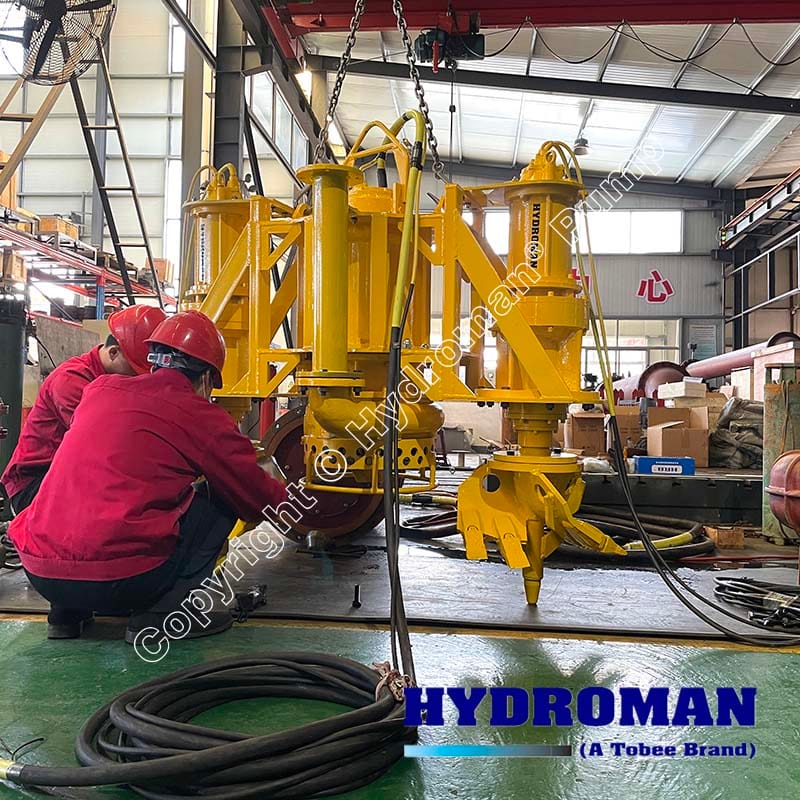
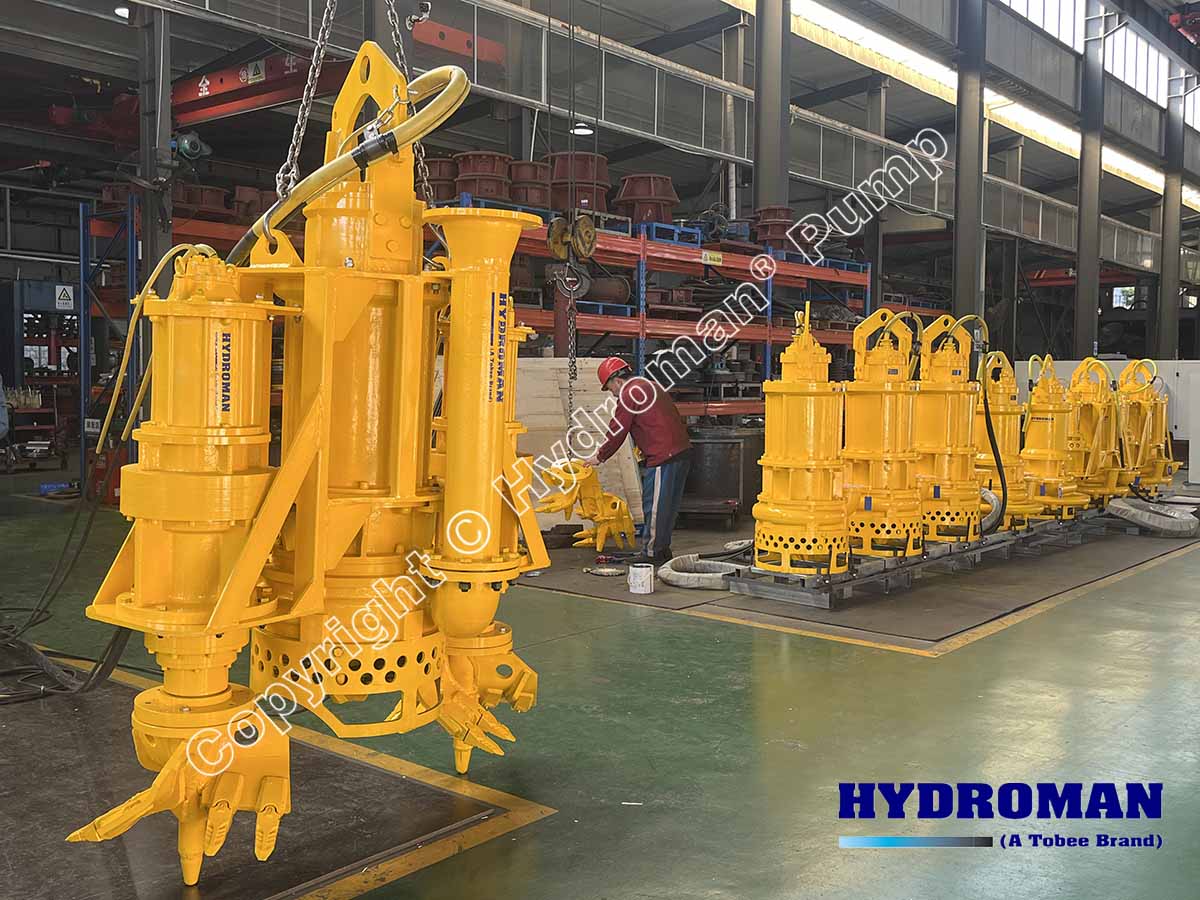
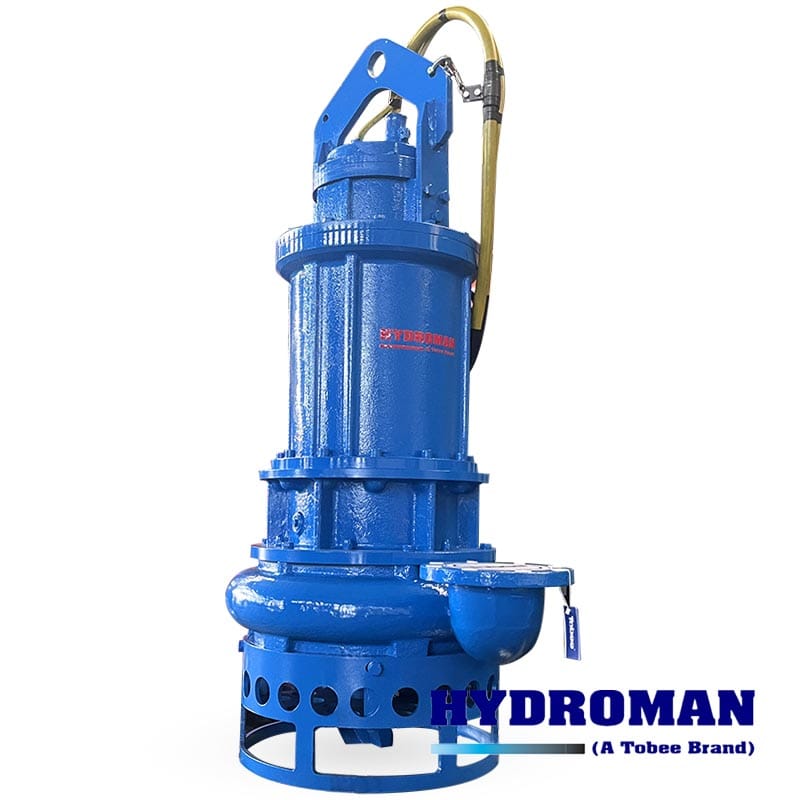
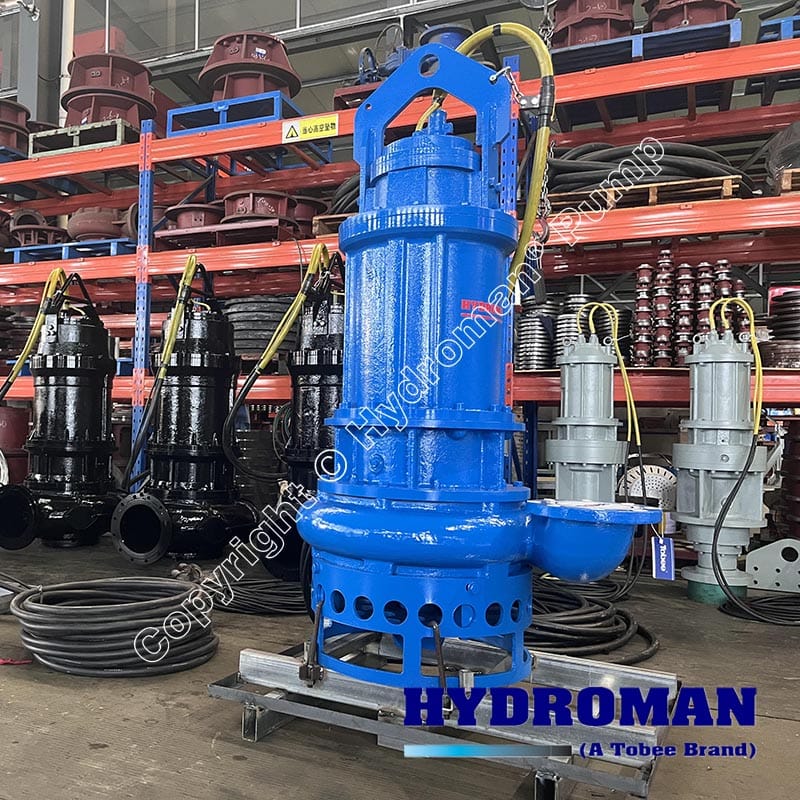
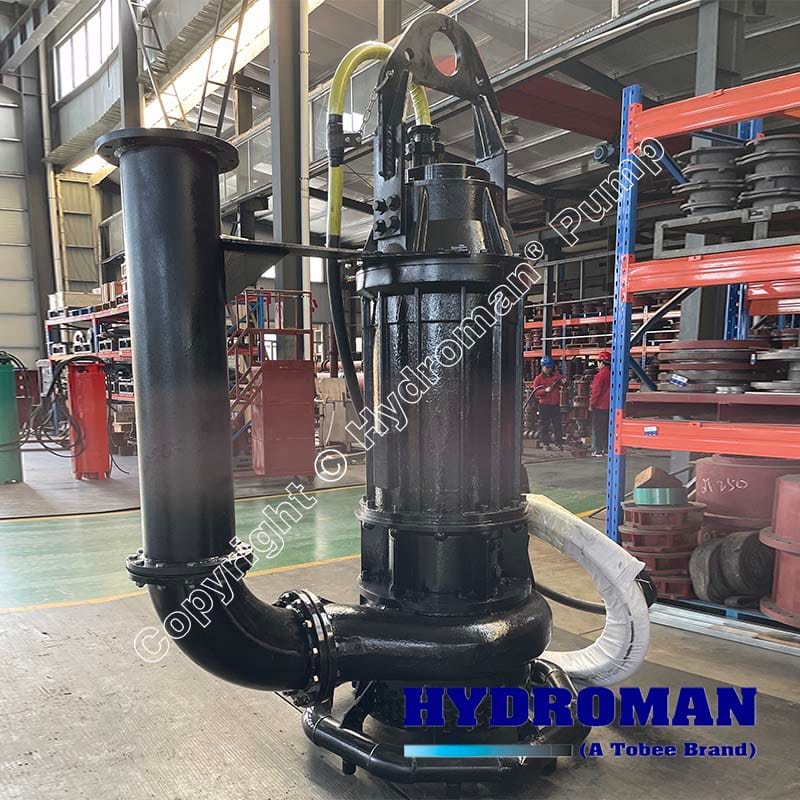
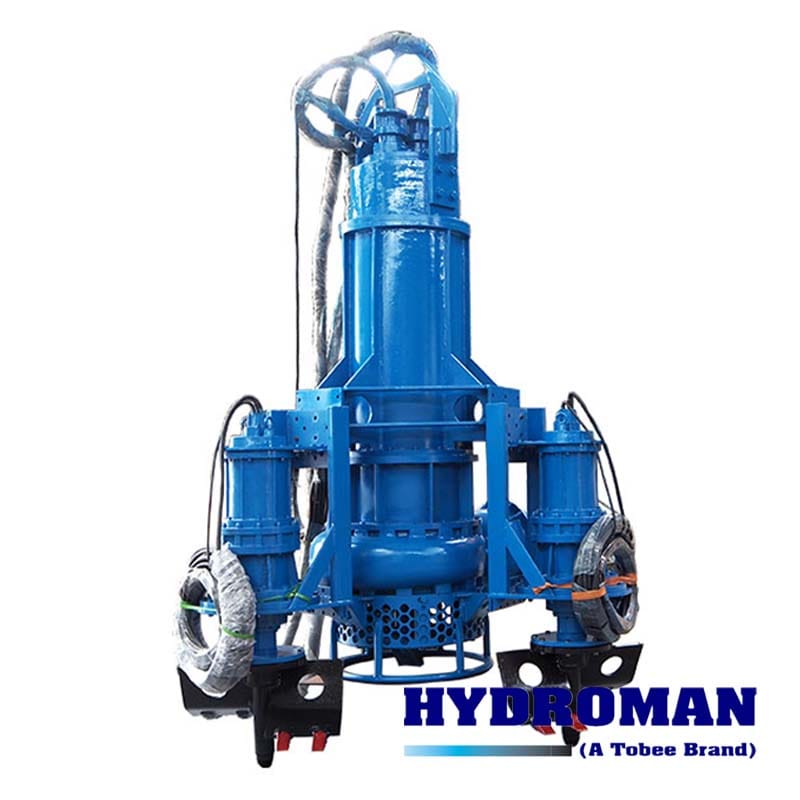
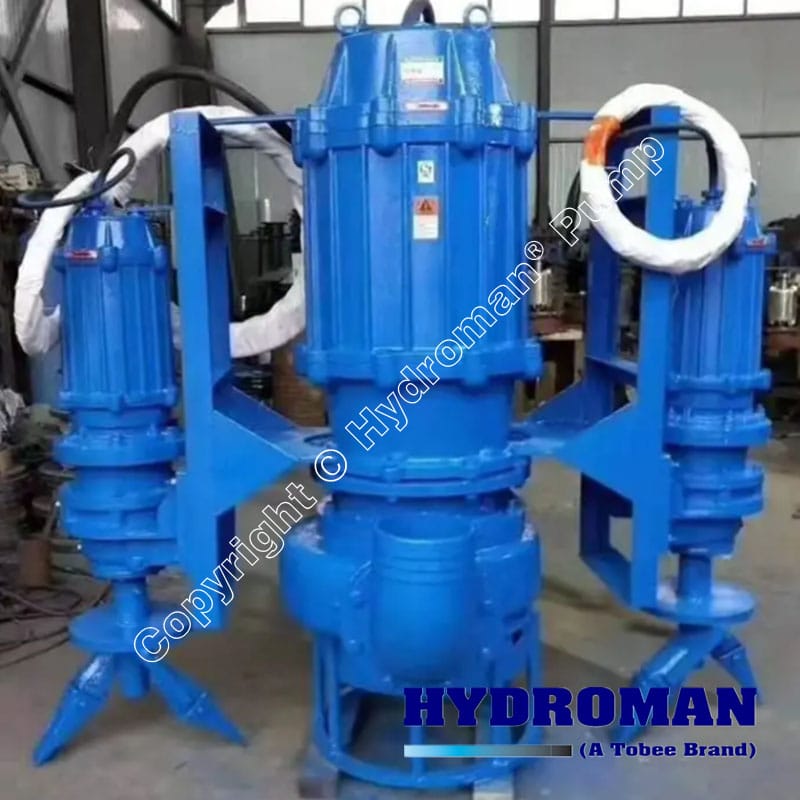
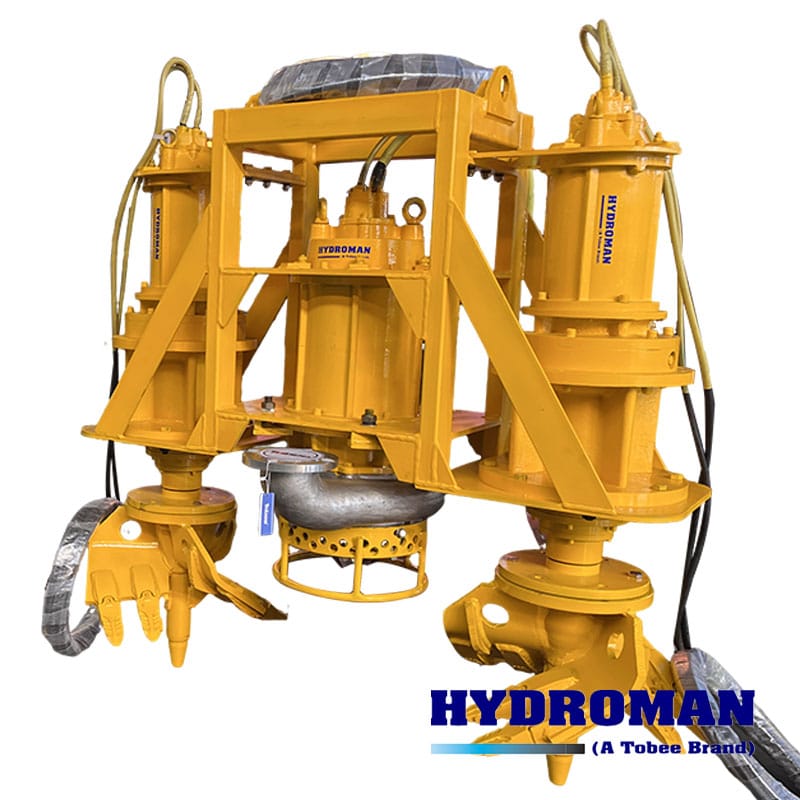
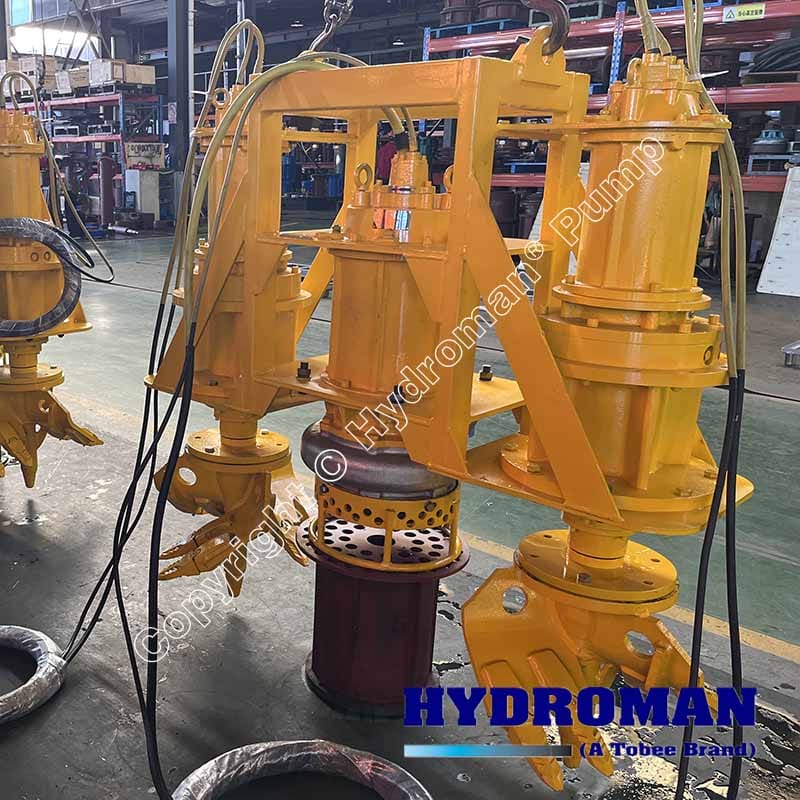
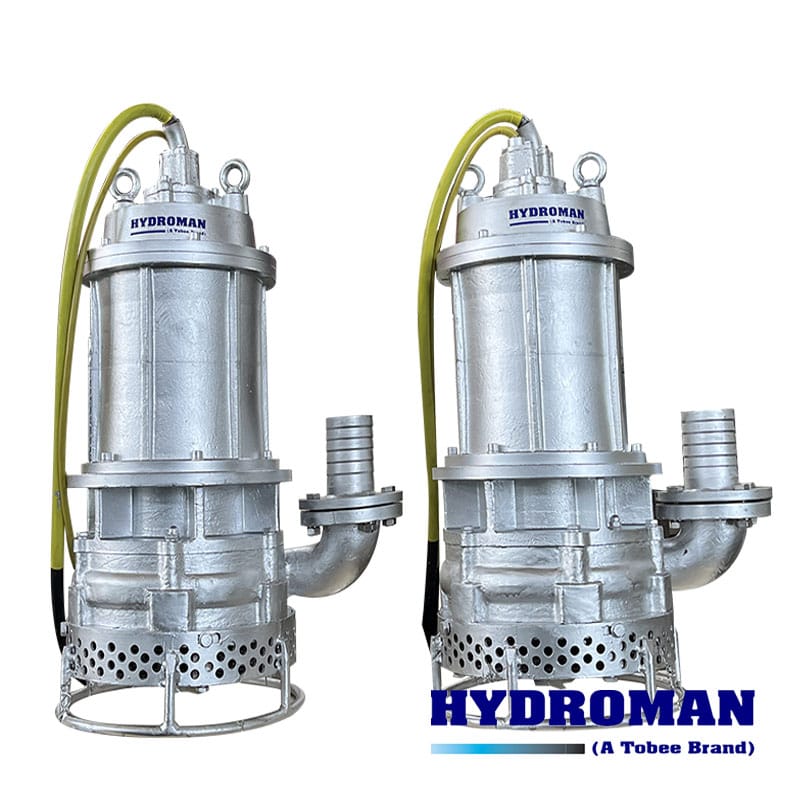
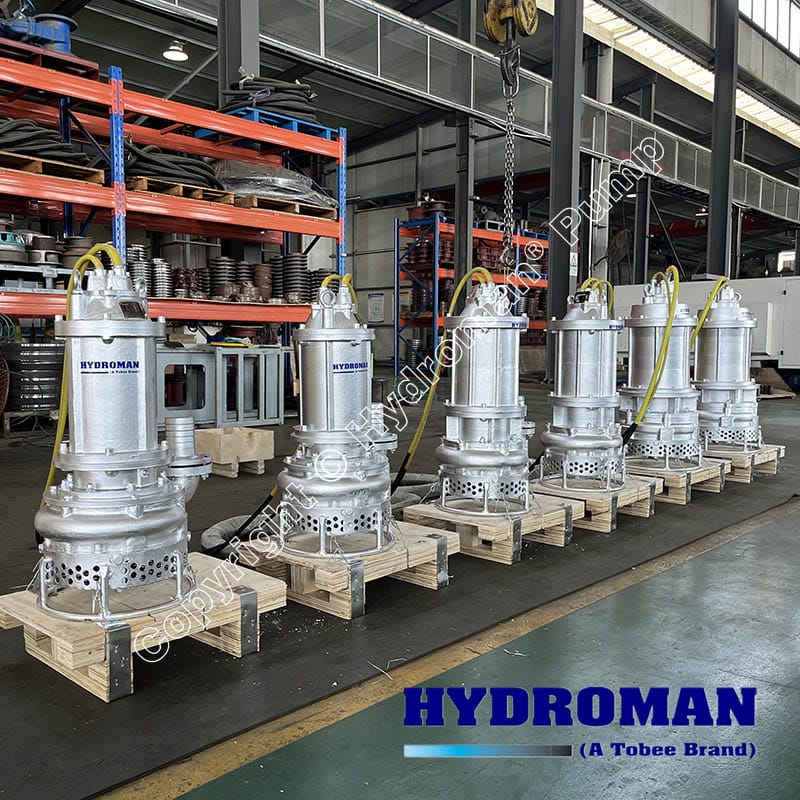
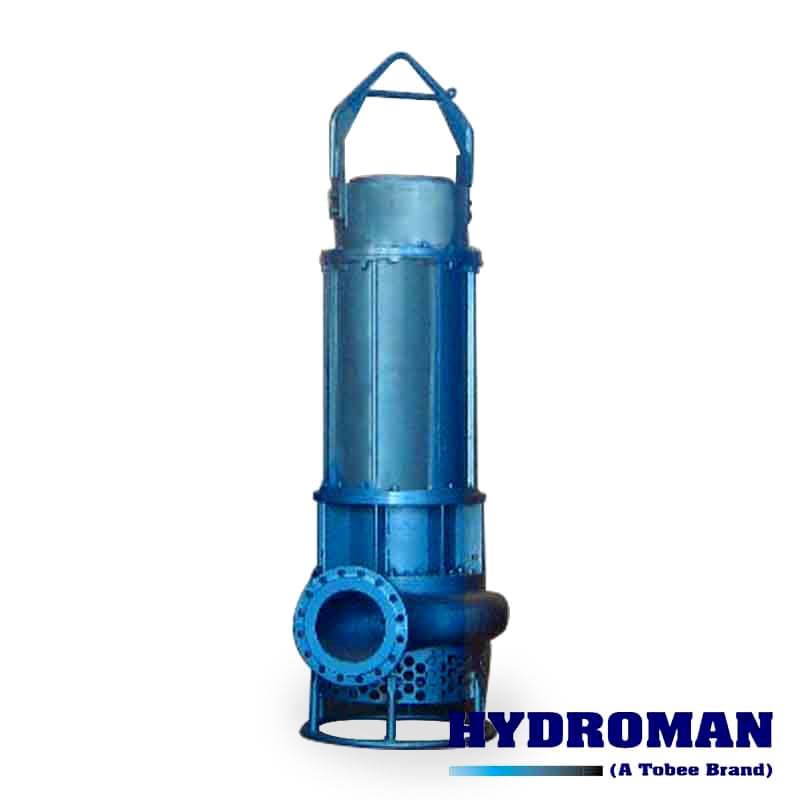
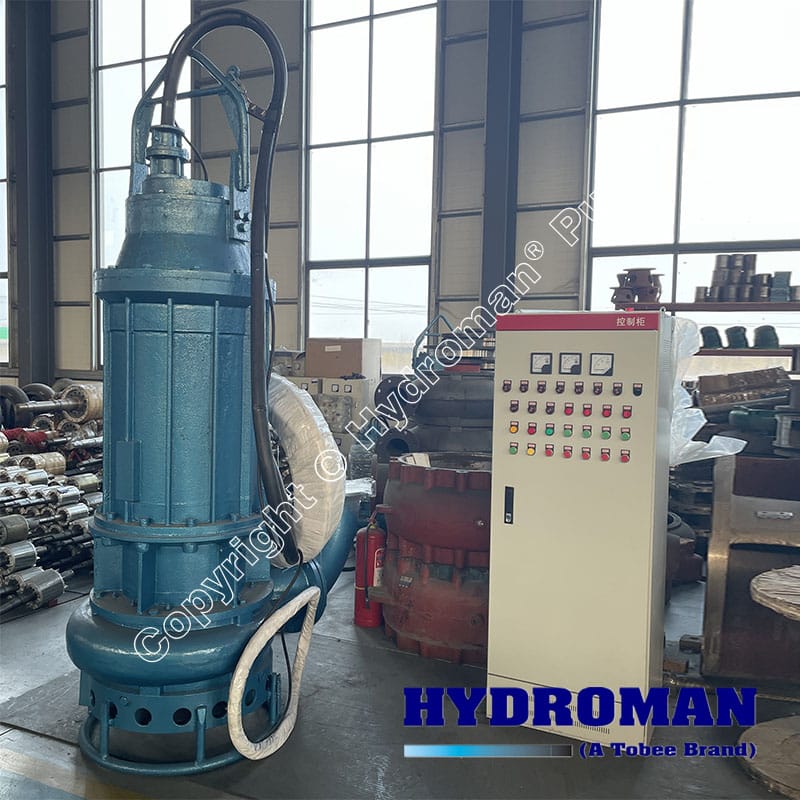
That's exactly the environment Hydroman's heavy-duty slurry pump with dual cutters was built for. Combining a purpose-engineered dual-cutter head, high-chrome alloy wetted components, and a fully submersible heavy-duty motor, this mining slurry pump delivers the abrasion resistance, anti-clogging performance, and continuous-duty reliability that demanding industrial sites can't afford to be without.
650+ BHN Impeller Hardness | 80mm Max Solid Passage | 1.8 SG Max Slurry Density | 600 m³/h Peak Flow Rate |
A standard centrifugal slurry pump moves fluid by spinning an impeller to generate velocity and pressure. That works reasonably well for relatively uniform slurries with fine, suspended particles. It starts to fail — sometimes quickly — when the feed contains large solids, fibrous material, semi-consolidated sludge, or any combination of the above. The impeller inlet clogs and the pump loses suction to stop production.
A slurry pump with dual cutters solves that problem at the source. Two counter-rotating or tandem cutter blades are mounted ahead of the pump inlet, positioned to intercept incoming material before it reaches to the impeller. The side cutters' job is to break down oversized solids, shred fibrous debris, and agitate any settled material back into suspension — so that what arrives at the impeller is a consistent, pumpable mixture rather than a slug of compacted solids.
The result matters in real operational terms. As a sludge suction pump in a tailings application, the dual-cutter configuration keeps the intake clear even when the pump is working material that has consolidated over time. As a slurry agitator pump in a sand dredging setup, it prevents the formation of suction-starved dead zones around the inlet. And in metallurgical slurry transfer, where abrasive grit at high concentration would wear a conventional impeller into failure within weeks, the cutter system reduces the burden on the pump's internal components by pre-processing incoming solids before they contact the impeller vanes.
Key point: The dual-cutter system doesn't just prevent clogging — it actively extends impeller service life by breaking down large, high-impact solids before they reach the pump's most wear-sensitive components.
|
 |  High-Chrome Wear-Resistant Materials |  High Solids Handling Capacity |  Powerful Submersible Motor |
| Twin hardened-steel cutter blades mounted at the pump inlet break down solids, shred fibrous material, and agitate settled deposits before they reach the impeller. This slurry agitator function keeps the flow path clear under continuous operation, eliminating the clog-and-restart cycles that cost time and money in heavy slurry applications. The cutter geometry is matched to the impeller eye diameter, so the material arriving at the slurry impeller is already conditioned for efficient pumping. | Hydroman's wetted-end components — impeller, casing, wear plate — are cast from 27% high-chrome white iron with a Brinell hardness exceeding 650 BHN. That's the industry-recognized benchmark for abrasive slurry pump applications involving silica, iron ore, copper tailings, and similar hard-particle materials. Silica sand alone rates 7 on the Mohs scale; chrome alloy at 650+ BHN resists that abrasion over sustained duty cycles where standard cast iron components would fail within weeks. | With a maximum solid passage of up to 80mm (configuration dependent) and internal clearances sized for high-density slurry, this Hydroman pump handles sand slurry, gravel, coal slurry, mine tailings, and mud slurry without the bridging and blockage issues that limit conventional submersible pumps. Solids concentrations up to 60–70% by weight in certain configurations, and slurry specific gravities up to 1.8, are within the operating range of Hydroman's heavy-duty range. | The motor is engineered specifically for continuous heavy-duty operation — not a standard electric submersible slurry pump motor with a new housing. Oil-cooled or water-cooled motor options suit different deployment environments. Built-in overload protection, thermal monitoring, and double mechanical seals protect the motor cavity from slurry ingress. The motor is rated for the actual torque demand of slurry-density loads, not just clear-water performance curves. |
Mining and Mineral Processing
Mill discharge, flotation circuit transfer, and concentrate thickener feed are continuous high-demand duties in copper, iron ore, gold, and coal mining. Mining slurry pumps in these circuits face SG values of 1.5–1.8 and abrasive particle loads that eliminate conventional pumps in weeks. Hydroman's dual-cutter configuration maintains flow through varying feed densities without operator intervention. |  |
Metallurgy and Steel Plants
Scale pit cleanout, rolling mill coolant slurry, and slag transfer in steel plants require an industrial sludge pump capable of handling metal particulate at high temperatures and varying chemistry. The dual-cutter design handles the scale and debris that would seize a conventional pump, while chrome alloy construction resists the mildly acidic chemistry common in mill coolant systems. |  |
Tailings and Wastewater Transfer
Mine tailings that have settled and partially consolidated are among the most difficult materials to restart pumping after a stoppage. The agitator function of the dual-cutter head breaks up the consolidated surface layer, re-suspending material into the pump inlet without manual intervention. Wastewater sludge pump applications in municipal treatment plants, lagoon desilting, and industrial effluent systems follow the same logic. |  | Sand Dredging and River Cleaning
A submersible dredge pump working a natural sand deposit encounters irregular particle sizes, occasional gravel, and organic debris — all at once. The dual-cutter system handles the debris fraction while the large-passage impeller moves the sand-water mixture efficiently. River and reservoir desilting projects, aggregate quarrying, and coastal dredging all benefit from the anti-clog reliability of this configuration. |  |
The table below covers the representative performance range across Hydroman's dual-cutter heavy-duty slurry pump lineup. Individual models vary by application — contact Hydroman's technical team for a configuration matched to your specific slurry properties and site conditions.
| Parameter | Specification / Range |
|---|---|
| Pump Type | Submersible Slurry Pump with Dual Cutters |
| Flow Capacity | 10 – 600 m³/h |
| Total Head | 5 – 80 m |
| Motor Power | 2.2 – 132 kW |
| Max Solid Passage | Up to 80 mm (inlet-diameter dependent) |
| Max Slurry SG | 1.8 |
| Impeller Material | 27% High Chrome White Iron (650+ BHN) |
| Casing Material | High Chrome Alloy / Rubber-lined (application dependent) |
| Cutter Material | Hardened Alloy Steel |
| Motor Type | Electric Submersible / Hydraulic Drive |
| Installation Mode | Vertical Submersible |
| Max Operating Depth | 20 m (standard); deeper on request |
| Seal Configuration | Double Mechanical Seal, Oil Chamber |
| Discharge Connection | DN50 – DN300 (flanged) |
Need a hydraulic submersible slurry pump or high head slurry pump configuration? Hydroman produces hydraulic-drive versions for sites using excavator or power pack hydraulics, and high-head variants for long-distance or elevated discharge applications. Specify your requirements when requesting a quote.
|
If you've previously used a standard centrifugal sludge pump or a basic submersible unit in a mining or heavy slurry application, the table below illustrates where purpose-built dual-cutter technology makes a practical difference:
| Capability | Hydroman Dual-Cutter Slurry Pump | Standard Centrifugal Sludge Pump | Basic Submersible Pump |
|---|---|---|---|
| Handles large solids (50–80mm) | ✔ Yes | ✘ Limited | ✘ No |
| Anti-clogging in dense slurry | ✔ Cutter system | ✘ Clogs at high SG | ✘ Frequent blockage |
| Abrasion-resistant materials | ✔ 650+ BHN chrome alloy | ✘ Cast iron standard | ✘ Cast iron standard |
| Restarts after settlement | ✔ Agitator breaks crust | ✘ Manual clearing required | ✘ Manual clearing required |
| Continuous 24/7 duty | ✔ Industrial rated | ⚠ Application-dependent | ✘ Light duty only |
| Slurry SG up to 1.8 | ✔ Yes | ✘ Typically ≤1.3 | ✘ Typically ≤1.2 |
| Impeller service life in mining duty | ✔ 12+ months | ✘ 1–3 months | ✘ Weeks |
The service life column is where the total cost calculation changes most dramatically. A cheaper pump that needs impeller replacement every 6–8 weeks in an active mining circuit generates far higher annual maintenance cost — plus unplanned downtime — than a correctly specified Hydroman unit that runs 12+ months between major services.

Getting the specification right before you order is the single most important step in slurry pump procurement. Here are the five variables that drive every pump selection decision:
How much material needs to move per hour? This is your baseline sizing parameter. A small site sump might need 20–50 m³/h; a mineral processing plant's mill discharge circuit might require 300–600 m³/h continuously. Undersizing flow rate means the pump can't keep pace with production. Oversizing wastes energy and capital.
Total dynamic head combines static lift (vertical elevation gain), pipe friction losses, and velocity head at discharge. For slurry pipelines, friction losses run 2–3× higher than equivalent clear-water calculations because maintaining solid suspension requires higher velocity energy. Don't use water-based friction tables for heavy slurry sizing.
Slurry at 20% solids by weight behaves very differently from slurry at 55%. Particle size governs minimum internal clearances — you need to know your maximum particle size to select an inlet diameter and cutter configuration that won't bridge. Provide both d50 (median particle size) and d95 (95th percentile) if available.
Slurry SG drives motor power requirements directly. Required hydraulic power = (Q × H × SG) ÷ 367 × efficiency. A pump motor sized for SG 1.2 will be chronically overloaded if your actual slurry runs at SG 1.6. Always size the motor for your realistic peak SG with a 15–20% safety margin.
Submersible electric suits fixed installations with grid power. Hydraulic drive suits remote sites or excavator-mounted deployments. Vertical configurations suit sump-edge installations where motor submersion isn't practical. Share your site layout and power availability with Hydroman's team — these logistics frequently determine the correct configuration independent of hydraulic sizing.
 Factory Direct |  OEM / ODM Capability |  Global Export Experience |
No intermediary markup. You source directly from the manufacturer, with full visibility into materials, build specifications, and quality control.
| Custom inlet/outlet configurations, specific material selections, non-standard motor ratings, and branded OEM supply are all available on volume orders.
| Hydroman pumps operate in mining, dredging, and wastewater projects across Europe, Southeast Asia, Africa, and the Americas. Export documentation, CE marking, and international shipping are standard.
|
 Engineering Support |  Fast Quotation |  Worldwide Shipping |
| Submit your slurry properties, flow requirements, and site conditions — Hydroman's engineers will recommend the correct pump configuration before you commit to a purchase order. | Standard configurations quoted within 24 hours. Custom and OEM builds include detailed technical documentation and lead time commitments upfront. | Full export packaging, freight coordination, and customs documentation support for every order, regardless of destination. |
A correctly maintained Hydroman slurry pump will consistently outlast an unmaintained unit by a factor of two or more. These are the four areas that matter most:
• Impeller clearance and wear inspection. As the impeller and wear plate erode, the running clearance between them increases, allowing internal recirculation that reduces pump efficiency and increases motor load. When your pump is drawing noticeably more power for the same output — or when flow rate drops without an obvious external cause — internal wear has likely reached the point where the wear plate or impeller needs measurement. A drop of 10–15% from commissioning efficiency is the standard replacement trigger. Checking slurry pump components on a scheduled basis, rather than waiting for performance degradation, is the more cost-effective approach.
• Mechanical seal condition. The double mechanical seal on Hydroman's submersible units protects the motor cavity from slurry ingress. A failing seal doesn't always announce itself obviously — monitor oil condition in the seal chamber at each service interval. Milky or discolored oil indicates water or slurry contamination. Replacing seals proactively at the first sign of oil condition change costs a fraction of what a motor replacement costs after seal failure.
• Cutter blade inspection. The dual-cutter blades are wear items. In high-abrasion applications, inspect blade edge condition every 500–1,000 operating hours. Worn cutter edges reduce the system's ability to break down incoming solids, which progressively increases the burden on the impeller. Replacement is straightforward and significantly cheaper than impeller replacement.
• Motor protection verification. Test thermal overload protection and verify motor winding resistance annually or after any suspected overload event. In submersible electric sludge pump applications, cable condition — particularly at the entry gland — should be checked for abrasion damage whenever the pump is retrieved for any servicing. A cable fault in a submersible application is typically a full pump retrieval event; catching abrasion damage early is far less disruptive.
A slurry pump handles flowable mixtures of liquid and suspended solids — the material moves on its own and the pump maintains that flow under pressure. A sludge pump is designed for thicker, semi-consolidated materials that have much higher solids content and may barely flow without mechanical agitation. In practice, the dual-cutter design bridges both categories: the cutter agitator resuspends semi-consolidated material, and the heavy-duty impeller moves the resulting slurry efficiently.
Yes — that's the primary design intent. Hydroman's mining-grade configuration uses 27% high-chrome white iron for the impeller and casing, rated above 650 BHN. This material is the industry standard for hard-particle abrasive slurry in copper, iron ore, gold, and coal mining applications. The dual-cutter system also reduces abrasive impact on the impeller by breaking down large solids before they enter the impeller zone.
Yes. The dual-cutter configuration is particularly well-suited to sand and gravel dredging because natural deposits contain irregular particle sizes, organic debris, and occasional coarse gravel that would clog a standard submersible pump. The cutter system handles the debris fraction continuously, while the large-passage impeller moves the sand-water mixture at the flow rates required for productive dredging operation.
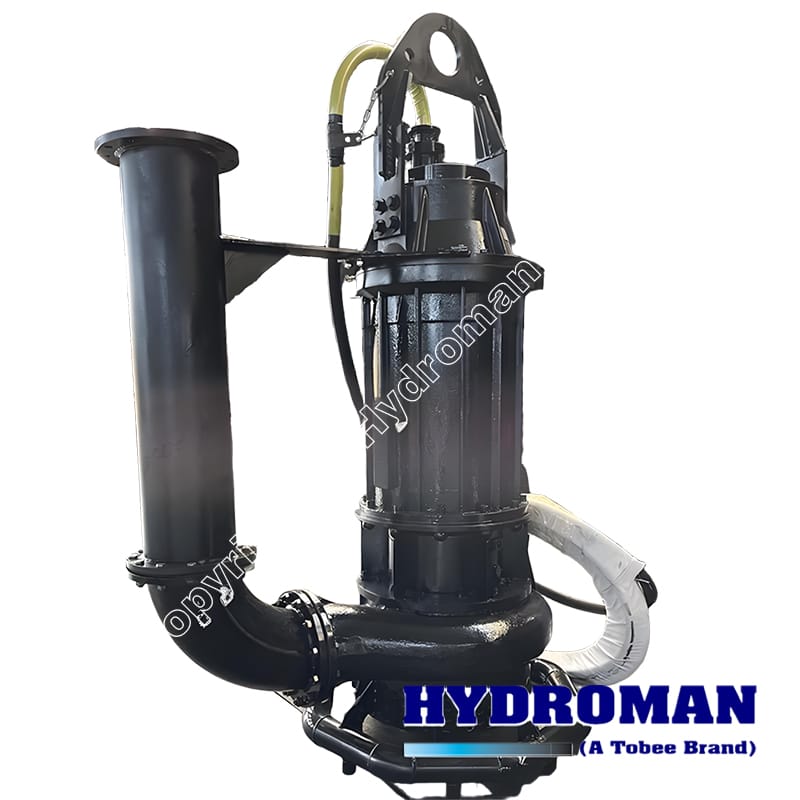
Yes. Hydroman produces hydraulic submersible slurry pump versions designed to connect to excavator auxiliary circuits or dedicated hydraulic power units. These are particularly popular for remote site deployments, offshore or marine dredging, and any application where electrical infrastructure is unavailable or where explosion-risk environments make electrical submersible motors unsuitable.
The standard mining-grade impeller is cast from 27% high-chrome white iron, exceeding 650 BHN hardness. For applications involving chemically active slurries (acidic or alkaline), rubber-lined impeller options are available. For highly corrosive environments, Hydroman can specify duplex stainless steel or other specialty alloys. The right material depends on your specific slurry chemistry and abrasion level — share your application details when requesting a quote.
Yes. Hydroman supports OEM and ODM orders with custom inlet and outlet configurations, non-standard motor ratings, specific material selections, branded nameplate requirements, and modified cutter geometry for unusual feed conditions. Custom configurations require a minimum order quantity — contact Hydroman's sales team to discuss your specific requirements and lead times.
Share your slurry type, flow rate, head, solids size, and site conditions — Hydroman's engineering team will match the right dual-cutter pump configuration to your exact requirements. Factory-direct pricing, fast quotation, worldwide shipping.
 Sara Liang
 +86 189 3110 6396 (Whatsapp/Wechat)
 Inquiry@tobeepump.com
OEM / ODM inquiries welcome · Hydraulic & electric options · Export documentation included
Submitted successfully
Your submission has been received. Thanks for your time

 FR(EUR)
 CN(CNY)
 GB(GBP)
 AU(AUD)





Reviews
0%
0%
0%
0%
0%
Share your thoughts with other customers
Write a Review