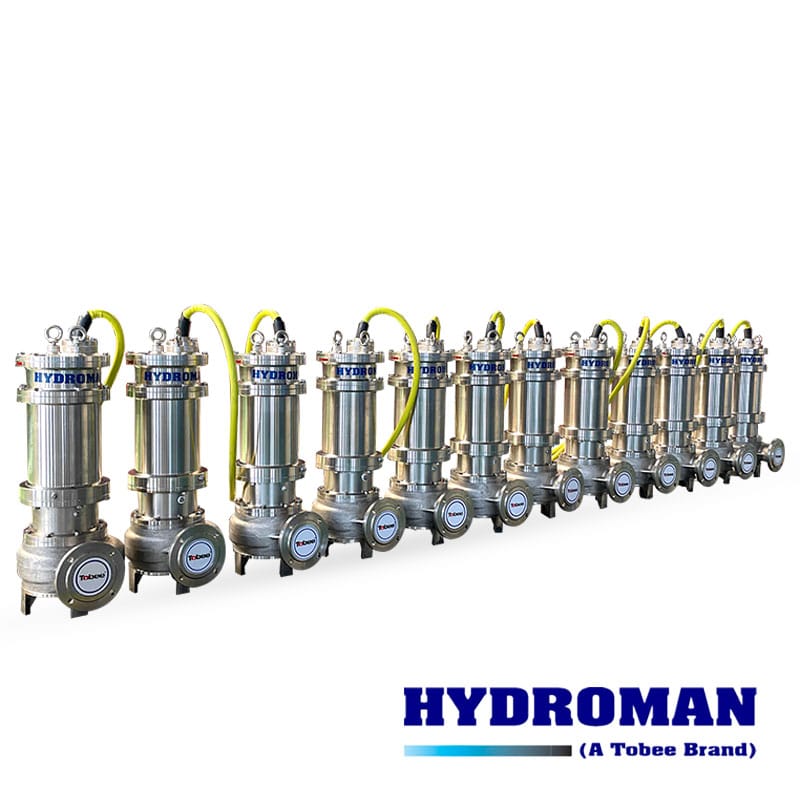
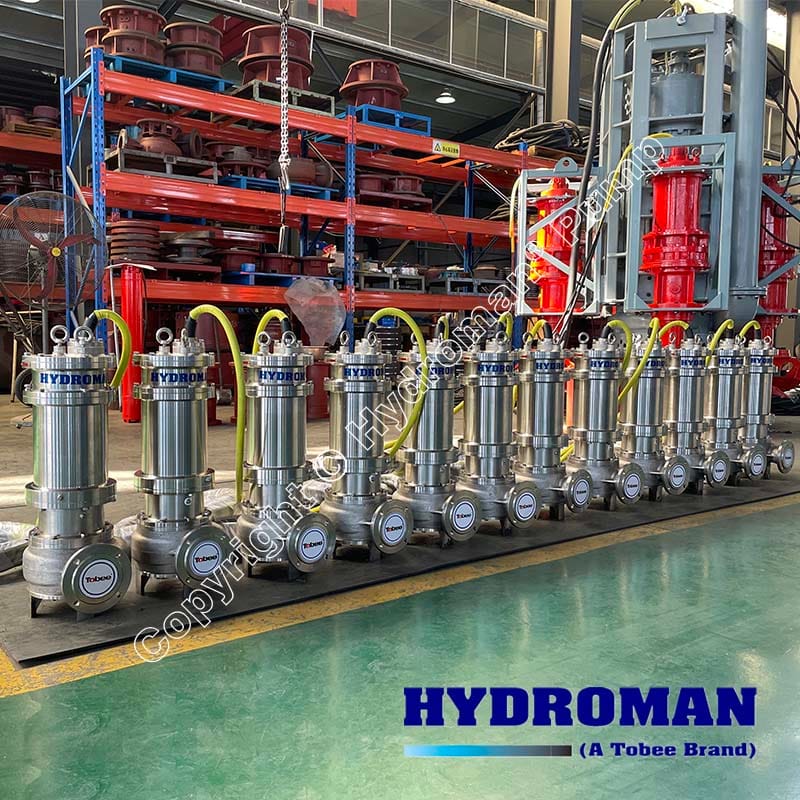
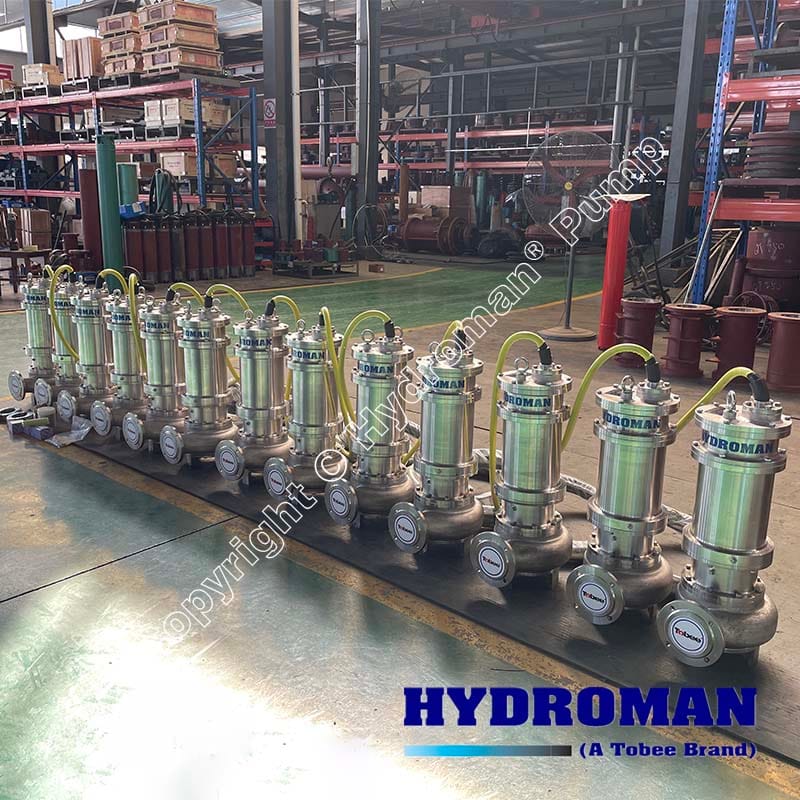
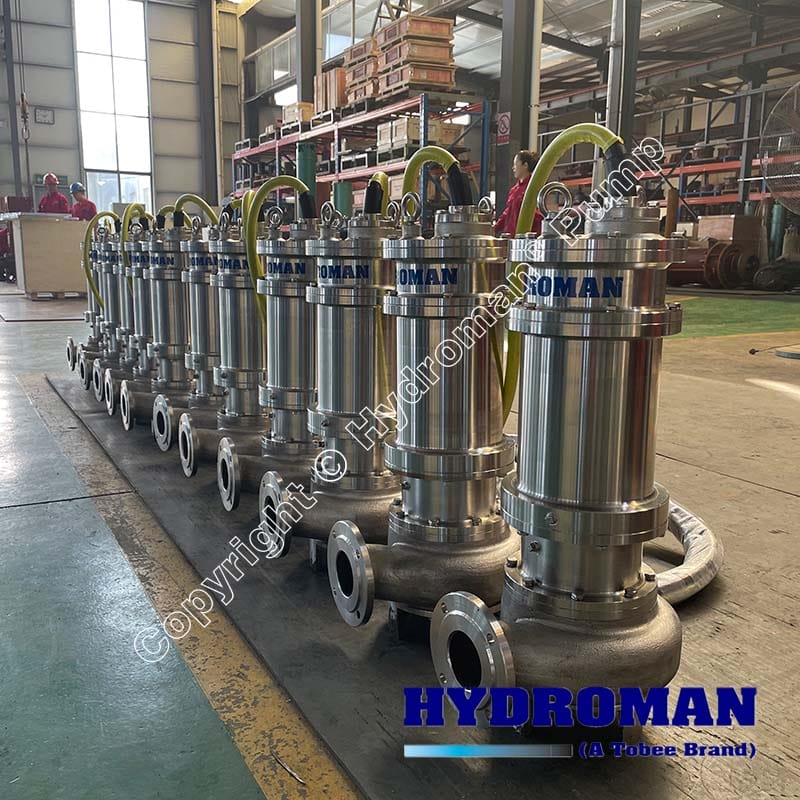
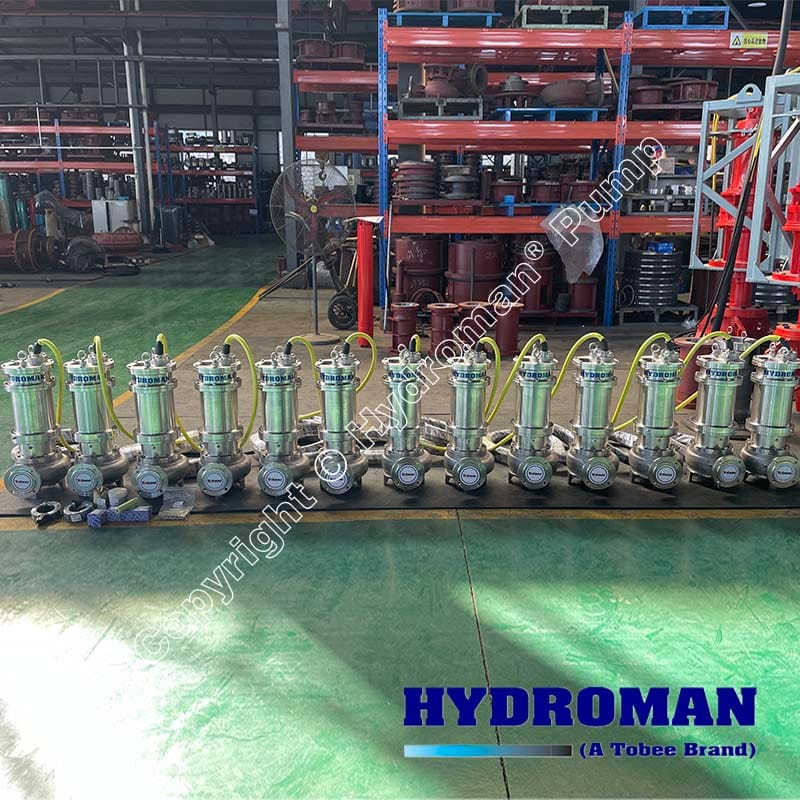
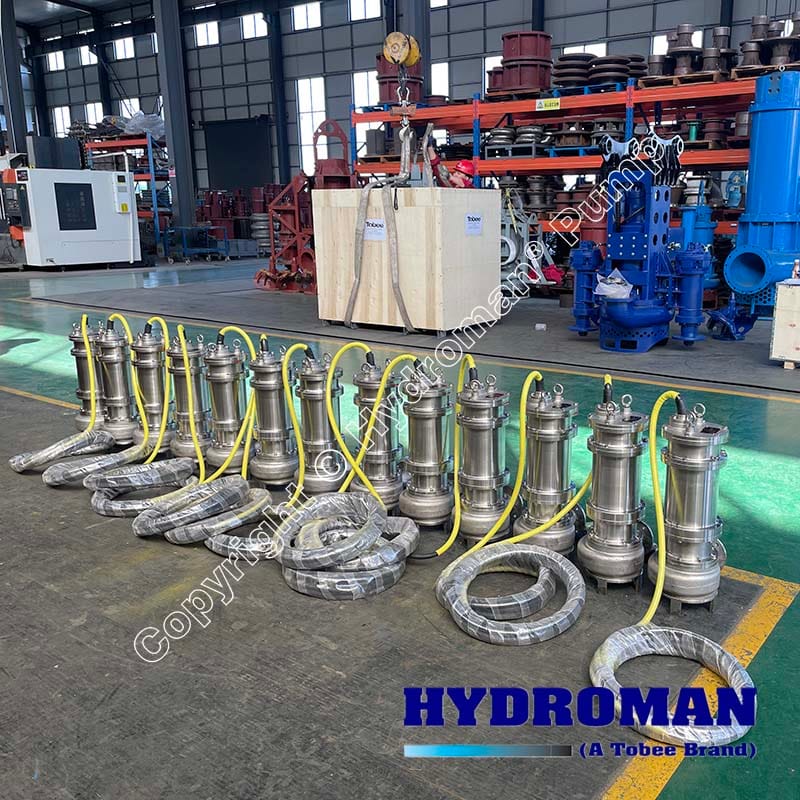
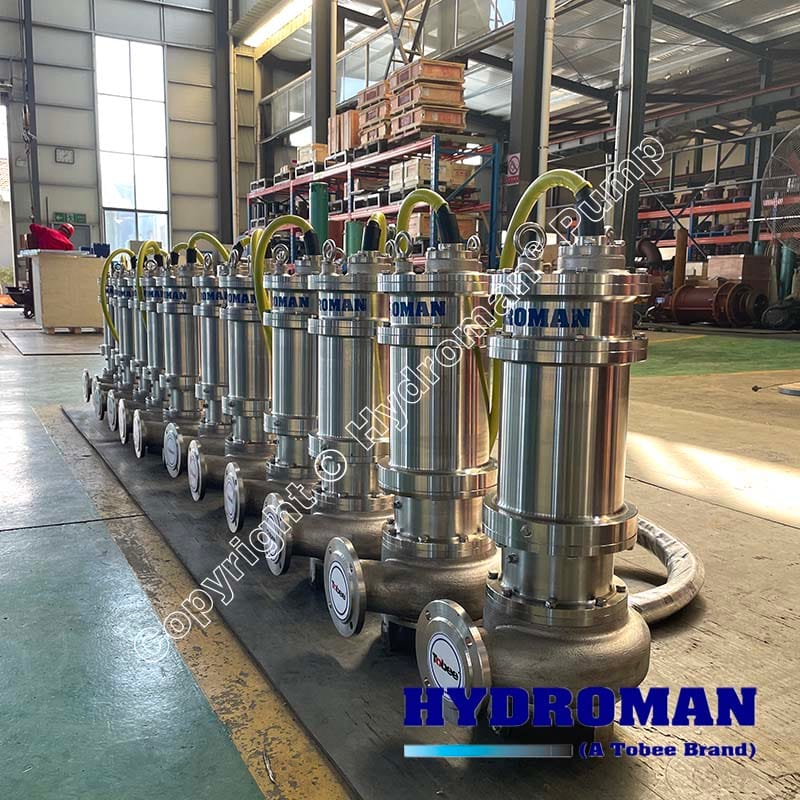
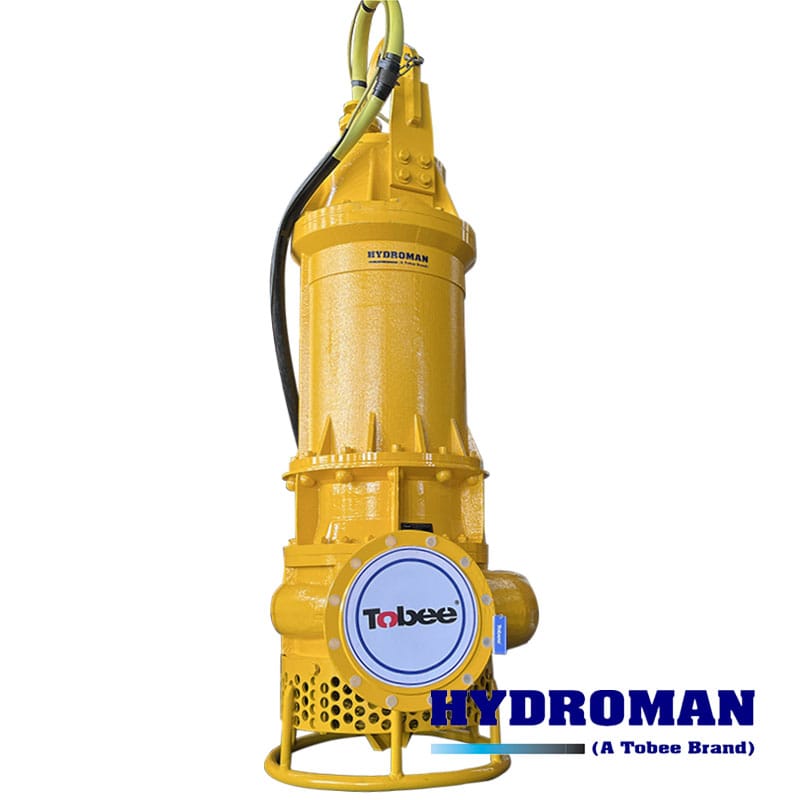
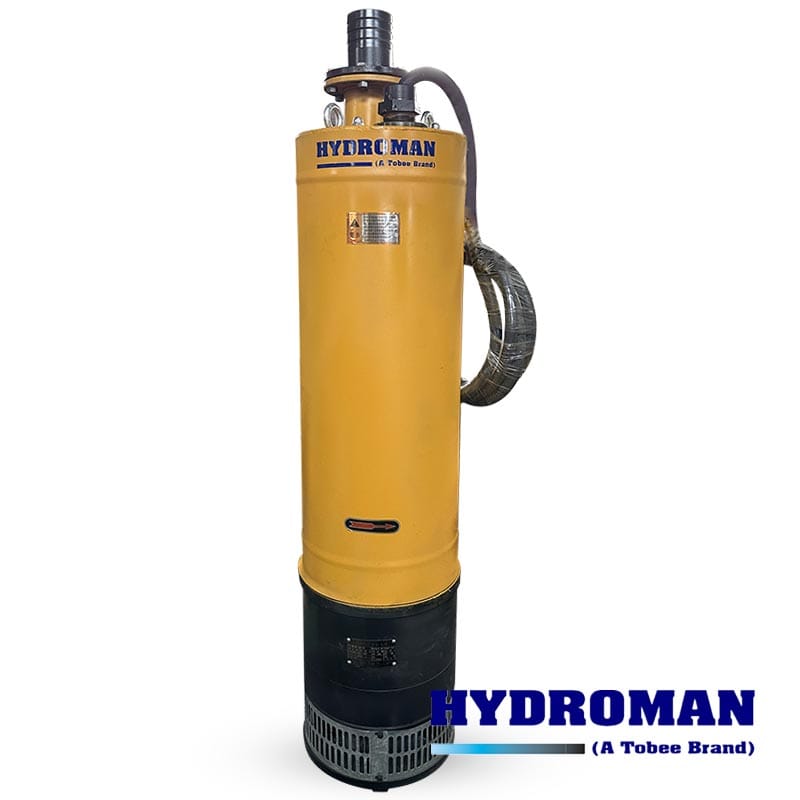
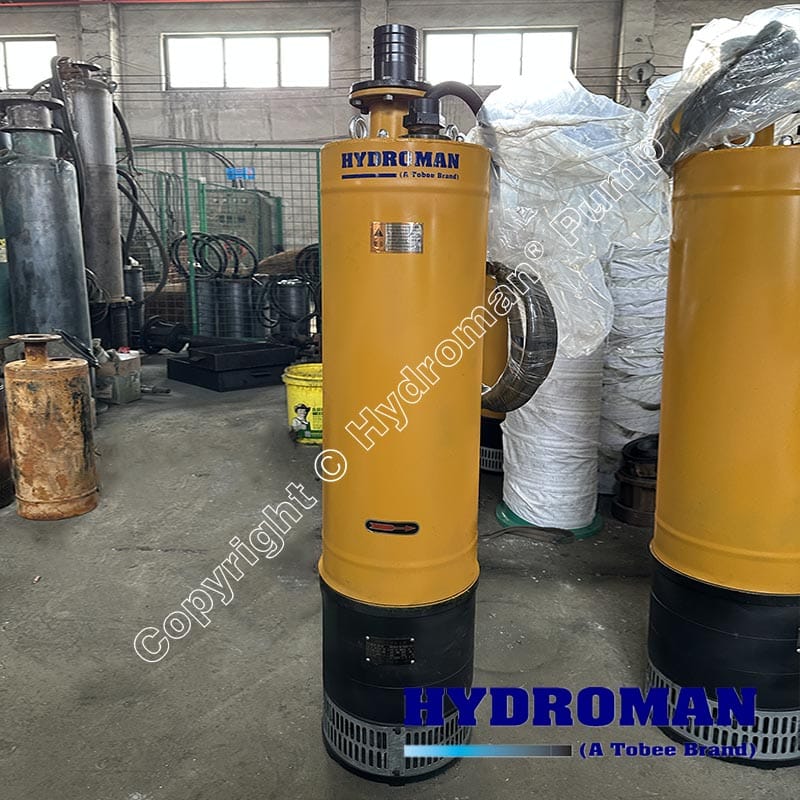
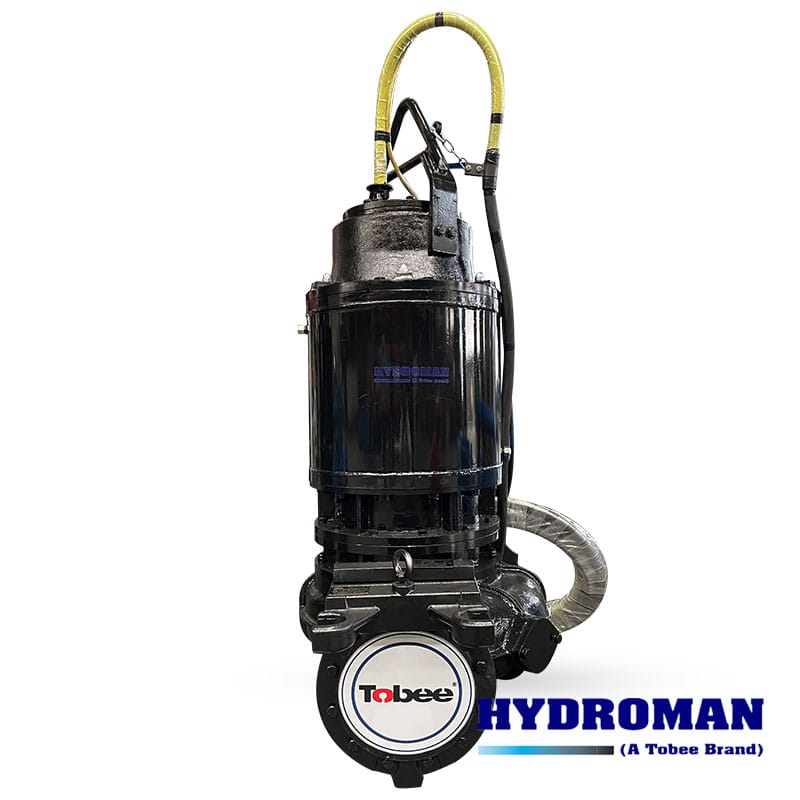
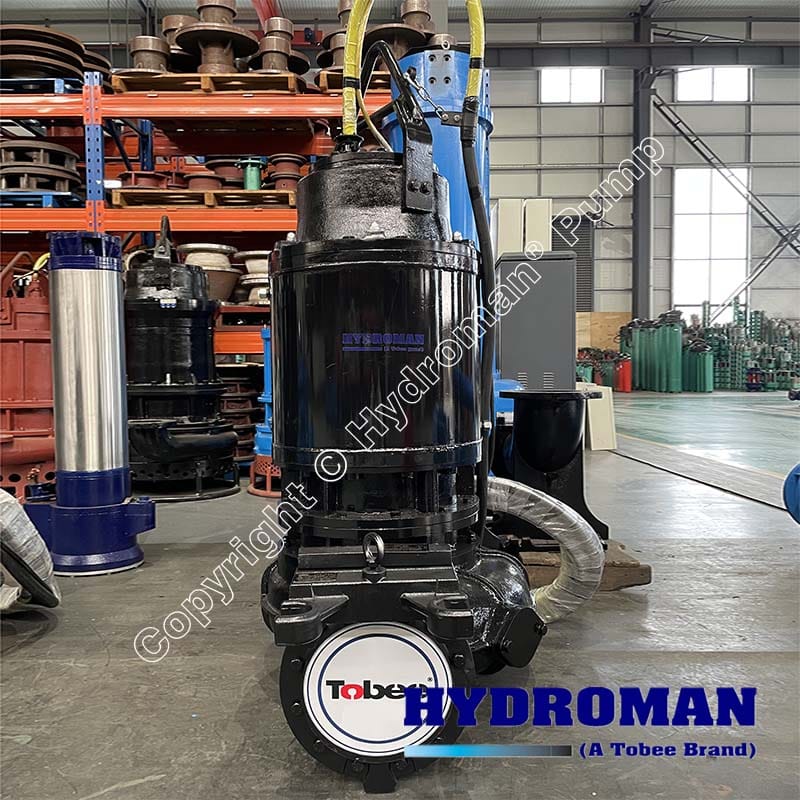
Hydroman® Stainless Steel Material Submersible Sewage Pump for Waste Drainage is engineered for the efficient handling of aggressive, corrosive, and contaminated wastewater, making it ideal for chemical plants, food processing factories, hospitals, and coastal/marine environments. Made from high-grade stainless steel (SS304, SS316, or duplex stainless steel), this pump is designed for long-term submersion and corrosion resistance in demanding waste drainage applications.
• Power Range 0.75 – 315 kW
• Voltage 220V / 380V / 415V / 440V (50/60Hz)
• Max Flow Rate Up to 6000 m³/h
• Max Head Up to 62 m
• Solids Passage Up to 50 mm
• Max Liquid Temperature Up to 60°C (higher with optional seals)
• pH Range 2 – 10 (depending on material grade)
• Material Options SS304 / SS316 / SS316L / Duplex SS
• Protection Class IP68
• Insulation Class H
• Shaft Seal Dual mechanical seals in oil chamber
• Installation Type Auto-coupling, guide rail, or free-standing
• Power Supply & Electrical Checks
Verify that the power supply voltage and frequency match the pump’s motor rating.
Check that the power cables are correctly connected, undamaged, and waterproofed at the entry point.
• Ensure the motor is properly grounded.
Test the insulation resistance of the motor windings (recommended: ≥ 50 MΩ).
Confirm proper phase sequence to avoid reverse rotation (for 3-phase motors).
• Mechanical & Installation Inspection
Confirm that the pump is securely installed on its base, guide rail, or support structure.
Inspect for any physical damage to the pump body, impeller housing, or seals.
Ensure impeller and shaft rotate freely without obstruction.
Check that the mechanical seals are intact and leak-free.
Verify that the auto-coupling system (if used) is properly aligned and sealed.
• Environment & Fluid Conditions
Confirm that the pump is fully submerged before starting.
Make sure the liquid level is above the minimum submersion depth.
Check for debris, stones, or fibrous material near the suction inlet.
Verify that the fluid pH and temperature are within the pump’s allowable range.
Ensure there is no air or gas accumulation in the sump that may cause cavitation.
• Operational Safety Systems
Confirm that float switches or level sensors are working properly (if installed).
Ensure the overload protection relay is correctly set.
Check that the control panel or starter box is functioning and shows no fault alarms.
Inspect any cooling jacket or external water circulation (if applicable).
• Trial Run
Start the pump briefly to check direction of rotation – it should match the arrow on the pump casing.
Listen for any abnormal noise or vibration.
Confirm that discharge flow and pressure meet expected performance.
Stop the pump and check for leaks or abnormal heat at cable entry or motor body.
• Municipal Sewage Systems: Lift stations, wastewater treatment plants.
• Industrial Waste: Chemical plants, food processing, pulp/paper mills.
• Stormwater Management: Flood control in urban or coastal areas.
• Marine Environments: Ports, shipyards, offshore platforms (saltwater-resistant).
• Agriculture: Drainage of slurry, manure, or silage.
Contact Us for Your Customized Sewage Pumping Solution!
Contact: Jasmine Huang
Mob/WhatsApp: +8618132668739
Email: Sales10@tobeepump.com
Submitted successfully
Your submission has been received. Thanks for your time

 FR(EUR)
 CN(CNY)
 GB(GBP)
 AU(AUD)





Reviews
0%
0%
0%
0%
0%
Share your thoughts with other customers
Write a Review