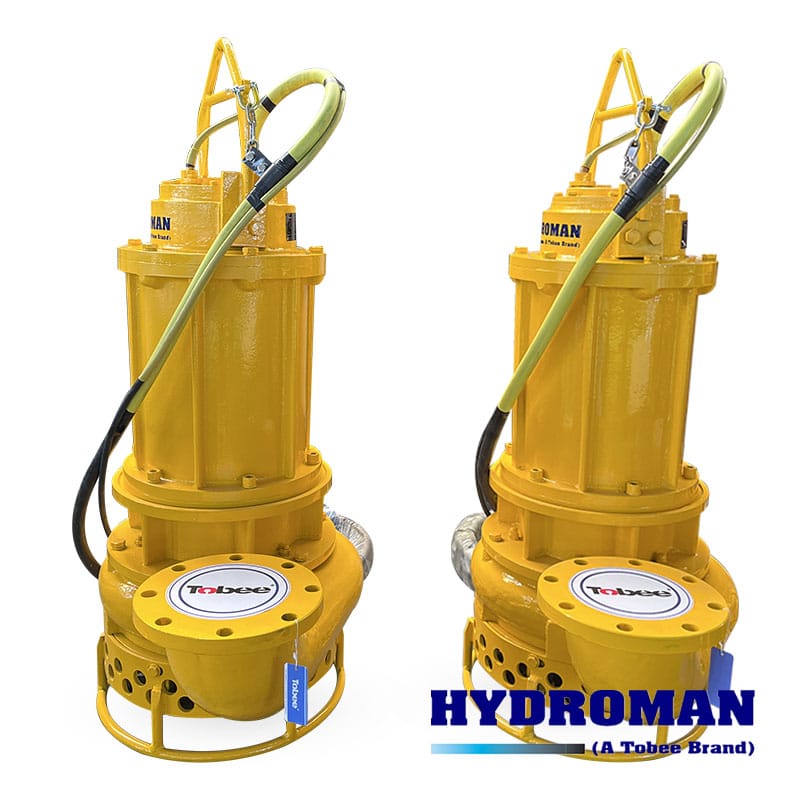
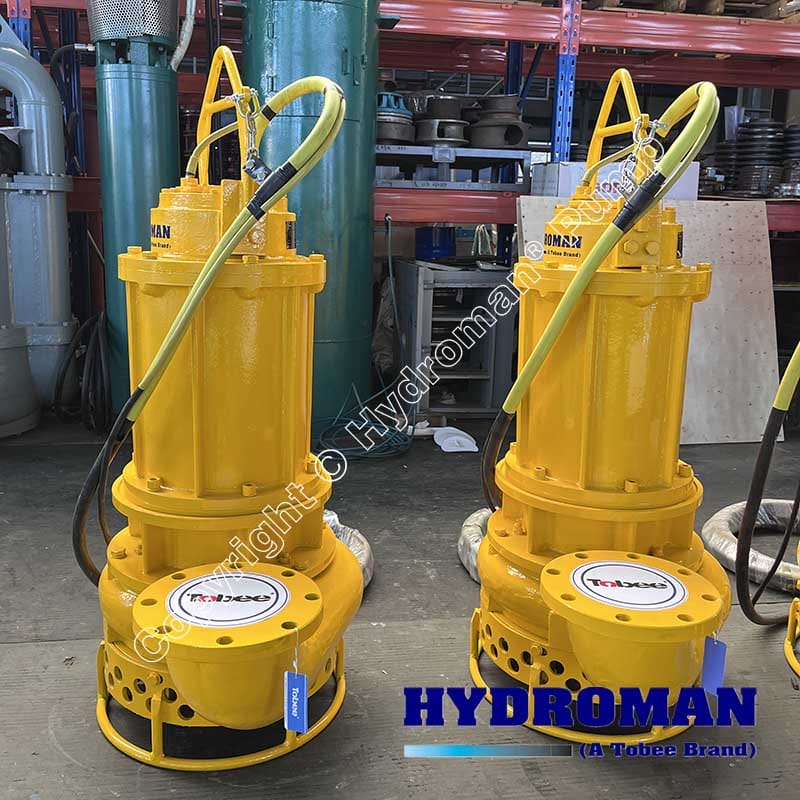
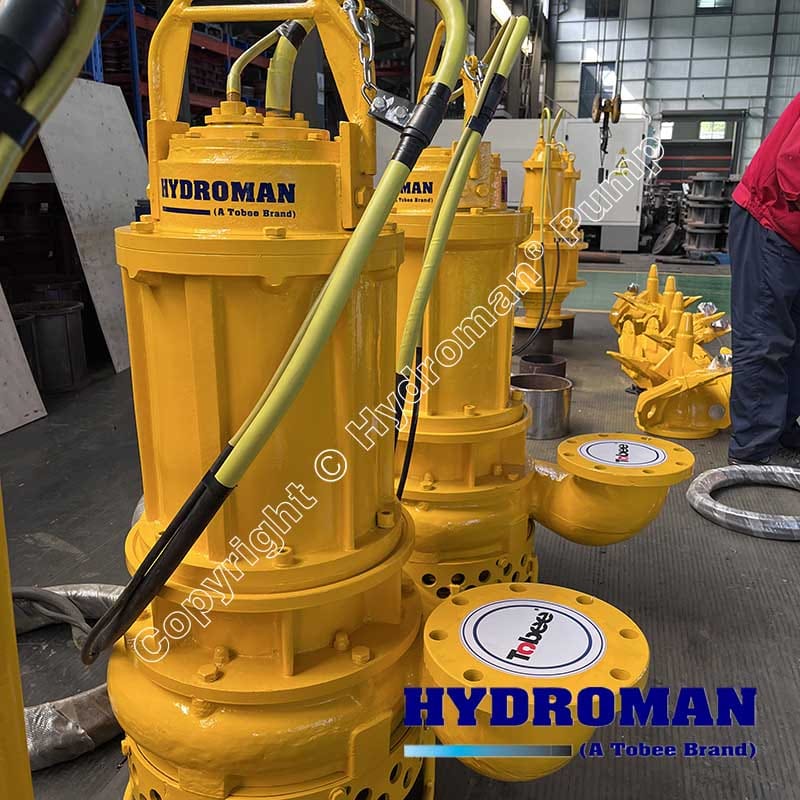
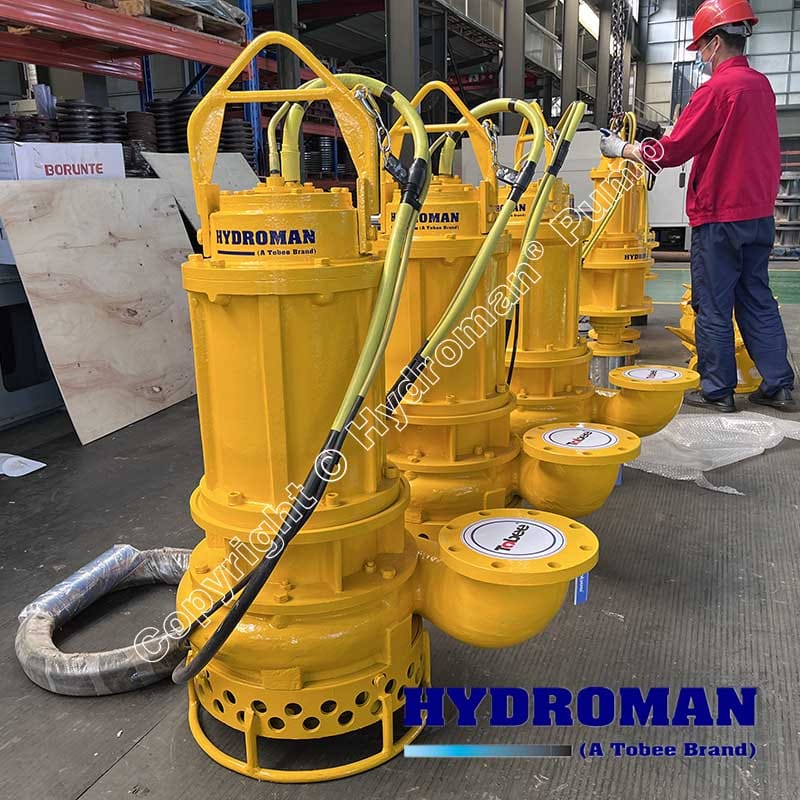
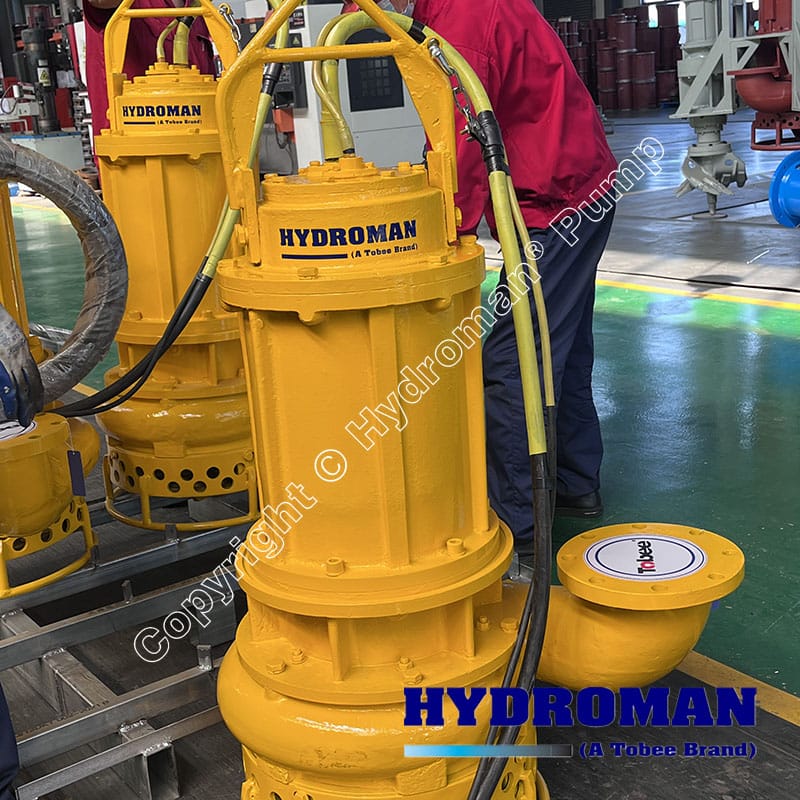
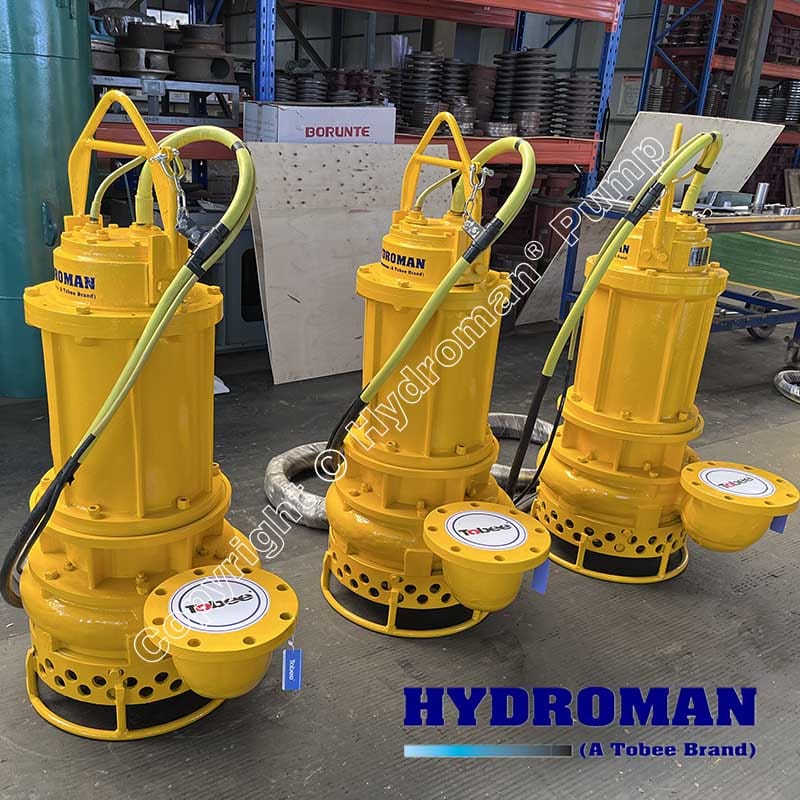
If you've ever run a dredging job where the slurry line kept choking on sand, or a mud pump burned out a wear plate three weeks into a project, you already know why a purpose-built heavy duty submersible dredge pump matters. Ordinary pumps aren't designed to swallow gravel, tolerate 60–70% solids by weight, or sit fully submerged in abrasive slurry for months at a time. The Hydroman submersible dredge pump is.
You lower it straight into the water, sediment pond, or tailings basin — no priming, no suction pipe, no external pump house. Inside, a high-chrome alloy impeller and wear liner do the heavy lifting, moving sand, sludge, sediment and other abrasive solids through the discharge line at rates that keep a real dredging schedule moving. It's the same working principle used across river restoration, mining, and industrial sludge removal projects worldwide: this dredging slurry pump is built to run hard, run long, and be rebuilt in the field rather than replaced.
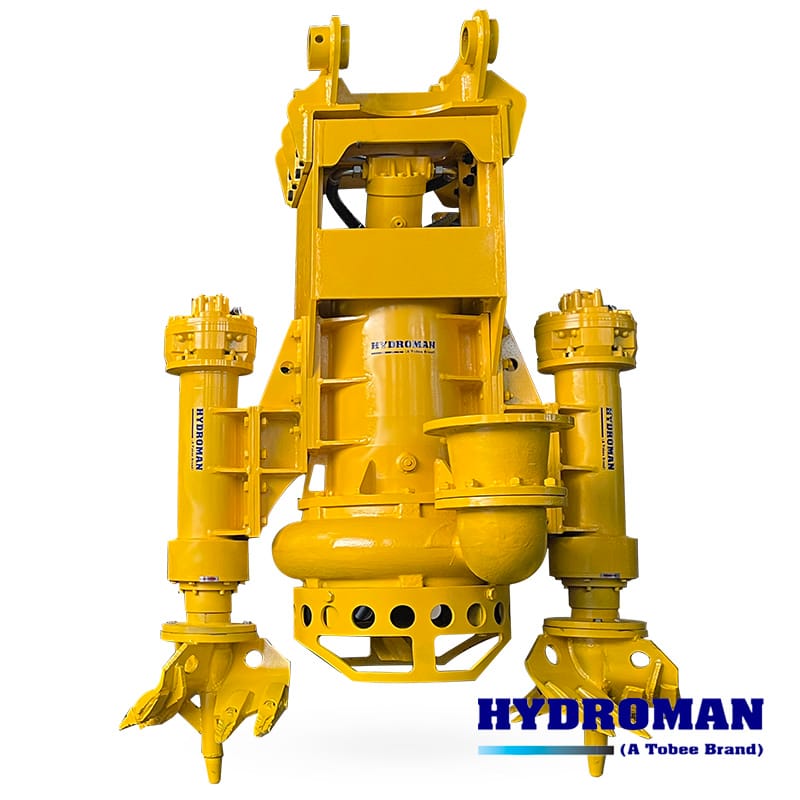
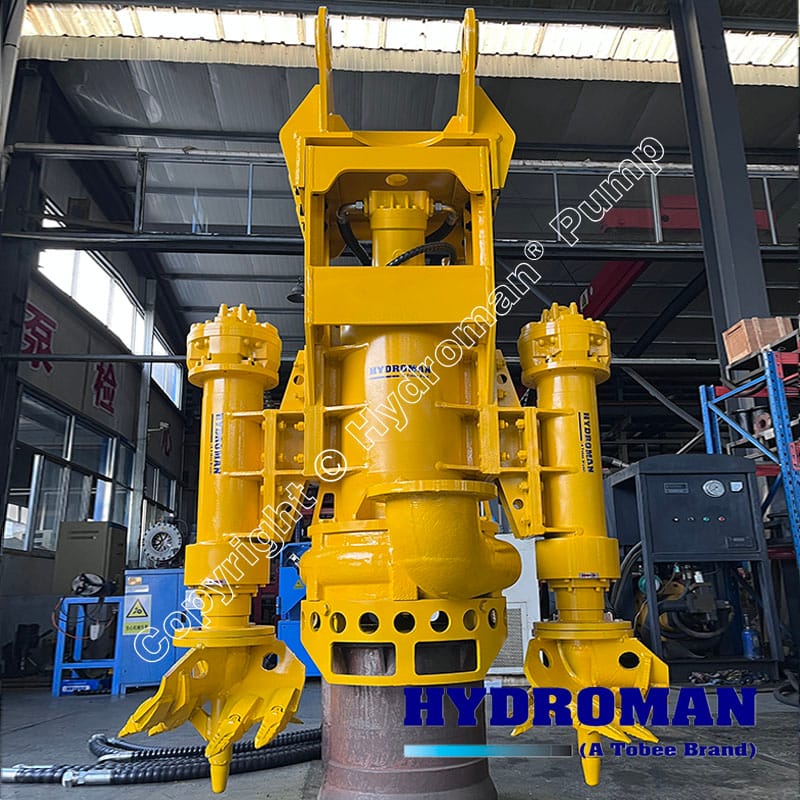
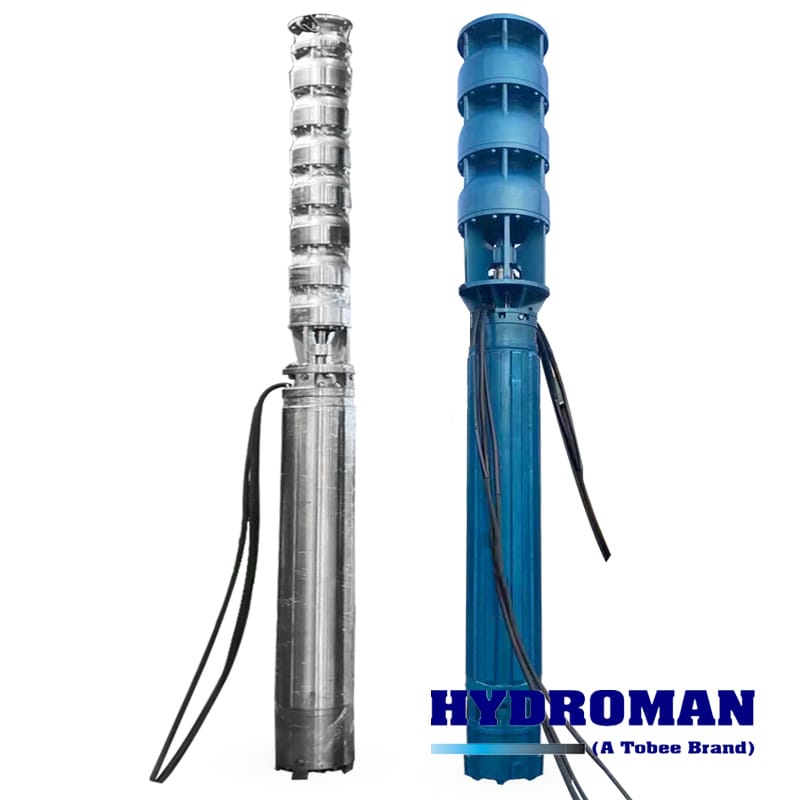
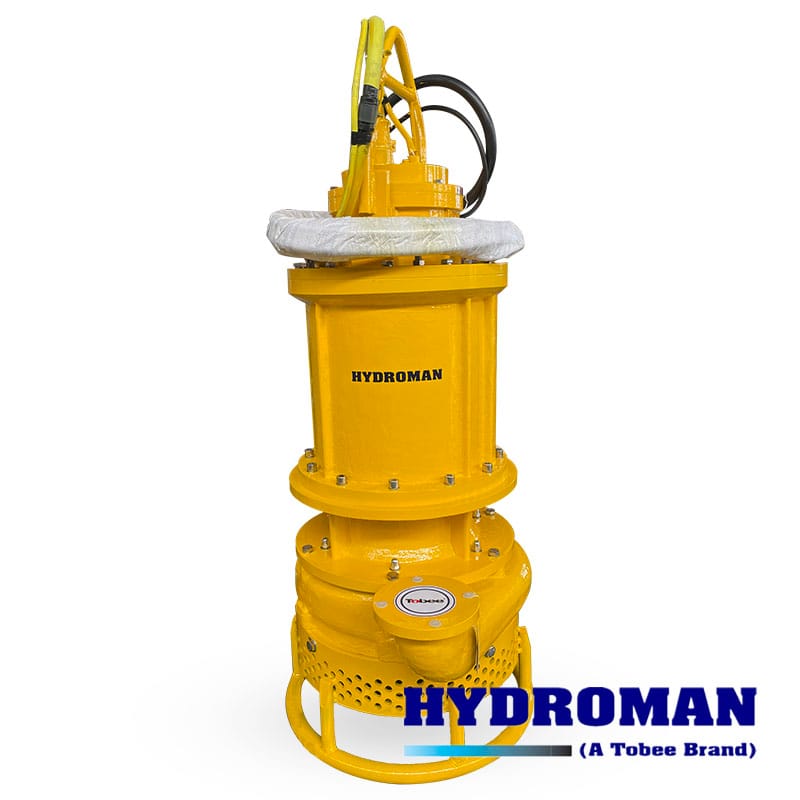
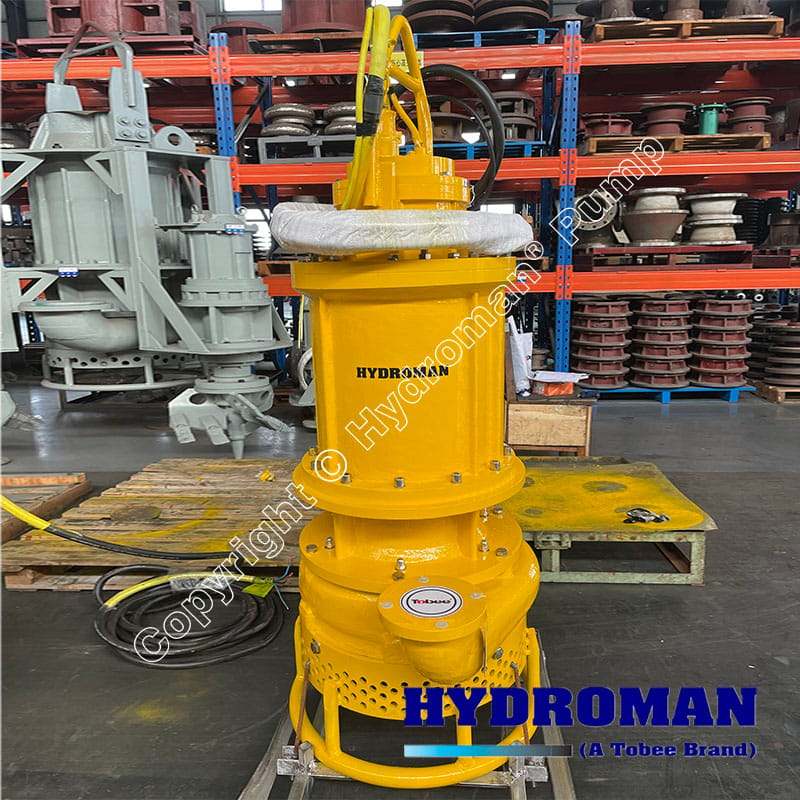
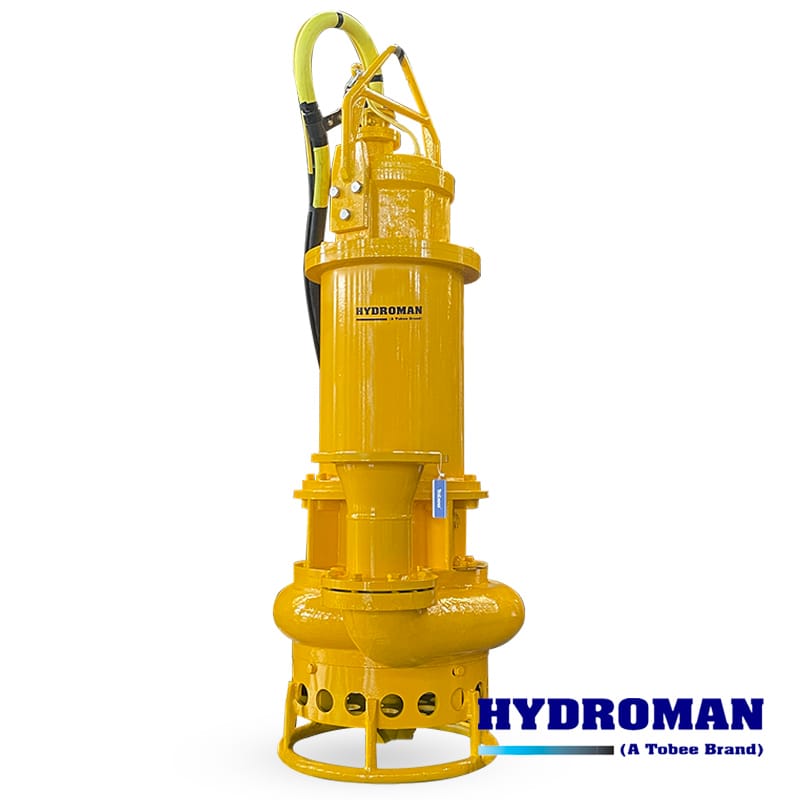
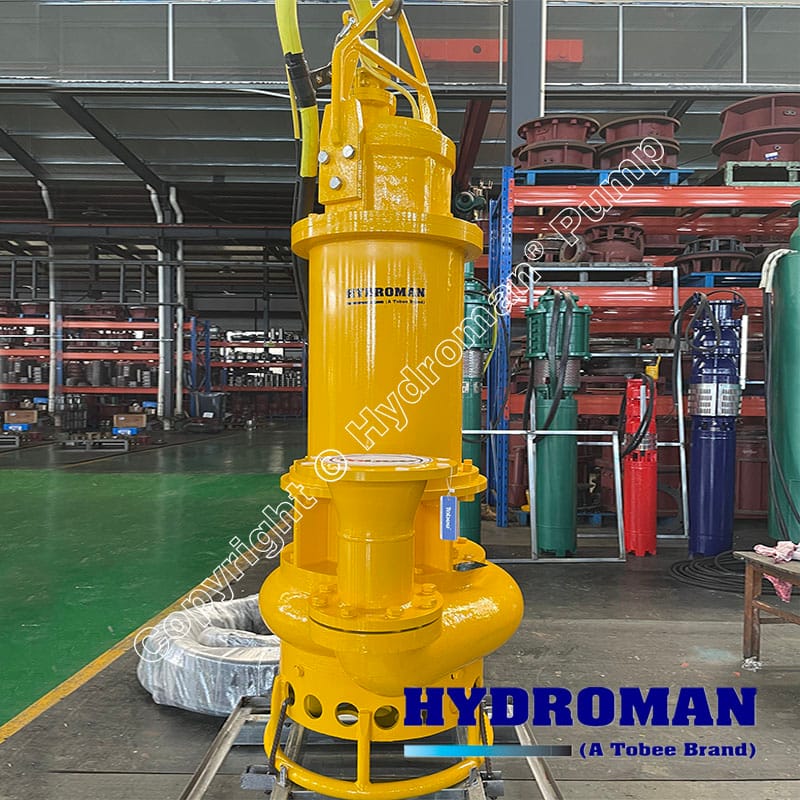
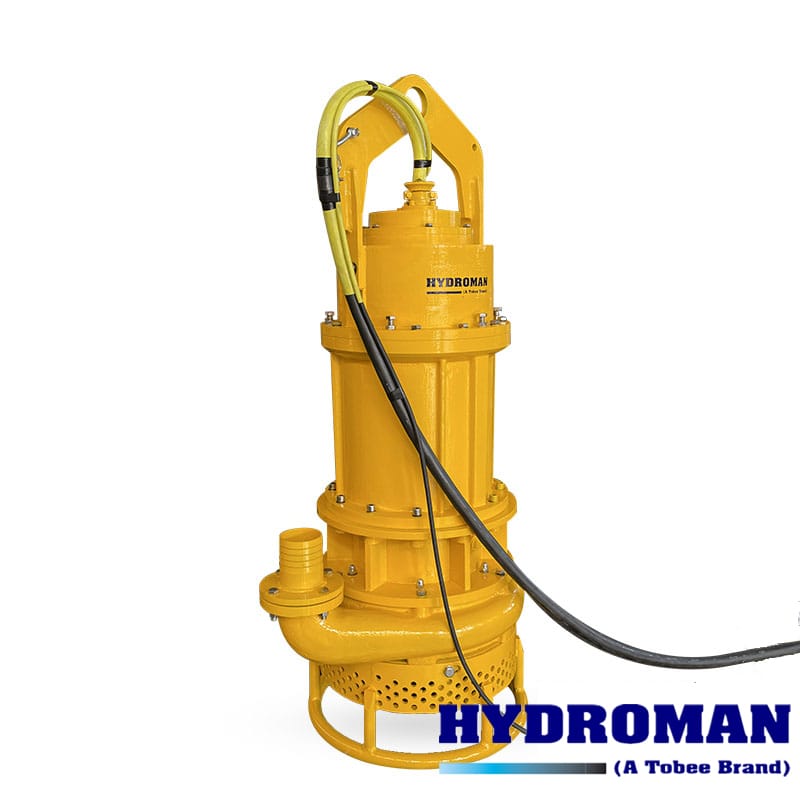
A heavy duty submersible dredge pump is an electric-driven centrifugal pump engineered to operate while fully underwater, pulling in high-density slurry and pushing it through a discharge pipeline to a settling pond, dewatering unit, or disposal site. Unlike a dry-mounted pump that needs a separate suction line and priming system, a submersible mud pump like this one goes directly into the material you're dredging — a river bottom, a silted-up pond, a tailings dam — and works from inside the slurry itself.
The working principle is straightforward, but the engineering behind it isn't:
The motor drives the impeller → slurry and suspended solids are drawn into the pump chamber → solids pass through the volute and are discharged through the pipeline.
What separates a real heavy duty unit from a light-duty sump pump wearing a "dredge pump" label is what happens at every one of those steps under abrasive load — the impeller clearance, the liner hardness, the seal design, and how the pump behaves when solids content spikes from 20% to 60% in the middle of a shift. That's where Hydroman's engineering shows up.
Heavy Duty, Wear-Resistant Construction
The wetted parts — impeller, wear plate, and volute liner — are cast from high-chrome alloy, typically in the 25–28% chromium range with hardness ratings around 58–62 HRC. That matters more than it sounds: field data on Cr28 high-chrome components shows wear rates roughly 18–25% lower than standard cast iron or mild steel parts under equivalent abrasive load. In practice, that's the difference between rebuilding wear parts every few hundred hours and running several thousand hours between liner changes. This is the foundation of what makes it a genuine abrasive sand pump rather than a general-purpose slurry pump pressed into dredging duty. | 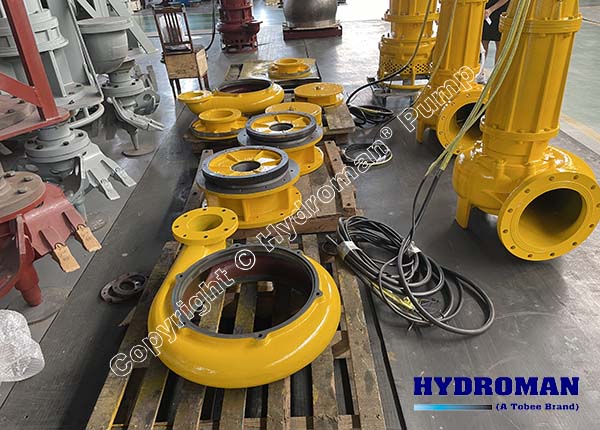 |
 | High Solids Handling Capability
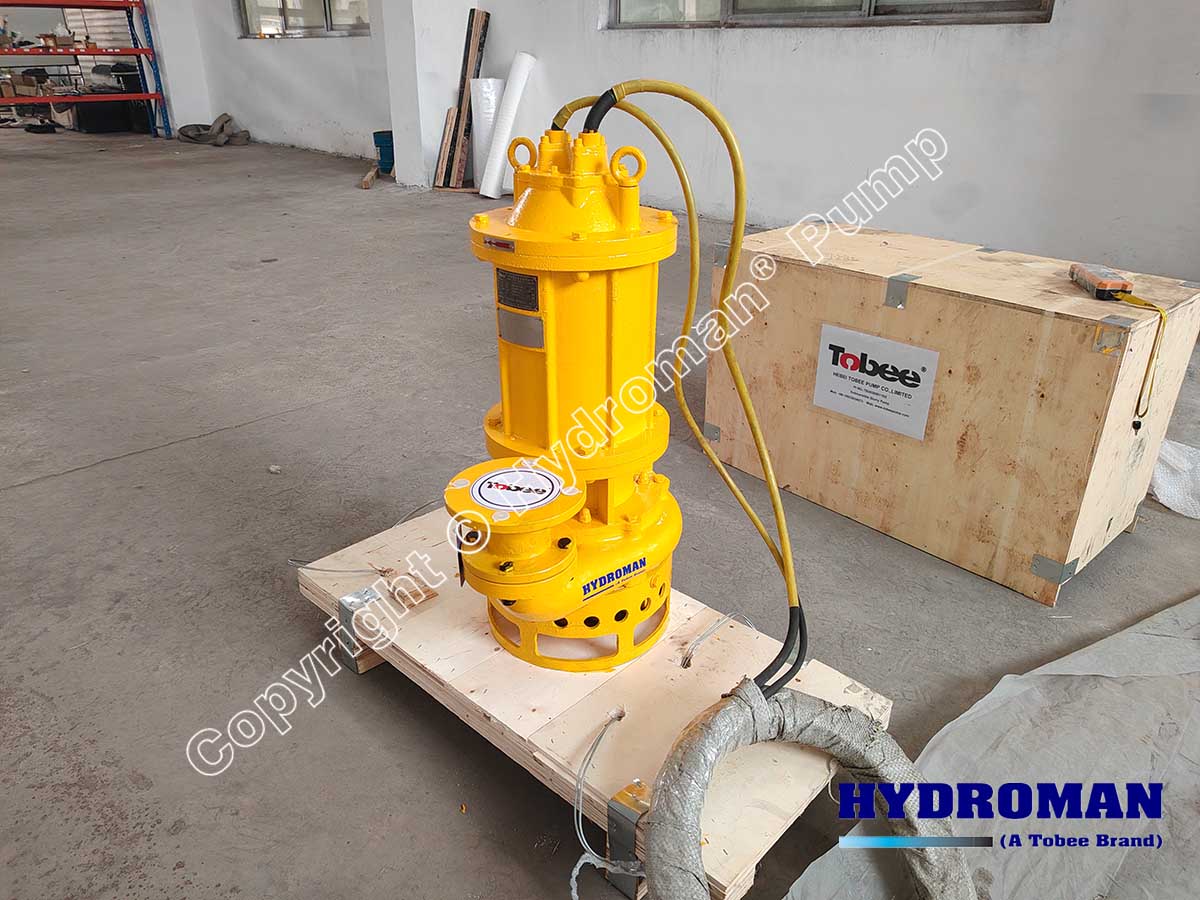
This pump is engineered to move slurry loaded with sand, gravel, sludge, sediment, and mineral fines — not clean water with a bit of grit in it. Depending on the model and impeller configuration, Hydroman's electric submersible slurry pumps handle solids concentrations up to roughly 60–70% by weight, with maximum particle sizes typically in the 40–120 mm range across the range. That's what qualifies it as a true high solids slurry pump and solids handling pump — it's built around the assumption that solids are the job, not an inconvenience.
|
Powerful Sand and Sediment Pumping Performance
A large free-passage impeller design lets bigger particles pass through without bridging or clogging at the eye of the impeller — a common failure point on cheaper pumps working sandy or gravelly material. Combined with a spiral discharge path that keeps solids moving rather than settling inside the casing, this gives the pump stable output even as slurry density fluctuates, which is exactly what you need from a sediment dredge pump or heavy duty sand pump working a variable riverbed or pond floor. | 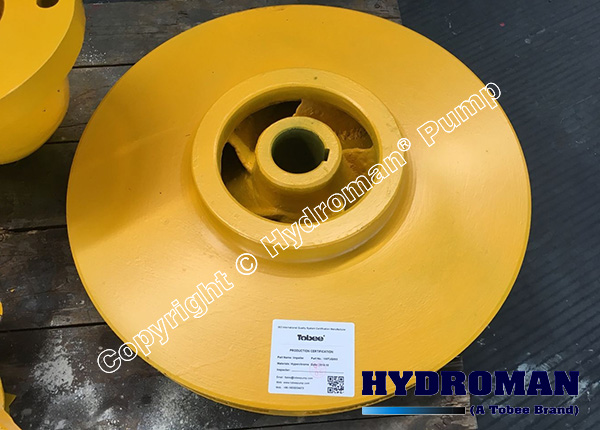 |
 | Optional Agitator System for Sediment Suspension
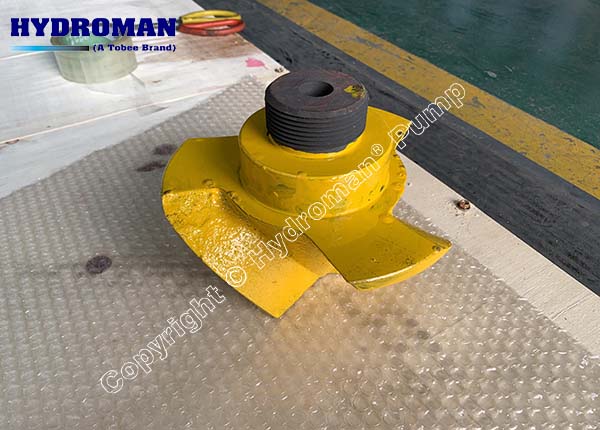
On models fitted with an agitator, a high-chrome agitator blade spins at the pump's base, breaking up settled or compacted material — clay-heavy sediment, consolidated silt, packed sand — and lifting it into suspension where the impeller can draw it in. Without this, a submersible pump sitting on top of hard-packed sediment can starve for solids even while surrounded by material. With the agitator running, you get consistent slurry density and far less manual repositioning, which is a major reason this stays a reliable submersible mud pump even in sticky, cohesive material. |
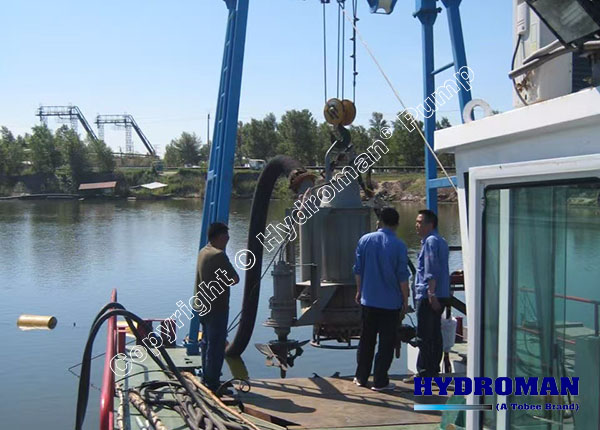
For river restoration, lake cleaning, and reservoir dredging, a submersible dredge pump lets you work directly from a barge, pontoon, or crane without building a shore-based suction system. As a river dredging pump, it handles the variable mix of silt, sand, and organic debris typical of natural waterways while maintaining flow through long discharge runs to a settling basin — Hydroman units are commonly configured for pipeline runs from a few hundred meters up to over a kilometer, depending on head and pipe diameter.
In aggregate operations, this pump is used for underwater sand recovery and gravel extraction, feeding directly into a screening or washing plant. As an abrasive sand pump and heavy duty sand pump, it's built for the continuous, high-wear duty cycle that dry-land pumps simply weren't designed for.
Mine slurry, tailings transfer, and mineral processing circuits push abrasive, high-density material around the clock. As a high solids slurry pump, the Hydroman unit is set up for exactly this — sustained operation against dense mineral slurry without the impeller and liner wearing out within weeks.
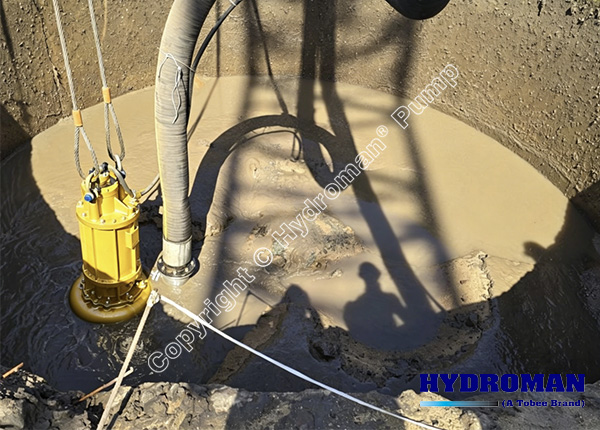
Sludge ponds, wastewater treatment sediment, and industrial waste basins accumulate heavy, often sticky material that ordinary pumps can't move efficiently. Here, the pump's role as a submersible mud pump comes through clearly — particularly with the agitator option engaged to keep settled sludge in suspension.
Some manufacturers take a standard slurry pump and market it for dredging. Hydroman designs the wear parts, impeller clearance, and seal arrangement specifically around continuous exposure to sand, gravel, and mineral abrasives from the start — this is what makes it a genuine abrasive sand pump suited to harsh, unpredictable field conditions rather than a pump that happens to tolerate them.
Thick slurry — the kind with high viscosity and heavy solids loading — is where most pumps lose efficiency fast. Hydroman's impeller and volute geometry are tuned to maintain stable flow and head even as slurry density climbs, which is why it holds up as a genuine thick slurry pump under load instead of just on paper.
Wear-resistant components extend service intervals, and a design built around field serviceability — replaceable liners and wear plates rather than full casing replacement — means less time pulling equipment out of the water and more time dredging. Double mechanical seal arrangements, used across Hydroman's submersible range, add a second layer of protection against water and abrasive ingress reaching the motor bearings, which is a large part of what keeps unplanned downtime down on long-duration projects.
Actual figures depend on model, discharge size, and impeller configuration, but here's the general range you can expect from Hydroman's electric submersible dredge and slurry pump lineup:
No. | Model | Size (mm) | Capacity Q (m3/h) | Head H (m) | Power P (kW) | Eff. η (%) | Speed n (r/min) | Max. particles (mm) | Weight (kg) |
|---|---|---|---|---|---|---|---|---|---|
| 1 | 200TJQ300-15-30 | 200 | 300 | 15 | 30 | 56 | 980 | 28 | 700 |
| 2 | 200TJQ300-20-37 | 200 | 300 | 20 | 37 | 56 | 980 | 28 | 775 |
| 3 | 200TJQ400-15-37 | 200 | 400 | 15 | 37 | 58 | 980 | 28 | 775 |
| 4 | 200TJQ500-15-45 | 200 | 500 | 15 | 45 | 59 | 980 | 46 | 1100 |
| 5 | 200TJQ350-35-75 | 200 | 350 | 35 | 75 | 53 | 980 | 28 | 1550 |
| 6 | 200TJQ400-25-75 | 200 | 400 | 25 | 75 | 58 | 980 | 25 | 1550 |
| 7 | 200TJQ500-20-75 | 200 | 500 | 20 | 75 | 59 | 980 | 25 | 1550 |
| 8 | 200TJQ400-40-90 | 200 | 400 | 40 | 90 | 54 | 980 | 28 | 1550 |
| 9 | 200TJQ500-25-90 | 200 | 500 | 25 | 90 | 60 | 980 | 25 | 1550 |
| 10 | 200TJQ400-50-110 | 200 | 400 | 50 | 110 | 53 | 980 | 28 | 1970 |
| 11 | 200TJQ400-60-132 | 200 | 400 | 60 | 132 | 53 | 980 | 28 | 2000 |
| 12 | 200TJQ500-45-132 | 200 | 500 | 45 | 132 | 56 | 980 | 28 | 2000 |
| 13 | 200TJQ500-55-132 | 200 | 500 | 55 | 132 | 55 | 980 | 28 | 2000 |
| 14 | 200TJQ650-52-160 | 200 | 650 | 52 | 160 | 58 | 980 | 28 | 2650 |
Need something outside these ranges? Hydroman configures discharge size, power rating, seal type, and wear material to match your slurry density, particle size, and pumping distance — talk to the team with your project numbers and they'll size it properly rather than pushing a stock unit that's close enough.
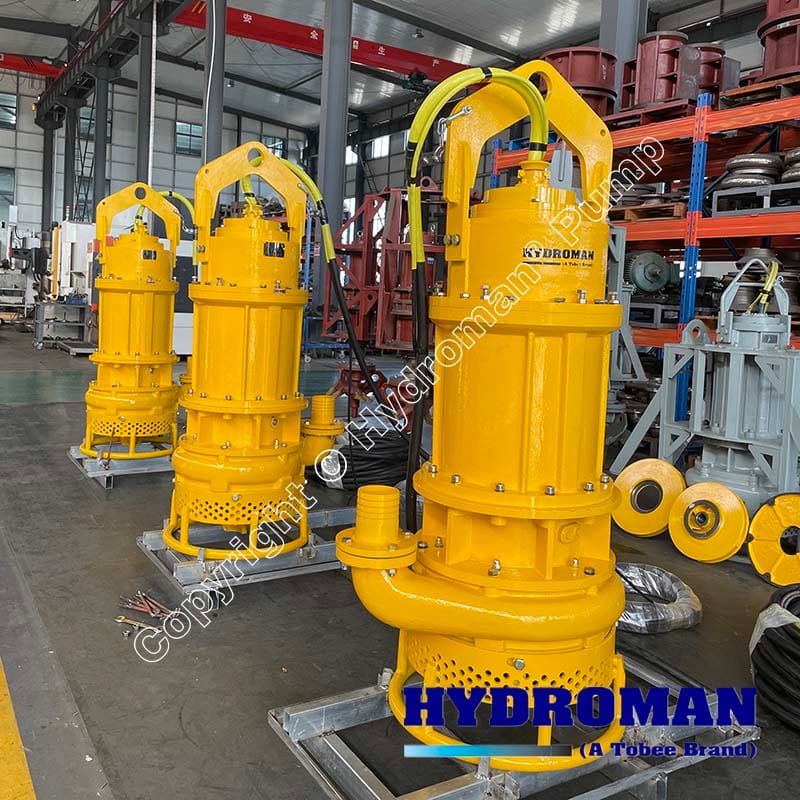
Every Hydroman heavy duty submersible dredge pump is built from the same core assembly, regardless of size:
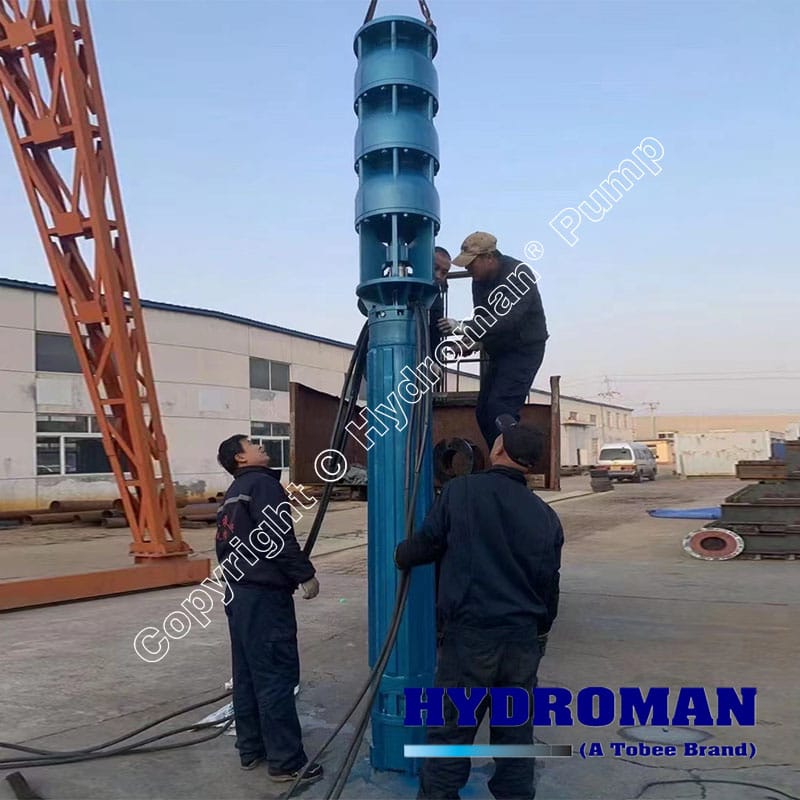
This modular build is a big part of the value: when a wear part finally gives out after thousands of hours of abrasive service, you're replacing a liner or impeller in the field — not shipping the whole pump back for rebuild.
| Feature | Hydroman Submersible Dredge Pump | Traditional (Dry-Mounted) Dredge Pump |
|---|---|---|
| Installation | Lowered directly into the water or slurry — no priming, no suction line | Requires a separate suction system and priming before startup |
| Solids Handling | Built for high solids slurry, up to ~70% by weight | Often limited by suction lift and impeller clearance on dense solids |
| Mobility | Easy to relocate by crane, barge, or excavator as the dredge site shifts | Fixed setup is more complex to move between pump locations |
| Maintenance | Wear-resistant, replaceable-liner design extends service intervals | More frequent full-part replacement in abrasive service |
Picking the right size pump isn't about choosing the biggest number on the spec sheet — it's about matching the pump to what's actually coming through it. A few things worth working out before you order:
Flow rate and head depend on how far and how high you need to push slurry — a short pipeline to an adjacent settling pond needs far less head than a run up and over a levee to a distant discharge point. Slurry density and solids concentration determine whether you need a standard impeller or one built for the top end of the solids range, since a high solids slurry pump running at 60%+ solids needs a different clearance setup than one moving 15% solids water. Particle size sets your minimum free-passage requirement — feeding gravel through an impeller sized for silt is a fast way to clog a line or crack a casing. And duty cycle matters too: a pump running 20 hours a day on a mining tailings line wears differently than one used for occasional pond cleanout.
As a general rule, if you're unsure between two sizes, undersizing a solids handling pump costs you productivity every single day, while oversizing mostly costs you upfront capital and a bit of extra power draw — the safer error, when in doubt, is usually to size up on discharge and impeller capability rather than down.
 |  |
It's an electric-driven centrifugal pump designed to operate fully submerged, pumping high-density slurry containing sand, sludge, sediment, and other abrasive solids directly from the dredge site through a discharge pipeline.
Yes — that's the core job. Hydroman's units are built with high-chrome wear parts and large free-passage impellers specifically to move sand, gravel, and sediment without excessive clogging or premature wear.
Sand, gravel, mud, silt, sludge, mineral slurry, tailings, and other abrasive solid-liquid mixtures, generally up to 60–120 mm particle size depending on the model.
In practice the terms overlap heavily — a submersible mud pump and a submersible dredge pump are often the same piece of equipment. Where there's a distinction, "mud pump" tends to emphasize thick, sticky, low-flow material (like pond sludge), while "dredge pump" is used more broadly for any high-solids slurry transfer in dredging work, including sand and gravel.
Yes. Depending on configuration, Hydroman submersible slurry pumps handle solids concentrations up to roughly 60–70% by weight, which puts them solidly in high-solids slurry pump territory rather than standard dewatering pump range.
An agitator at the pump base breaks up and suspends settled or compacted sediment, so the impeller has a consistent flow of solids to draw in rather than starving on top of undisturbed material. It's particularly useful on clay-heavy or long-settled sediment.
River restoration, channel maintenance, lake and reservoir dredging, harbor and canal cleaning, and contaminated sediment removal are all common uses for a river dredging pump of this type.
It varies with abrasiveness and duty cycle, but high-chrome wear parts (25–28% chromium, ~58–62 HRC hardness) commonly deliver several thousand hours of service between liner or impeller replacement — field data on this grade of alloy shows wear rates roughly 18–25% lower than standard cast materials under comparable abrasive load, which is a major factor in total cost of ownership over the life of the pump.
Whether you're clearing a silted-up reservoir, moving mine tailings, or dredging a harbor channel, the right pump comes down to matching flow, head, particle size and solids concentration to your actual site conditions — not picking off a catalog page. Send Hydroman your project details — pipeline length, slurry density, particle size, and duty cycle — and get a submersible dredge pump sized specifically for the job, backed by high-chrome wear parts built to last through it.
Talk to a Hydroman pump engineer today and get a configuration, lead time, and quote for your heavy duty submersible dredge pump.
Name: Bella Zhang
Submitted successfully
Your submission has been received. Thanks for your time

 FR(EUR)
 CN(CNY)
 GB(GBP)
 AU(AUD)







Reviews
0%
0%
0%
0%
0%
Share your thoughts with other customers
Write a Review