
 FR(EUR)
 CN(CNY)
 GB(GBP)
 AU(AUD)
Blog
Submersible Slurry Pumps Explained: A Complete Guide for Industrial Applications
- Jul.22, 2026 10:57:36
- 0 Comments
Submersible Slurry Pumps: What You Actually Need to Know Before You Buy
A practical guide for mining, dredging, construction and wastewater teams choosing between electric, hydraulic, agitator and dredge configurations — with real material and performance data.
Table of Contents
- The Reality of Pumping Slurry — Why "Just Use a Pump" Doesn't Work
- How a Submersible Slurry Pump Actually Moves Solids
- What's Inside: Motors, Wet-End Materials and Wear Life
- Agitator and Cutter Systems: Solving the Settled-Solids Problem
- Electric vs. Hydraulic Drive: Which One Fits Your Site
- Where These Pumps Actually Get Used
- A Realistic Framework for Choosing the Right Pump
- Reference Data: Particle Size, Head, Flow and Wear Materials
- Warman, Tsurumi, KSB, Goodwin, Kirloskar, Texmo — and Where Hydroman Fits
- Why Engineers Keep Coming Back to Hydroman
- Quick Answers to Common Questions
The Reality of Pumping Slurry — Why "Just Use a Pump" Doesn't Work
If you've ever tried running a standard water pump on anything thicker than muddy water, you already know what happens: the impeller wears through in weeks instead of years, the seals fail early, and the whole system chokes the moment particle size or solids concentration climbs. Mining tailings, dredged riverbed sediment, and raw sewage sludge behave nothing like clean water — they're abrasive, dense, and often unpredictable in consistency from one hour to the next.
That's the gap a submersible slurry pump is built to close. Instead of sitting outside the pit or tank and relying on suction lift, the pump goes straight into the material being moved. You get a shorter, more reliable suction path, fewer priming headaches, and a machine engineered from the ground up to survive contact with sand, ore fines, gravel, and grit rather than just tolerate it.
How a Submersible Slurry Pump Actually Moves Solids
The working principle is centrifugal, the same basic physics behind any centrifugal pump — but every detail of the execution changes once solids enter the picture. A sealed, submersible motor turns a shaft connected to an impeller. As the impeller spins, it flings the slurry outward, converting rotational energy into velocity and pressure, and the mixture is pushed out through the discharge pipe while fresh slurry is drawn in behind it.
What separates a slurry-rated design from a standard model is everything around that basic loop: wider impeller passages so larger particles pass through instead of jamming, heavier shaft and bearing assemblies to absorb the impact loading from solids striking the impeller vanes, and — on the toughest duty pumps — an agitator or cutter mounted below the intake to break up compacted or settled material before it ever reaches the impeller eye. Without that pre-conditioning step, a pump can sit in a bed of settled tailings and simply cavitate, pulling in air instead of solids.
What's Inside: Motors, Wet-End Materials and Wear Life
Two things determine how long a slurry pump survives in the field: how well the motor is protected from the environment, and what the wet-end parts are made of.
| On the motor side, a submersible unit has to run fully underwater or partially buried in sediment for extended periods, so the housing needs a genuinely sealed design — not just splash resistance. Reliable units use double mechanical seals with an oil-filled chamber between them, thermal sensors embedded in the windings to cut power before overheating occurs, and Class H or Class F insulation rated for continuous duty rather than intermittent cycling. A moisture-sensing probe that trips an alarm before water reaches the windings is a feature worth asking about specifically, since it's often the difference between a scheduled seal replacement and an unplanned motor rebuild. | 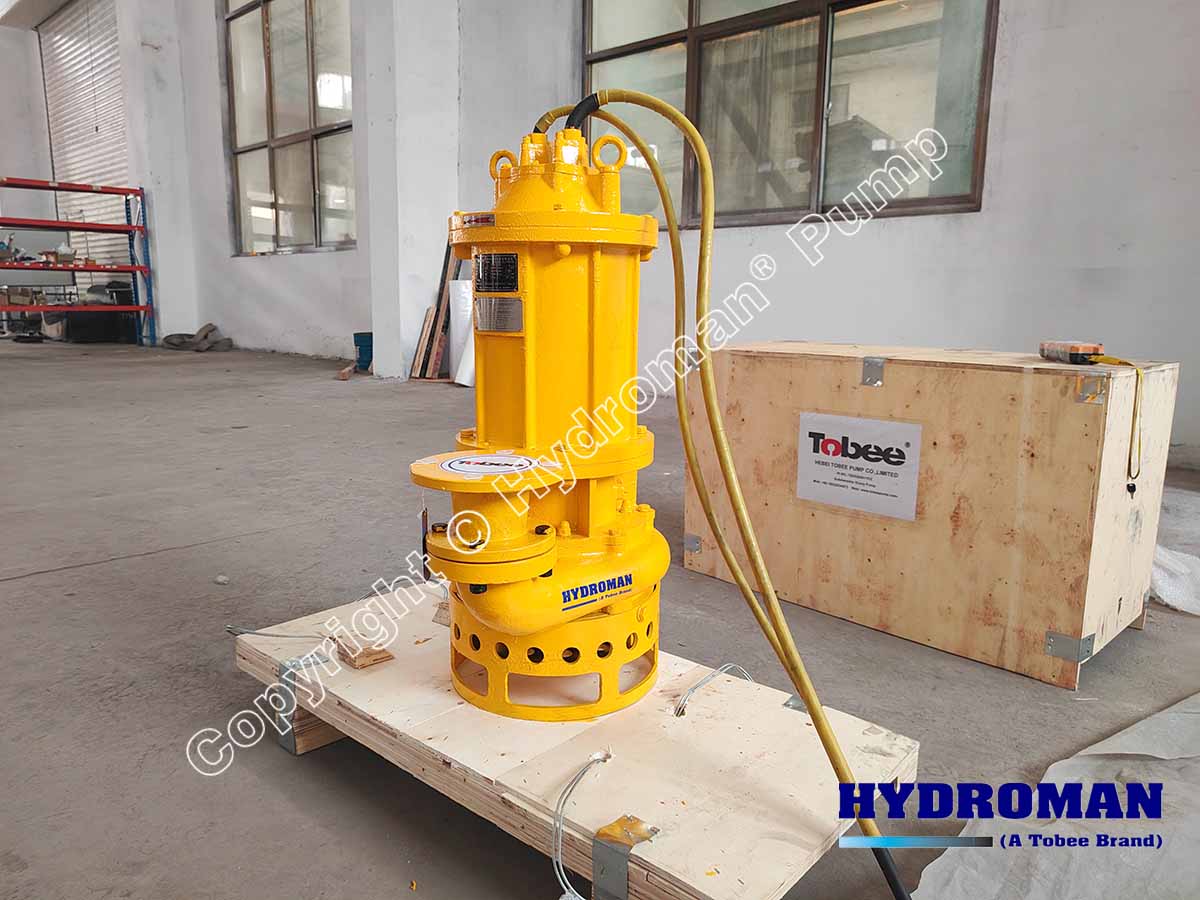 |
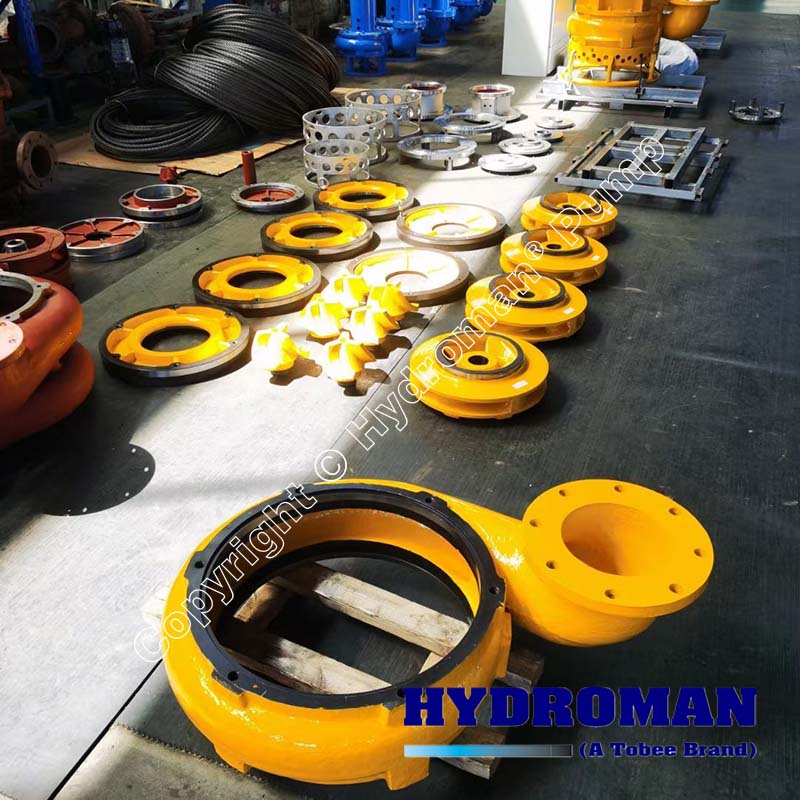 | On the wet end, the industry has largely converged on high-chrome white iron alloys for anything abrasive. The most common grade — generally referred to as A05, containing roughly 26–28% chromium — reaches a hardness in the 56 to 60+ HRC range after heat treatment, with a microstructure of hard chromium carbides set in a martensitic matrix. That combination is what lets an impeller resist gouging from sharp, fractured mineral particles instead of grinding away in a matter of days. For slurries that are both abrasive and corrosive — acidic mine water, for example — some manufacturers step up to higher-chrome or duplex variants that trade a small amount of hardness for better resistance to pitting. Where the application involves rubber-friendly conditions (fine, less angular particles, moderate temperatures) natural rubber or polyurethane linings can actually outlast metal, since they deform around particles instead of being cut by them. |
| Wet-end material | Typical hardness / property | Best suited to |
|---|---|---|
| High-chrome alloy (A05, ~26–28% Cr) | 56–60+ HRC, density ~7,500 kg/m³ | Sharp, coarse, highly abrasive solids — mining ore, tailings, gravel |
| Natural rubber lining | High elasticity, moderate wear resistance | Fine particles, moderate concentration, lower temperature slurries |
| Polyurethane lining | Good abrasion + some corrosion resistance | Fine to medium particles with corrosive content |
| Ni-hard / Cr-Mo white iron | Lower Cr, lower cost, lower corrosion resistance | Budget applications with mild abrasion, non-corrosive slurry |
A well-built submersible slurry pump uses these materials only where wear actually happens — impeller, volute liner, throat bush and frame plate liner — while keeping the rest of the housing in standard cast iron or steel to control weight and cost. That targeted approach is part of why a properly specified heavy duty submersible slurry pump costs more up front but ends up cheaper per ton of material moved.
Agitator and Cutter Systems: Solving the Settled-Solids Problem
Anyone who has run a standard submersible pump in a settling pond knows the frustration: the pump works fine while the slurry is well-mixed, then loses suction the moment solids drop out and pack down around the intake. This is exactly the problem a submersible agitator pump is designed to solve.
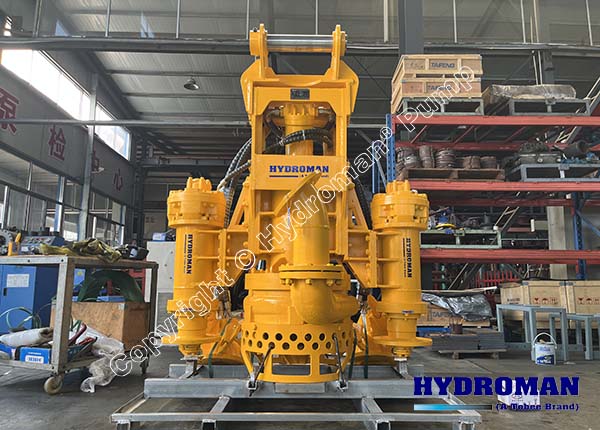
An agitator — sometimes a rotating paddle, sometimes a screw-type mixer mounted just below the impeller — stirs the material directly in front of the suction inlet, keeping settled particles in suspension long enough to be drawn into the pump. On sand and gravel jobs, a submersible sand pump agitator configuration lets the pump work its way down through a bed of material rather than skimming only what's already suspended. For denser or more compacted material, cutter blades ahead of the intake shred clumps and fibrous debris before they reach the impeller, which matters a lot in wastewater applications where rags, roots and other stringy material would otherwise wrap around the shaft.
In practice, a submersible pump with agitator isn't a luxury option for most dredging and tailings work — it's the difference between a pump that runs unattended for a full shift and one that needs constant repositioning to stay in suspended material.
Electric vs. Hydraulic Drive: Which One Fits Your Site
The drive type is usually the first real decision point, and it comes down to how power is available on site and how mobile the pump needs to be.
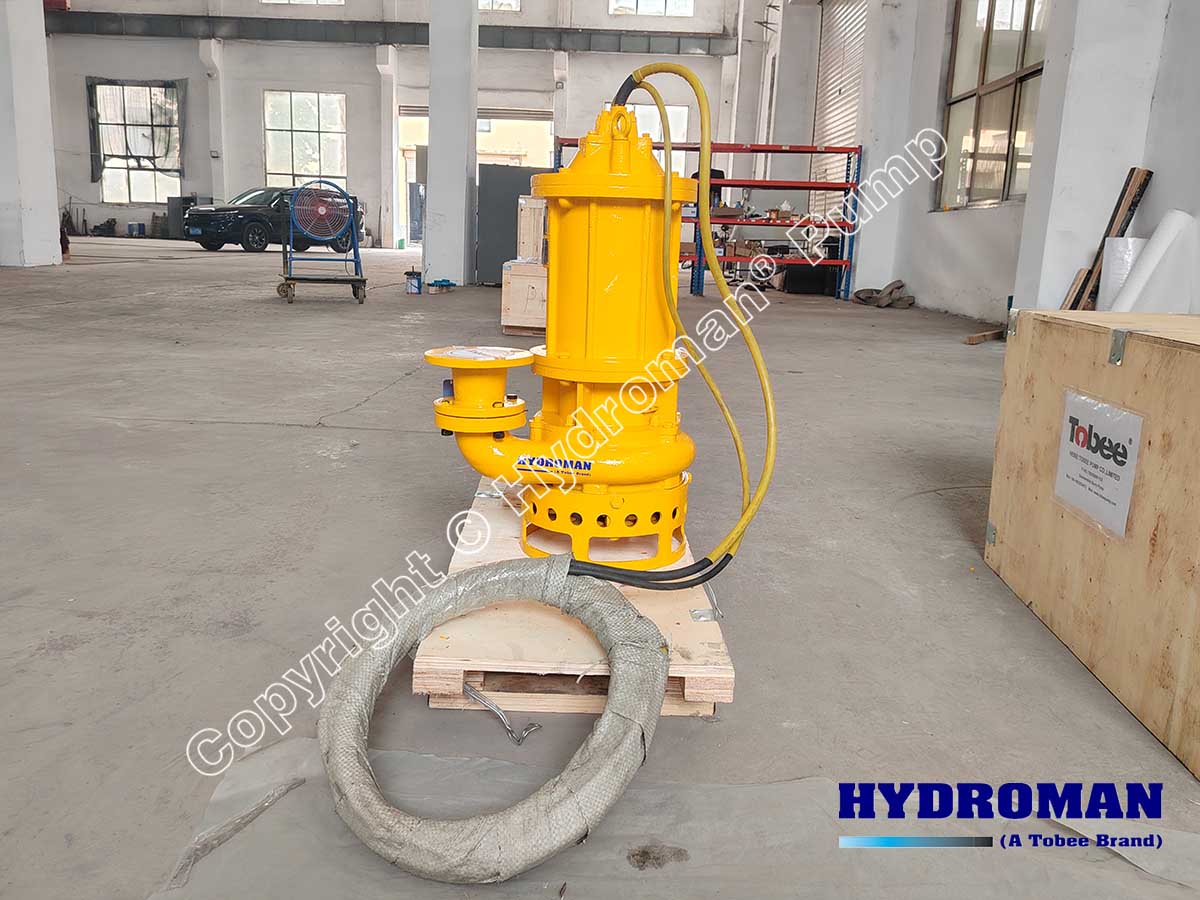
An electric submersible slurry pump is the default choice wherever grid or generator power is already on site — a fixed mine sump, a treatment plant wet well, a permanent dewatering station. It's simpler to control, generally quieter, and easier to automate with float switches or level sensors for unattended operation. A hydraulic submersible slurry pump, on the other hand, runs off a hydraulic power pack or an excavator's auxiliary circuit, which makes it the practical choice for mobile dredging, remote river or lake work, or any site where running mains power to the pit isn't realistic. Because it can be lowered on an excavator arm, a hydraulic unit also handles variable water depth and shifting sediment far more easily than a fixed installation.
| Factor | Electric submersible slurry pump | Hydraulic submersible slurry pump |
|---|---|---|
| Power source | Grid / generator, fixed cable run | Hydraulic power pack or excavator circuit |
| Best fit | Fixed sumps, mine dewatering, plant installations | Mobile dredging, remote sites, excavator-mounted work |
| Mobility | Limited by cable and installation | High — repositioned as fast as the excavator moves |
| Automation | Straightforward level-switch control | Depends on carrier machine controls |
| Typical head range | Up to and beyond 60 m with multistage design | Site-dependent, tied to power pack output |
 |  |
For projects that need serious lift rather than just volume, a high head submersible slurry pump — usually a multistage design stacking several impellers on one shaft — pushes material vertically out of deep pits or up long discharge runs where a single-stage pump would run out of pressure. It's worth checking this spec early, because underestimating head requirement is one of the most common and expensive sizing mistakes on a slurry project.
Where These Pumps Actually Get Used
The core technology stays the same across industries, but the emphasis shifts depending on what's being moved.
Mining and mineral processing
Tailings management, ore concentrate transfer, and process water recovery all depend on pumps that can run continuously against abrasive, high-density slurry. A heavy duty submersible slurry pump earns its keep here specifically because downtime for an unplanned impeller change can cost far more than the pump itself.
Dredging and sand recovery
River, lake and harbor dredging call for a submersible dredge pump that can sit directly in sediment and keep working as it's advanced through a cut. Combined with an agitator, a submersible sand dredging pump with agitator handles the packed, settled sand at the bottom of a channel far more effectively than a pump relying on suction alone.
Construction dewatering
Excavation slurry, concrete washout water and muddy site runoff need to move fast without wrecking a standard dewatering pump. This is usually where a mid-range submersible slurry pump earns its keep — tough enough for grit and small stones, without the cost premium of a full mining-grade unit.
Wastewater and sludge treatment
Municipal and industrial plants rely on a submersible sludge pump — sometimes specified as submersible pump for sludge or submersible sludge slurry pump depending on solids content — to move thickened sludge, digester feed and return activated sludge without clogging on rags or fibrous debris. A sludge pump submersible design with a cutter or vortex impeller is common here specifically to deal with that fibrous content.
A Realistic Framework for Choosing the Right Pump
Most sizing mistakes come from skipping straight to flow rate and head without first understanding what's actually in the slurry. Before comparing pump models, it helps to nail down a few numbers.
Start with particle size and specific gravity — the two variables that determine both wear rate and how much the pump has to work to keep solids suspended. Then look at solids concentration by weight, since anything above roughly 40–50% starts to behave more like a paste than a liquid and needs a purpose-built high-solids design rather than a general slurry pump. From there, match required flow rate and total dynamic head (including any vertical lift, friction losses, and static head) against the pump's published performance curve, not just its nameplate maximum. Finally, factor in chemical exposure — pH, dissolved salts, temperature — because a pump that's perfectly wear-resistant against sand can still fail early from corrosion in acidic mine drainage.
| Slurry characteristic | Typical Hydroman recommendation |
|---|---|
| Fine sand, moderate solids (10–25% by weight) | Submersible sand slurry pump, rubber or standard high-chrome liner |
| Coarse mining tailings, high abrasion | Heavy duty submersible slurry pump, A05 high-chrome wet end |
| Settled/compacted sediment, dredging | Submersible slurry pump with agitator or cutter, hydraulic drive |
| Municipal or industrial sludge with fibrous debris | Submersible sludge pump with vortex impeller or cutter system |
| Deep pit or long vertical discharge | High head submersible slurry pump, multistage configuration |
| Tight access, small sump, portable jobs | Small submersible slurry pump, single-phase electric drive |
Once you've got those numbers, installation depth, cable or hose length, and access for maintenance become the deciding factors between two otherwise similar pumps. A vertical submersible slurry pump layout, for instance, is often chosen specifically because it minimizes footprint in a tight sump while still allowing the motor to sit above the wet end for easier servicing.
Reference Data: Particle Size, Head, Flow and Wear Materials
To make comparisons easier across brands and configurations, here's the kind of operating envelope you should expect to see on a genuine industrial-grade submersible slurry pump datasheet, based on common ranges across current heavy-duty models used in mining and dredging:
| Parameter | Typical range for heavy-duty models |
|---|---|
| Maximum solid particle size handled | Roughly 50–100 mm depending on model and impeller passage width |
| Solids concentration (by weight) | Up to 40–50% for standard slurry duty; higher with paste-rated designs |
| Total head (single stage) | Commonly 5–35 m; multistage high-head units extend well beyond 60 m |
| Flow rate | From roughly 10 m³/h on small submersible slurry pumps up to 2,000+ m³/h on large mining/dredging units |
| Wet-end hardness (high-chrome alloy) | 56–60+ HRC, ASTM A532 Grade III A / ISO 21988 25Cr equivalent |
| Motor insulation class | Class F or H, continuous duty (S1) rating standard for mining use |
| Maximum submersion depth | Typically 15–20 m for standard cable-rated units; deeper on request |
Exact figures vary by manufacturer, impeller design and model series — always confirm against the specific pump's performance curve rather than general industry ranges before final sizing.
Warman, Tsurumi, KSB, Goodwin, Kirloskar, Texmo — and Where Hydroman Fits
If you've been researching this category for more than a few minutes, you've already run into the established names: Warman submersible pumps and Goodwin submersible slurry pumps out of the historically dominant mining-pump suppliers, KSB submersible slurry pump and Tsurumi submersible slurry pump lines with strong reputations in general dewatering and municipal work, and Kirloskar submersible slurry pump and Texmo slurry pumps as long-standing options in South Asian markets. Each of these has genuine engineering pedigree, and for many operations they remain a completely reasonable choice.
Where the conversation usually shifts is cost and lead time. Sourcing a submersible slurry pump from China — Hydroman included — typically means comparable or better wet-end material specification (the same A05-grade high-chrome alloys used industry-wide), interchangeable or near-interchangeable wear parts with several of the established brands, and meaningfully shorter delivery windows with more flexibility for custom shaft lengths, cable lengths and agitator configurations built to a specific pit or sump. That combination is a big part of why Chinese-manufactured submersible slurry pumps have moved from a budget alternative to a mainstream specification choice across mining, dredging and municipal projects over the past decade.
| Consideration | Established Western/Japanese brands | Hydroman |
|---|---|---|
| Wet-end material quality | High, industry-standard alloys | Matched — same high-chrome alloy grades |
| Lead time | Often longer, especially for custom builds | Typically faster, with custom configurations available |
| Price point | Premium | Competitive, without cutting wet-end spec |
| Customization | Available, often at added cost/time | Standard offering — agitator, cutter, drive type, shaft length |
| Parts compatibility | Brand-specific | Interchangeable options for several major brand series |
A practical note: the "best submersible slurry pump" isn't a fixed model — it's whichever configuration matches your particle size, head requirement and duty cycle without over- or under-specifying the wet end. A ZJQ-series submersible slurry pump with agitator sized for fine sand will underperform on coarse tailings, and a heavy mining-grade unit is overkill (and overpriced) for a construction dewatering job that only runs a few hours a week.
|
Why Engineers Keep Coming Back to Hydroman
Hydroman® builds its submersible slurry pump range around one working assumption: the pump has to survive conditions that would destroy a general-purpose unit within weeks, and it has to do it without demanding constant operator attention. That shows up in a few concrete ways.
Every heavy duty submersible slurry pump in the range uses high-chrome alloy wet-end components sized specifically for the model's flow passage, not a generic casting scaled up or down — which is part of why service intervals on Hydroman units tend to run longer between wear-part replacements than budget alternatives. Both electric submersible slurry pump and hydraulic submersible slurry pump drive lines are built on the same wet-end platform, so switching between fixed-power and excavator-mounted deployment doesn't mean starting the sizing process over. Agitator and cutter options — including dedicated submersible sand pump agitator and submersible pump with agitator configurations — are engineered in from the start rather than bolted on afterward, which matters for shaft balance and seal life. And because the whole range is built to standard mounting and coupling dimensions, wear parts and spares stay in stock and interchangeable across a wide span of the product line, including options sized to match several established brand footprints.
For teams sourcing a submersible slurry pump from China for the first time, that combination of proven material spec, flexible drive configuration and realistic lead times is usually what tips the decision — not price alone.

Quick Answers to Common Questions
What's the difference between a submersible slurry pump and a submersible sludge pump?
They share the same submerged, centrifugal working principle, but a sludge pump is typically optimized for fibrous, lower-abrasion municipal or industrial waste (often with a cutter or vortex impeller to handle rags and debris), while a slurry pump is built primarily around abrasion resistance for sand, ore and mineral solids.
Do I need an agitator on every slurry pump?
No. An agitator matters most when the pump has to work directly in settled or compacted material — dredging, tailings ponds, sand recovery. For slurry that's already well mixed and kept in suspension, a standard submersible slurry pump without agitator is often sufficient and simpler to maintain.
How do I know if I need a high head or multistage pump?
Add up your actual vertical lift, pipe friction losses and any static head at the discharge point, then check that figure against the pump's performance curve — not its maximum rated head. If your required head sits near or above the top of a single-stage pump's curve, a high head submersible slurry pump with multistage impellers is the safer specification.
Is a Chinese-manufactured submersible slurry pump as durable as established brands?
Material specification is the real determinant of durability, and manufacturers like Hydroman use the same high-chrome alloy grades (A05/27Cr, 56–60+ HRC) found across the industry. Durability comes down to casting quality and heat treatment control more than country of origin, so it's worth asking any supplier for their alloy certification and hardness testing data directly.
Need Help Sizing a Submersible Slurry Pump for Your Site?
Hydroman's engineering team reviews your slurry characteristics, head and flow requirements, and site power availability, then recommends a configuration — electric or hydraulic, with or without agitator — sized for the job rather than oversold. Get in touch with our technical team for a pump selection consultation and a custom quotation.
Visit Hydroman.store to explore the full submersible slurry pump range →
|
 Sara Liang
 +86 189 3110 6396 (Whatsapp/Wechat)
 Inquiry@tobeepump.com
Related Articles:
Hydroman® Professional Technical Servies for Submersible Slurry Pump
Hydroman® Submersible Slurry Pump with Strict Quality Control
Post Comment
Your email address will not be published.Required fields are marked. *
Popular Articles
- Suction Dredge Systems Explained: Slurry Pump Technology, Efficiency, and Applications
- Submersible Slurry Pumps Explained: A Complete Guide for Industrial Applications
- Everything You Need to Know About Vertical Inline Pumps
- Sewage Pumps 101: Types, Design, Working Principles and Maintenance Guide
- Water Suction Pump Guide: Types, Uses, Working Principles & Selection
You May Like
-
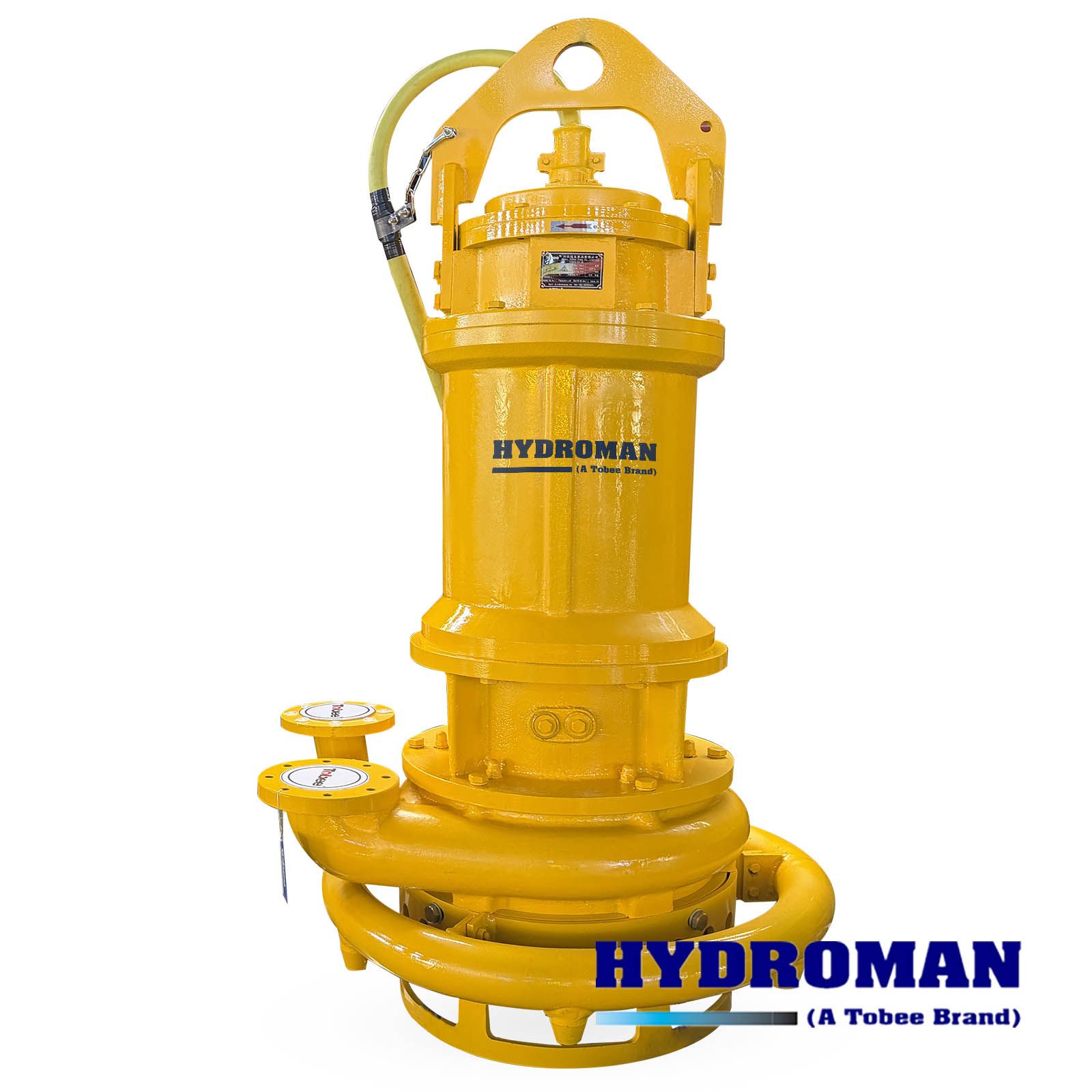
Hydroman Submersible Slurry Pump with Jet Ring for Ocean Projects
$16,877.00 $19,533.00

-
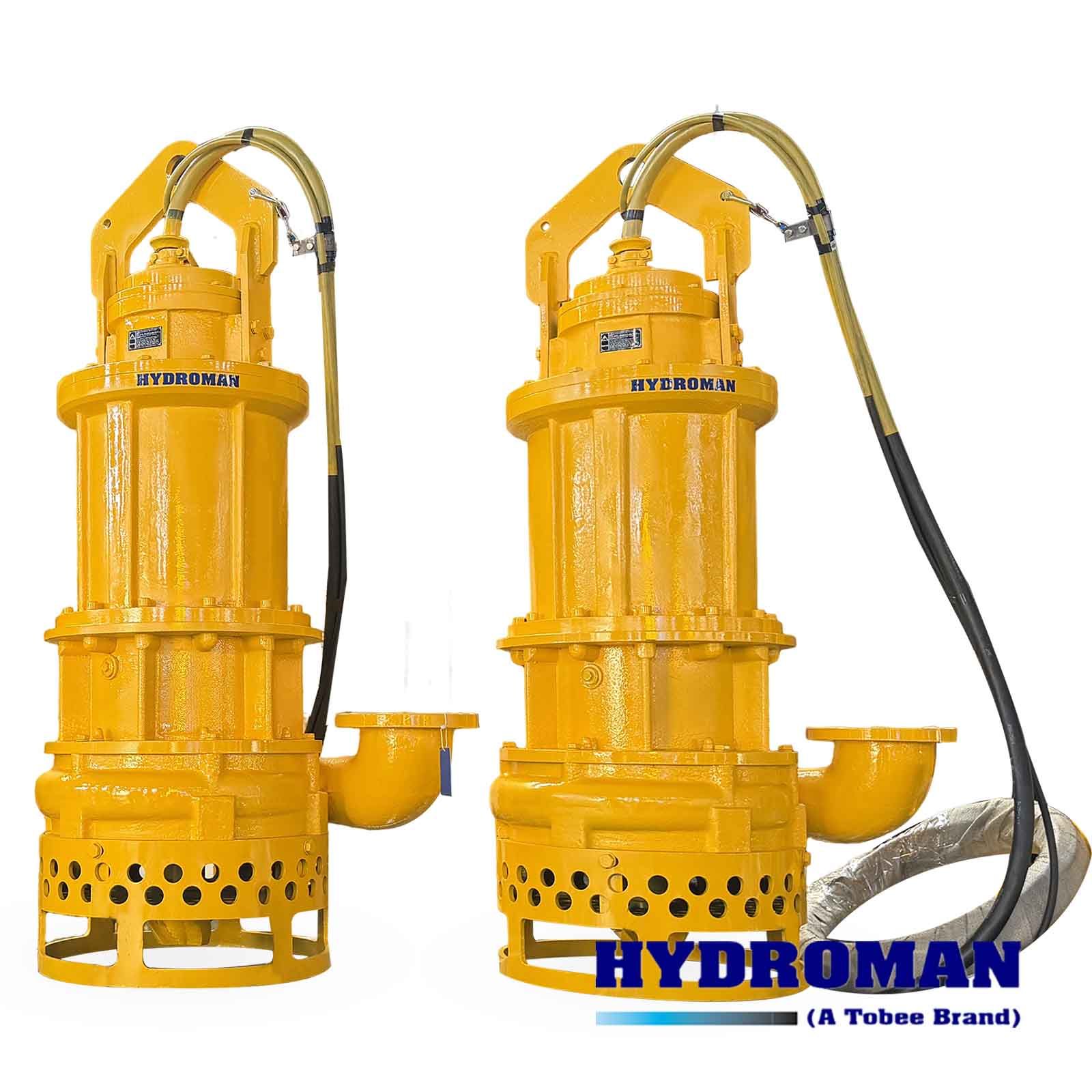
Hydroman 55kw Durable Submersible Sand Dredging Pumps
$15,199.00 $17,666.00
-
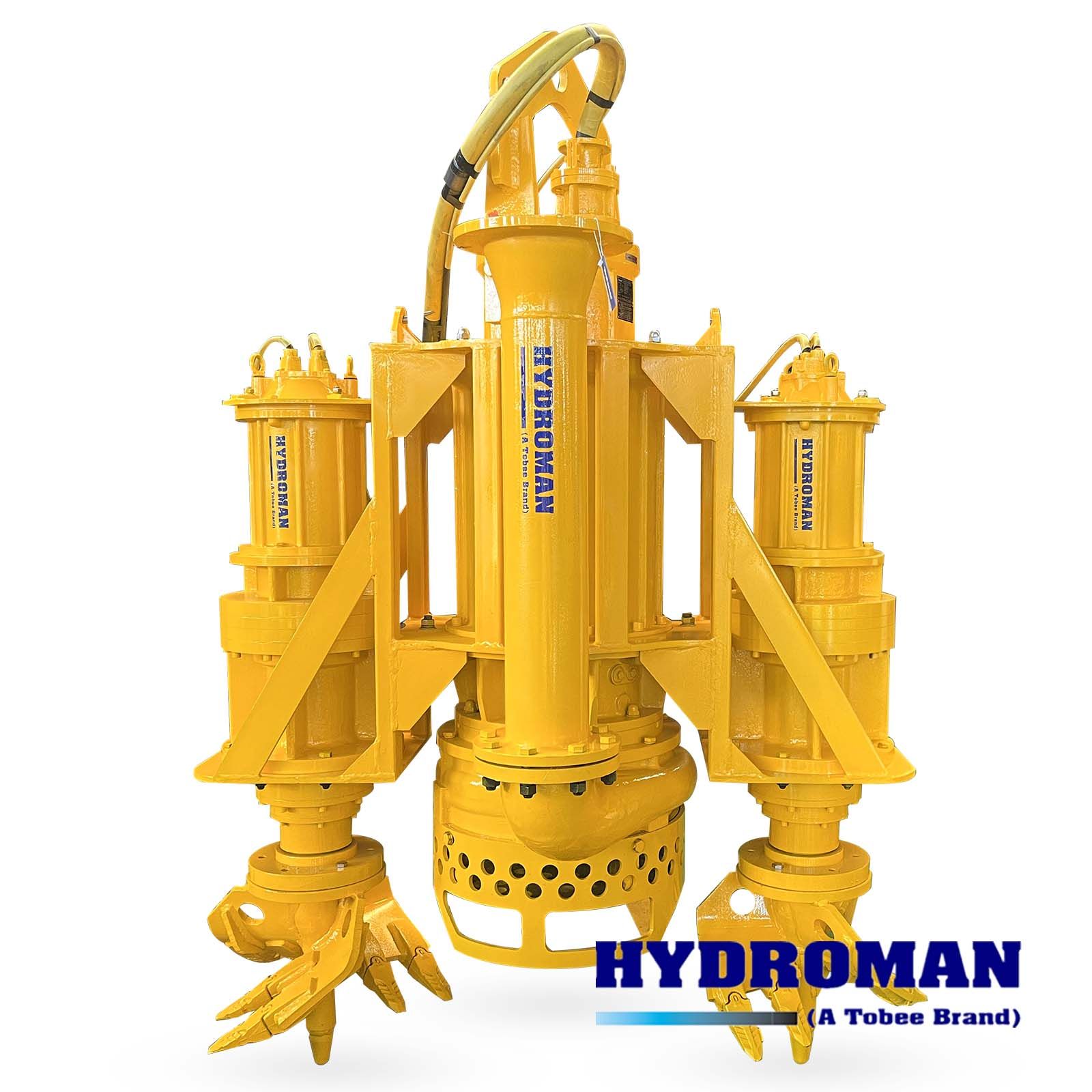
Hydroman Heavy duty Submersible Sludge Pump with Side Agitators
$25,197.00 $27,688.00





Donna
取消
取消