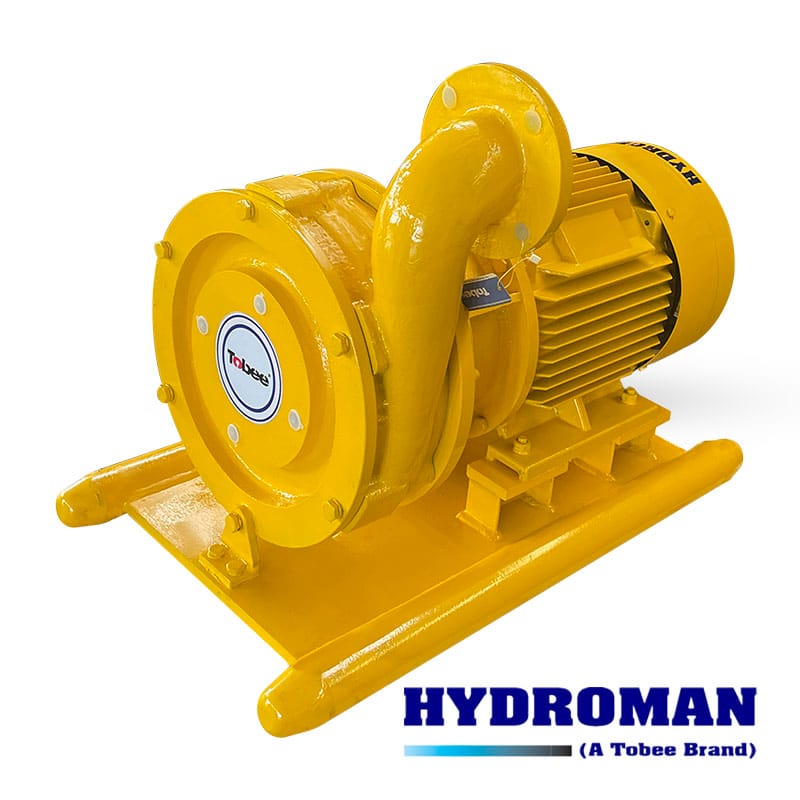
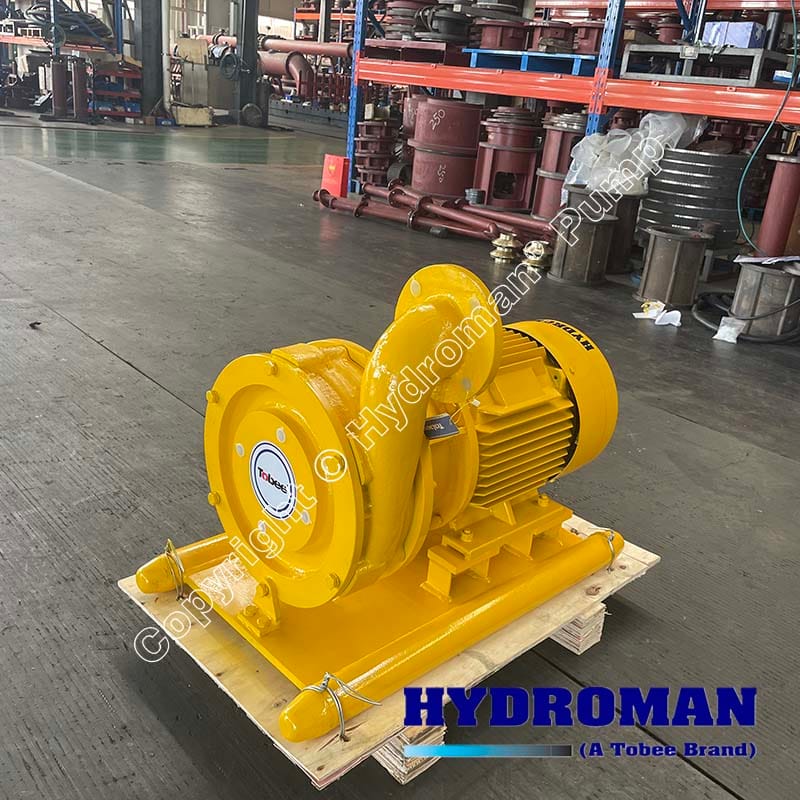
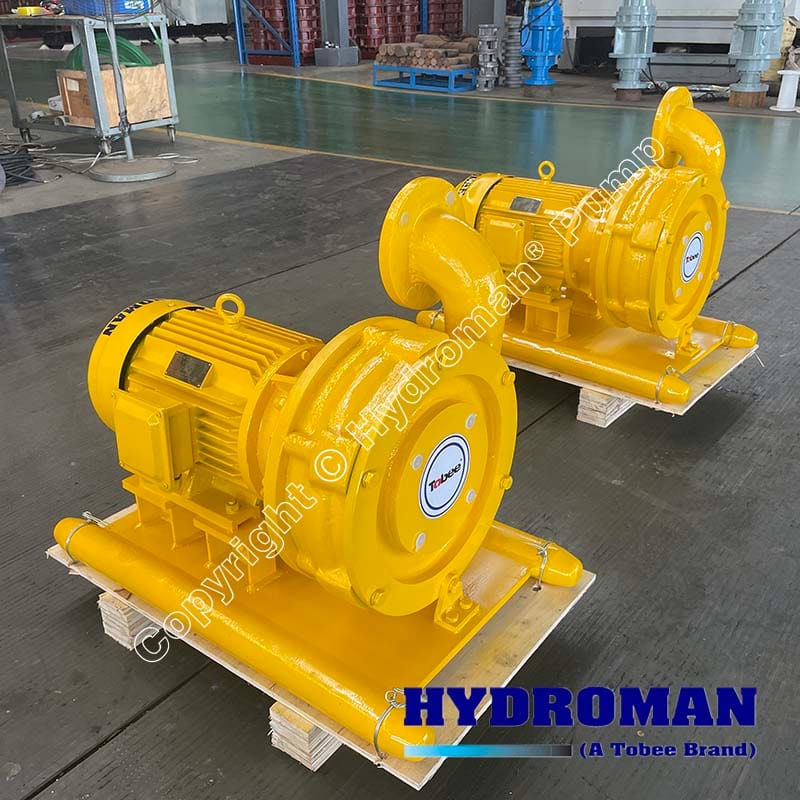
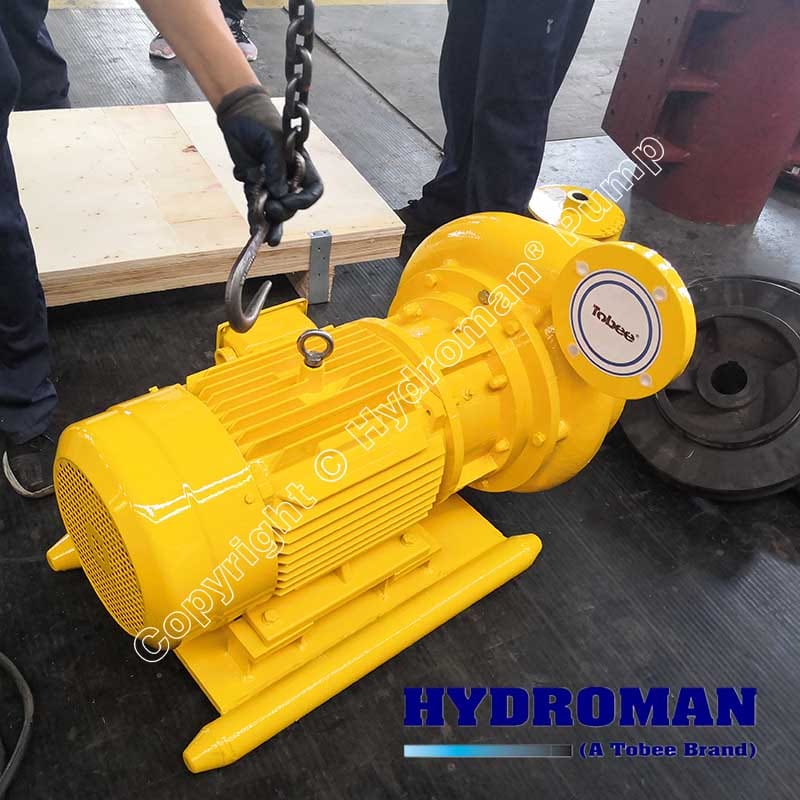
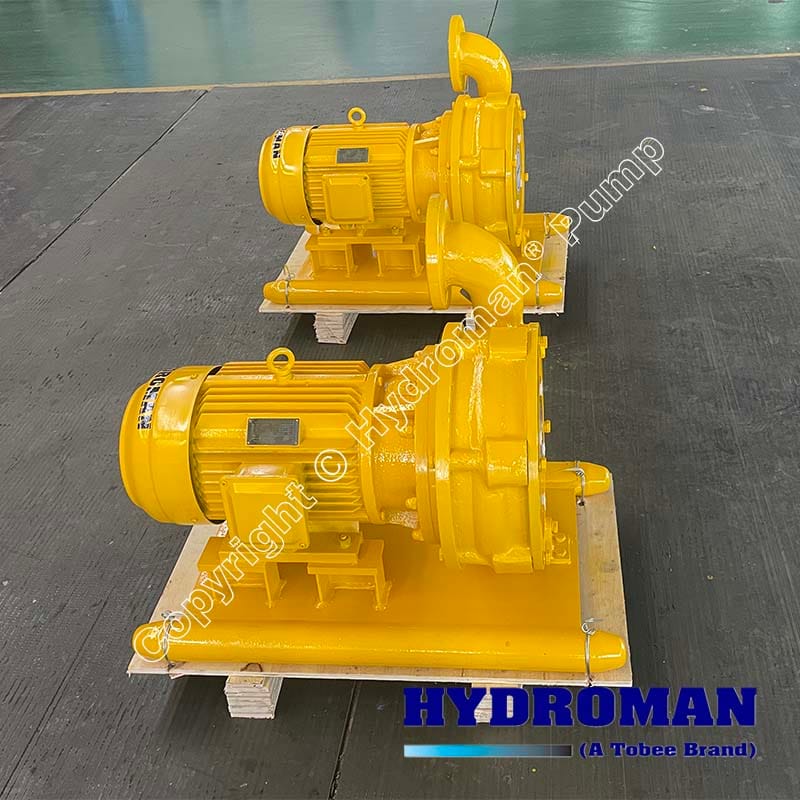
Engineered for the harshest underground environments — from metro bores to deep-rock mining tunnels. Built to keep your TBM moving, shift after shift.
Tunnel boring operations demand more than ordinary slurry pumps. Abrasive spoil, high solids concentrations, and continuous-duty operation place extreme stress on pumping equipment. Hydromann® Tunnel Boring Machine Slurry Pumps are engineered specifically for these challenging environments.
| • Handles slurry concentrations up to 70% solids by weight • Wear-resistant high chrome alloy wetted components • Available in electric drive configurations • Suitable for continuous 24/7 tunneling operations | • Designed for sand, gravel, clay, and bentonite slurries • Low maintenance and extended wear life • Available in submersible and dry-mounted designs • Custom configurations for TBM and shield machine systems |
If you've ever managed slurry transport on a shield tunneling project, you already know the stakes. When the pump fails — or underperforms — everything behind it backs up. Muck accumulates at the cutterhead, face pressure drops, and costly delays compound by the hour. A Tunnel Boring Machine slurry pump is the circulatory system of the entire excavation loop, and choosing the right one is as consequential as selecting the TBM itself.
In slurry-shield and earth-pressure balance (EPB) tunneling, excavated spoil is conditioned with bentonite or polymer slurries and flushed continuously through a closed-loop hydraulic transport circuit. According to industry benchmarks, slurry pipelines in major metro projects typically span 300 m to over 2,000 m between the cutterhead and the separation plant — demanding pumps capable of sustaining both high flow rates and elevated discharge pressure without interruption.
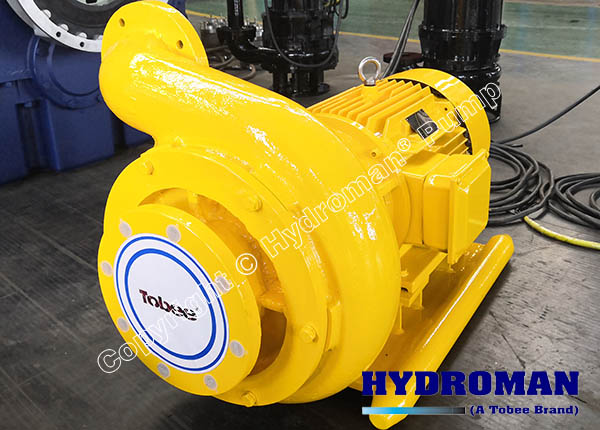
Hydroman® TBM slurry pumps are purpose-built for this environment. They are not repurposed industrial water pumps adapted for construction duty; they are engineered from the wetted end outward for abrasive, high-density slurries that would destroy conventional equipment within days. The difference shows up in operating hours, not brochure specs.
2,000 m³/h Max Flow | 60 m Max Discharge Head | 70% Solids Concentration | 60 mm Max Particle Size | 24/7 Continuous Duty |
Real tunneling projects rarely fit a single pump archetype. Ground conditions shift. Power availability changes. Slurry density climbs as you hit unexpected clay or gravel seams. That are three distinct solids-handling pump technologies — each optimized for a specific operational window, and all designed to work together within a unified slurry transport system.
Most Widely Deployed Centrifugal Slurry Pumps
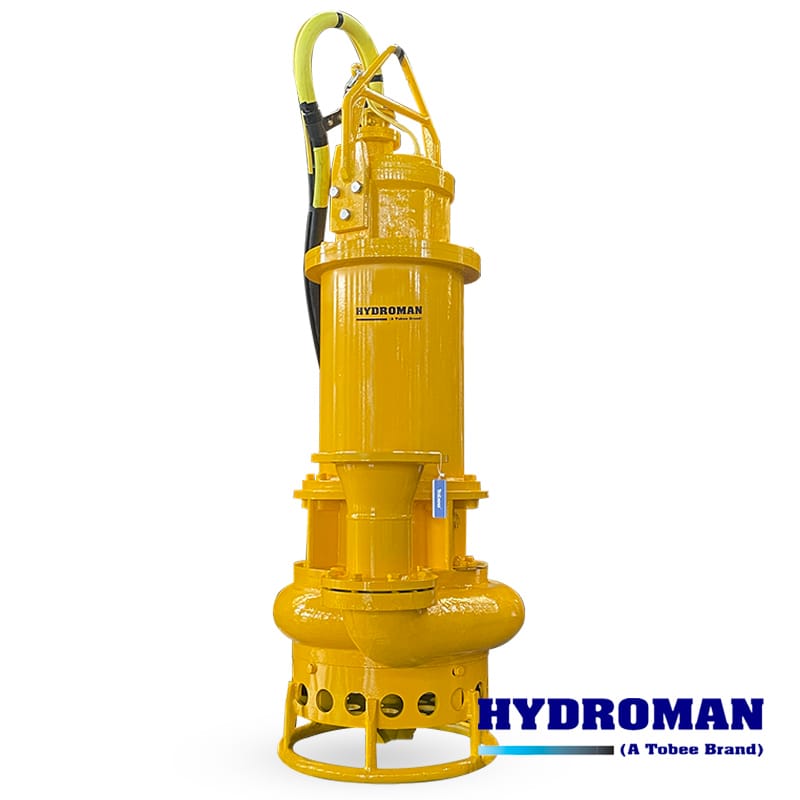
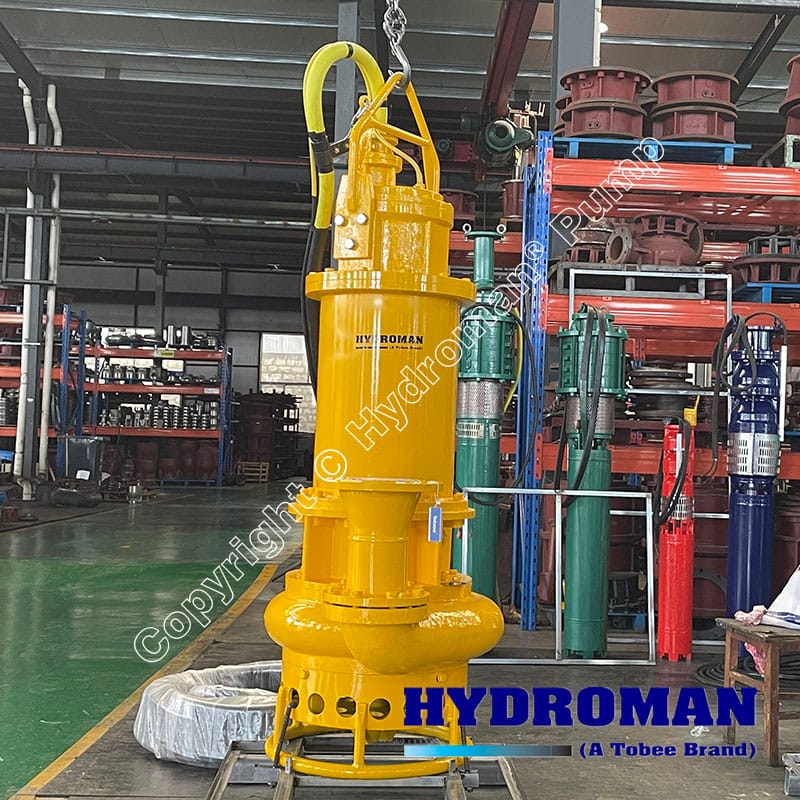
The workhorse of TBM slurry circuits. Centrifugal slurry pumps — including flooded-suction and submersible configurations — deliver high volumetric flow with a mechanically simple impeller-and-volute design that your maintenance team can service underground without specialist tooling.
In slurry transport using centrifugal pumps, the rotating impeller imparts velocity to the slurry, converting kinetic energy into pressure head. Their open or semi-open impeller geometry passes solids up to 60 mm without clogging, and the high-chrome alloy wetted parts — typically 28% Cr white iron — resist the grinding wear that bentonite-laden sand slurries inflict at 2,300–2,800 Brinell hardness equivalents.
Where the slurry circuit includes a centrifugal dredge pump segment near the separation plant, or a centrifugal sludge pump for secondary dewatering, these units integrate seamlessly into the same control architecture. | 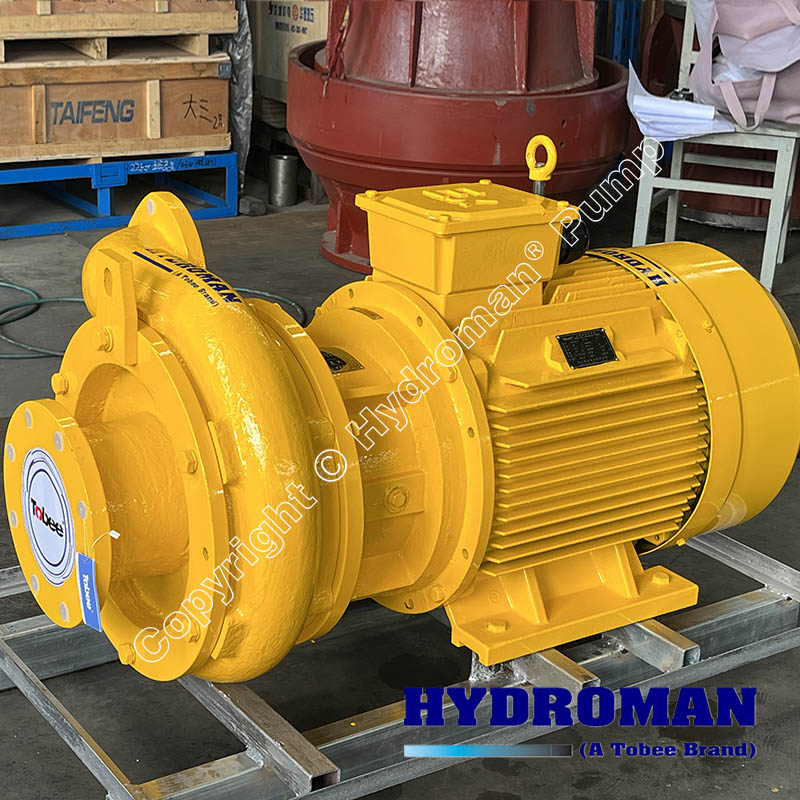 |
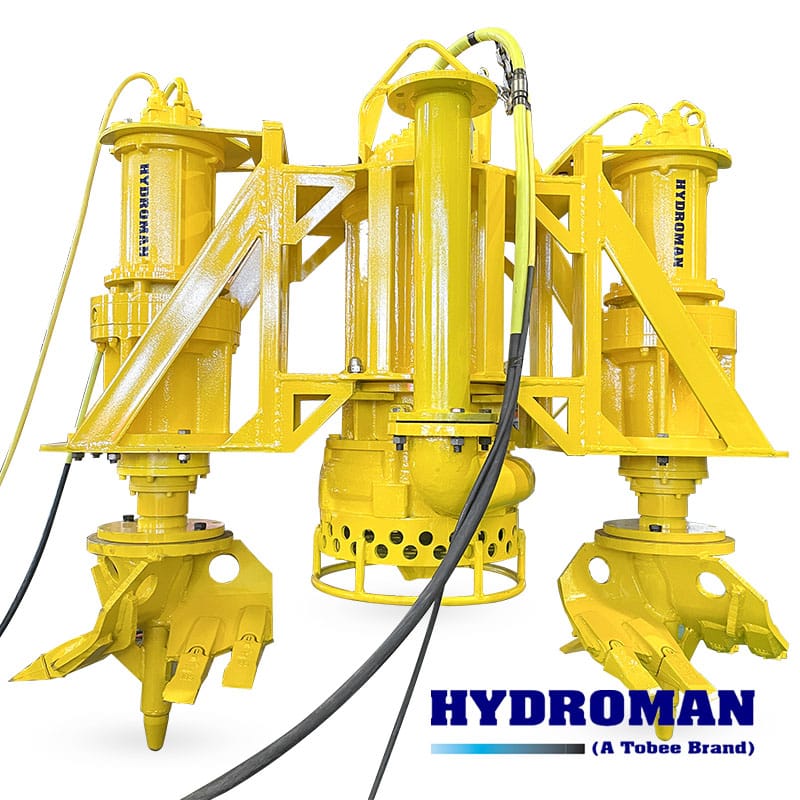
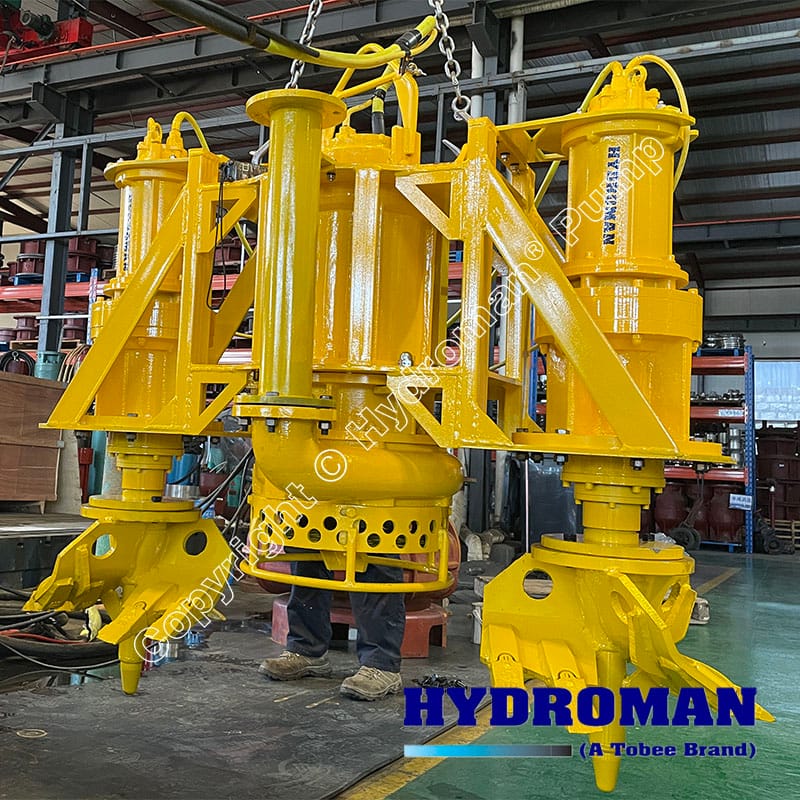
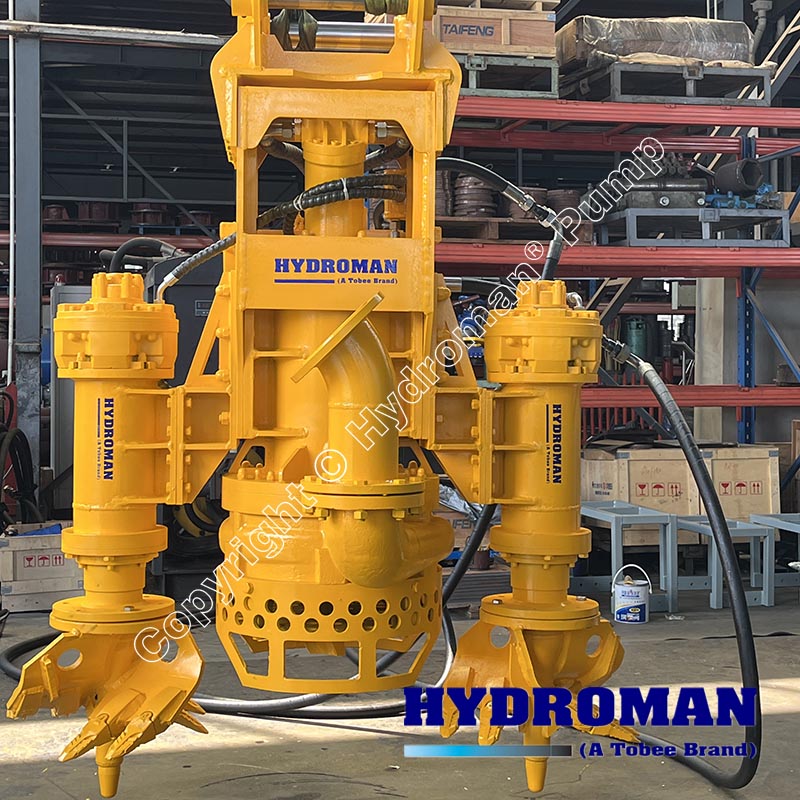 | Off-Grid & Emergency Hydraulic Slurry Pumps
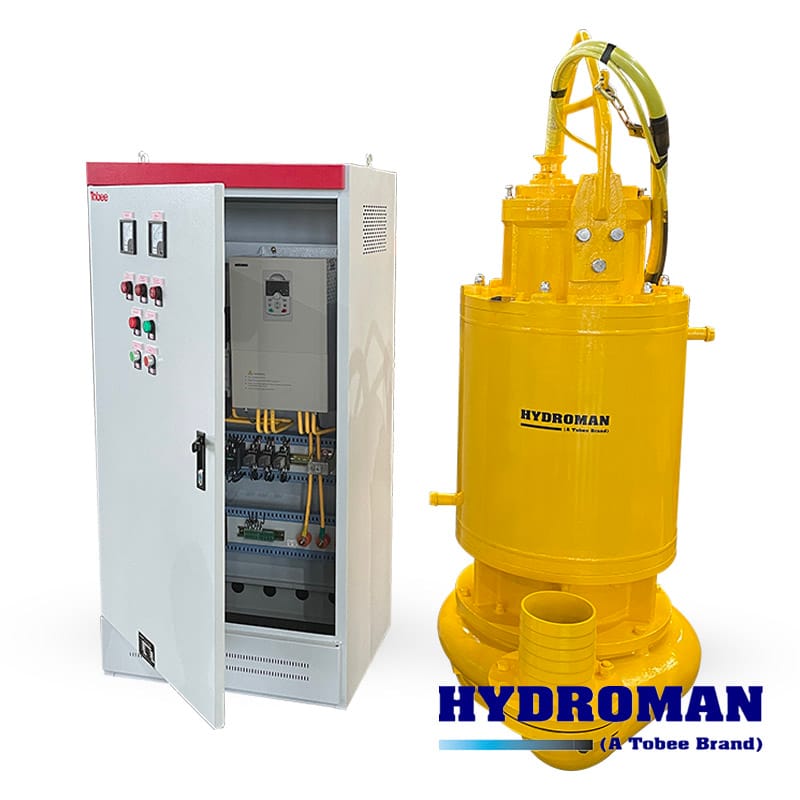
On microtunneling machine projects, pipe-jacking operations, and remote ground boring machine sites where grid power is unreliable or simply unavailable, hydraulic-drive slurry pumps offer a self-contained alternative that draws power from the host machine's hydraulic circuit.
Variable-displacement hydraulic motors allow infinitely adjustable flow — critical when slurry density fluctuates and you need to dial back pump speed to prevent segregation in long horizontal runs. Their compact form factor also makes them the right choice for confined heading environments where space around the TBM machine is at a premium.
These units are equally valued as standby emergency pumps on larger projects, where a second independent power source provides insurance against main electrical failures that could compromise face stability. |
High-Pressure Applications Positive Displacement Slurry Pumps
When your slurry circuit demands precise metered flow — bentonite injection systems, annular grouting, or tail-void backfill on large-diameter TBM tunnels — positive displacement pumps deliver consistent volumetric output independent of back-pressure. Each stroke moves exactly the same volume of material, regardless of downstream resistance.
This characteristic makes them indispensable for grouting operations where dosage accuracy directly affects lining stability and long-term settlement control — increasingly critical on urban infrastructure projects where surface tolerances may be as tight as 10–15 mm. High-pressure capability, combined with their tolerance for viscous and thixotropic slurries, makes them the right choice where centrifugal pumps simply cannot sustain the required discharge head. |  |
Hydroman® offers a complete range of slurry pumps for tunnel excavation projects ranging from small utility tunnels to large-diameter metro and railway tunnels.
| Model | Discharge Size | Flow Rate | Head |
|---|---|---|---|
| 4 Inch TBM Slurry Pump | 100 mm | Up to 100 m³/h | Up to 15 m |
| 6 Inch TBM Slurry Pump | 150 mm | Up to 200 m³/h | Up to 30 m |
| 8 Inch TBM Slurry Pump | 200 mm | Up to 400 m³/h | Up to 50 m |
| 10 Inch TBM Slurry Pump | 250 mm | Up to 600 m³/h | Up to 55 m |
| 12 Inch TBM Slurry Pump | 300 mm | Up to 800 m³/h | Up to 55 m |
Custom designs are available for specific tunnel boring machine slurry transport systems.
Every Hydroman® TBM slurry pump is configurable. The ranges below reflect the standard production envelope; if your project falls outside these parameters — larger particle sizes, higher solids concentrations, or specific explosion-proof certifications for mining tunnels — contact our engineering team directly for a project-specific configuration.
| Parameter | Standard Range | Notes |
|---|---|---|
| Flow Rate | 10 – 2,000 m³/h | Scalable from micro-bore to large-diameter TBM circuits |
| Discharge Head | Up to 60 m (single stage) | Multi-stage configurations available for longer pipelines |
| Solids Concentration | Up to 70% by weight | Handles high-density bentonite, sand, and gravel mixes |
| Maximum Particle Size | Up to 60 mm | Open impeller design — no pre-screening required in most applications |
| Wetted Material | High-chrome alloy (28% Cr), hardened iron | Hardness ≥ 60 HRC; optional rubber lining for fine-particle slurries |
| Drive Type | Electric motor | IEC/NEMA; explosion-proof motors (Ex d IIB) available |
| Installation Mode | Submersible / Dry-mounted / Skid-mounted | Submersible units rated to IP68; dry units on anti-vibration mounts |
| Operating Temperature | Up to 70°C continuous | Higher ratings with optional seal flush systems |
| Seal Type | Mechanical seal / Expeller seal / Gland packing | Gland packing preferred for highly abrasive underground slurries |
| Compliance | CE, ISO 9001, ATEX (on request) | Full documentation package for international project tenders |
A note on real-world wear life: In independent field studies of chrome-alloy slurry pump impellers handling sand-bentonite slurries at specific gravities of 1.3–1.6 SG, high-chrome white iron components consistently outlast standard cast iron by a factor of 6 to 12 times. For a pump running 6,000 hours per year on a major metro project, that translates directly into fewer shutdowns, less consumable spend, and a lower total cost per cubic meter of slurry transported.
The global tunneling market continues to expand rapidly. The International Tunnelling Association (ITA) estimates that over 400 km of new tunnel bores are initiated worldwide each year, driven by urban metro expansion, high-speed rail programs, and utility corridor development. Behind every one of those excavation fronts, slurry pumps are running — often continuously, for months at a stretch.
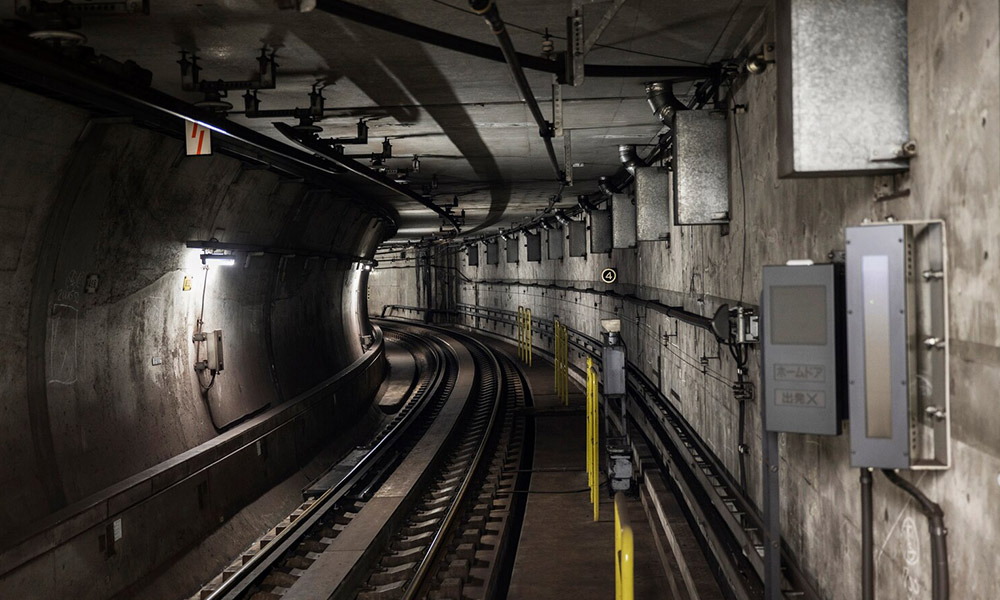 |  |
Metro & Railway Tunnels
Urban metro projects represent some of the most demanding slurry pump applications on earth. Tunneling beneath active city streets means navigating mixed-face ground conditions — alternating layers of sandy alluvium, stiff clay, cobbles, and man-made obstructions — that generate highly variable slurry densities and particle distributions. Your pumps need to handle all of it without adjustment delays.
Hydroman® submersible solids pumps and dry-mounted centrifugal slurry pumps are configured for the slurry separation plants that process muck from these drives, handling flow rates matched to the TBM's advance rate and the volume of excavated material per ring.
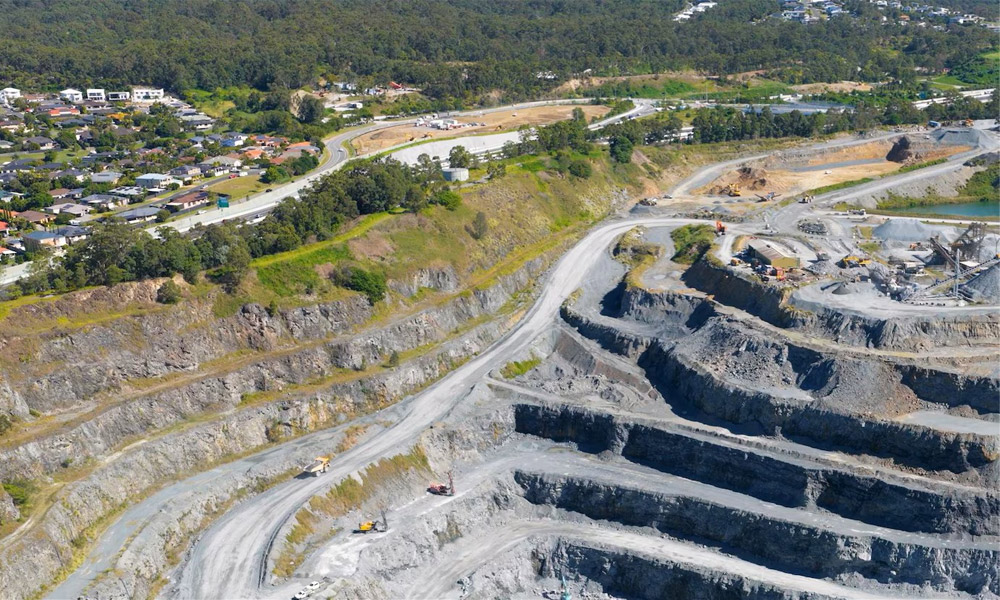
| Mining & Resource Tunnels
In hard-rock mining environments — where a rock boring machine or tunnel drilling machine may be cutting through granite, basalt, or quartzite — the abrasiveness of the excavated slurry is dramatically higher than in soft-ground urban tunneling. Mohs hardness values above 6 for common rock types place extreme demands on pump wear components.
For these applications, Hydroman® sources and supplies wastewater solids handling pumps and heavy-duty slurry transport configurations with reinforced impellers, thicker volute liners, and extended maintenance intervals specifically validated for hard-rock cutting debris at high solids concentrations.
|
 |  |
Microtunneling & Pipe Jacking
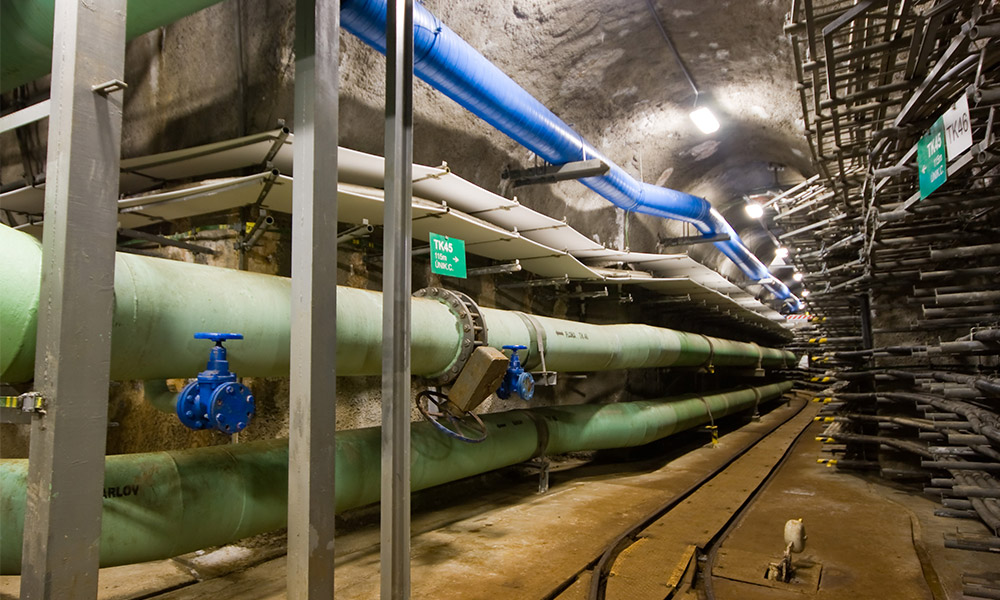
The microtunneling machine market — covering bore diameters from 150 mm to approximately 3,000 mm — demands compact, high-efficiency slurry pumps that fit within severely constrained launch pit spaces. Hydroman® hydraulic slurry pumps are widely used in this sector precisely because their hydraulic drive eliminates the need for bulky motor starters and electrical distribution panels in confined above-ground setups. | Utility & Pipeline Corridors
As cities deepen and densify their underground utility networks — water, sewer, power, and data — the demand for smaller-diameter tunneling equipment and the associated solids pumping solutions it requires continues to grow. Whether you are running a ground boring machine for a new sewer interceptor or a small tunnel boring machine for telecommunications conduit, the slurry circuit still needs pumps built for continuous duty with genuine solids-handling capability. |
Hydroman® slurry pumps are widely used in both slurry shield TBMs and Earth Pressure Balance (EPB) machines.
Typical applications include:
| • Slurry circulation systems | • Bentonite slurry transfer | • Excavated muck transportation | • Slurry separation plants |
| • Tunnel dewatering systems | • Cutterhead support systems | • Drill fluid transfer operations |
Whether operating in soft clay, mixed ground, or abrasive rock formations, Hydroman® pumps provide stable slurry transport throughout the tunneling process.
Tunnel slurry is not a uniform material. Its composition shifts by ground condition, tunneling method, and the conditioning additives your team introduces at the cutterhead. Hydroman® TBM slurry pumps are validated across the full range of fluids you will encounter in the field.
| Fluid Type | Typical Specific Gravity | Primary Pump Technology |
|---|---|---|
| Bentonite slurry (fresh) | 1.04 – 1.20 SG | Centrifugal slurry pump |
| Bentonite slurry (contaminated, post-excavation) | 1.20 – 1.45 SG | Centrifugal / Positive displacement |
| Sand & gravel slurry | 1.4 – 1.7 SG | Heavy-duty centrifugal, high-chrome alloy |
| Clay-rich mud / construction sludge | 1.3 – 1.6 SG | Positive displacement or centrifugal sludge pump |
| Drill flush (water + cuttings) | 1.05 – 1.25 SG | Centrifugal / Submersible solids pump |
| Annular grout / tail-void backfill | 1.6 – 1.9 SG | Positive displacement (high pressure) |
| Tunnel dewatering (solids-laden) | 1.01 – 1.15 SG | Submersible solids pump / wastewater solids handling pump |
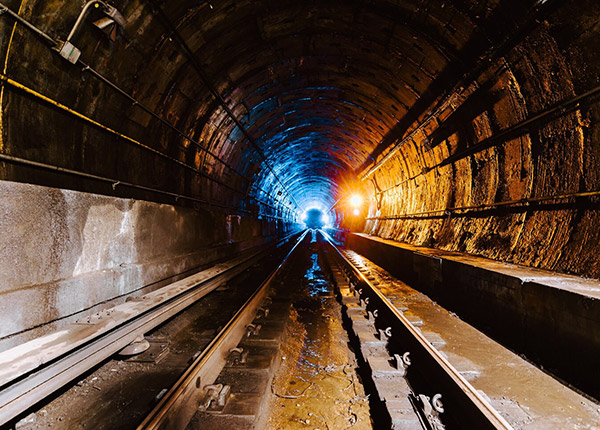 |  |  |
The Challenge
A railway tunnel contractor in North America required a reliable slurry pump capable of transporting abrasive drilling fluids and excavated spoil through a 1.8-kilometer slurry pipeline. Existing pumps experienced excessive impeller wear and frequent downtime. | The Solution
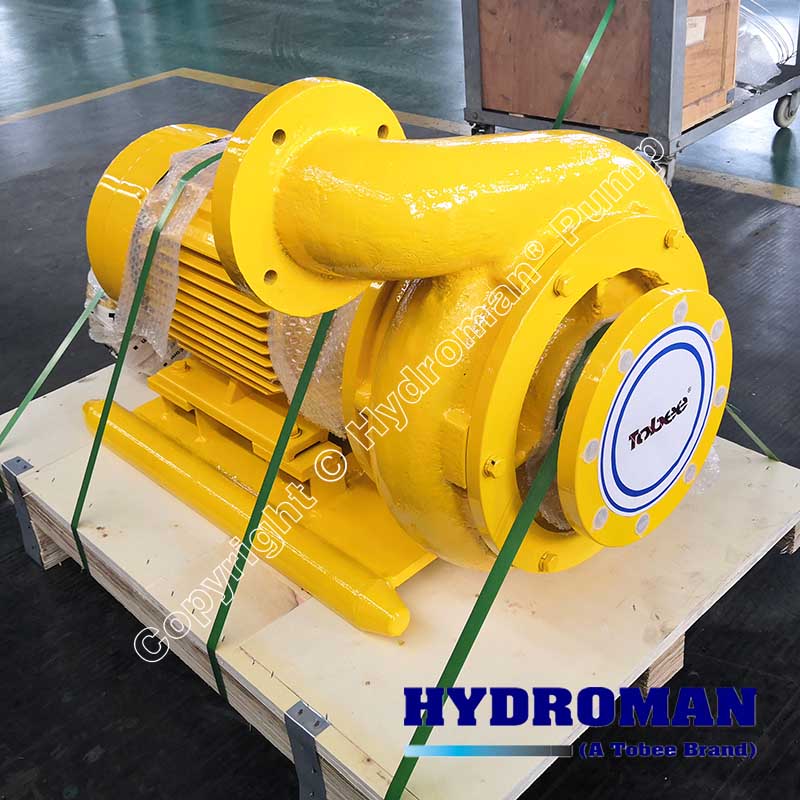
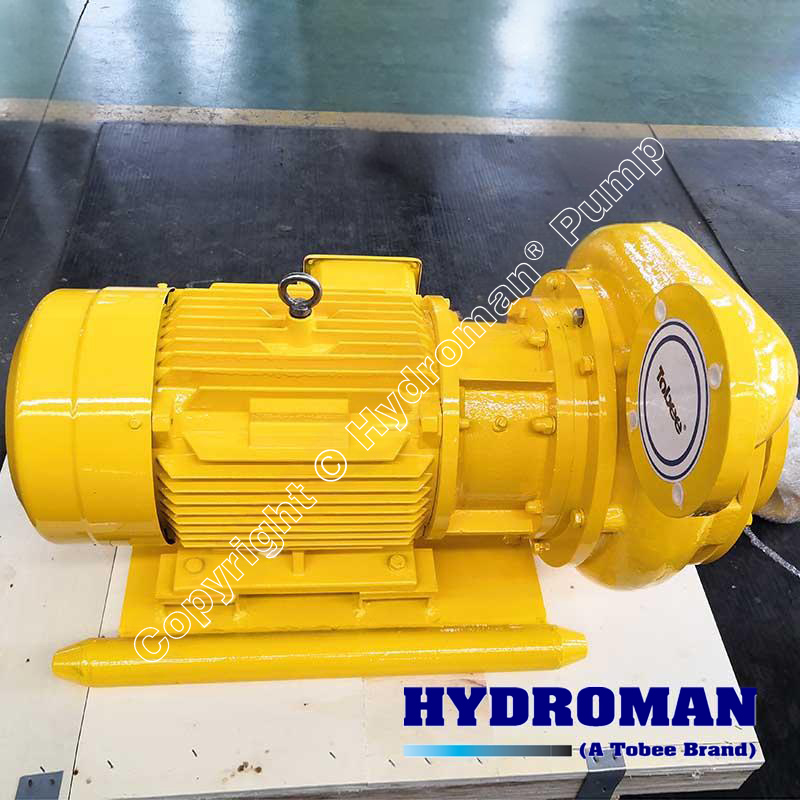
Hydroman® supplied a 6-inch electric slurry pump equipped with high chrome alloy wear components and a heavy-duty system. The pump was integrated into the tunnel boring machine slurry circulation system. | The Result
Continuous operation throughout excavation shifts |
There are dozens of pump manufacturers who will tell you their equipment handles slurry. Fewer will give you the engineering data to back it up — wear rate curves, impeller hardness certifications, field performance logs from comparable projects. Hydroman® is built around that transparency, because contractors who manage tunneling equipment professionally demand it.
The conversation we have most often with project engineers isn't about flow rates — it's about total cost per operating hour. A cheaper pump that requires impeller replacement every 800 hours on a project running 6,000 annual hours costs more than a premium unit with a 2,500-hour wear life, even after accounting for the higher upfront price. We document this math for every major application, and we back it with replacement parts availability and on-site service support for international projects.
Beyond hardware, Hydroman® offers configurable systems: you can specify hydraulic drives for off-grid sites, explosion-proof motors for gas-risk underground boring machine environments, submersible configurations for shaft-bottom dewatering, and high-pressure multi-stage arrangements for long-haul slurry pipelines. These are not afterthought options — they are engineered configurations with validated performance data.
One more thing worth saying plainly: if you're pricing a tunneling project or preparing a pump specification for tender, we can provide detailed technical documentation, wear rate estimates based on your slurry characterization, and a formal quotation within 48 hours. The goal is to give you what you need to make a confident procurement decision — not to push a brochure.
What pump type is best suited for a slurry-shield TBM circuit?
Centrifugal slurry pumps dominate the main slurry circuit in slurry-shield TBMs because they handle large flow rates — typically 300–800 m³/h on mid-diameter drives — with low mechanical complexity and field-serviceable wear parts. For the bentonite injection feed and tail-void grouting circuits on the same machine, positive displacement pumps are preferred for their pressure consistency and flow accuracy.
How do I select the right pump for my solids concentration and particle size?
The key inputs are specific gravity of the slurry, maximum particle size (d85 or absolute maximum), abrasive mineral hardness, and required flow rate and head. For high-SG slurries above 1.5 with coarse particles, you'll need a heavy-duty centrifugal unit with full-chrome alloy wetted parts and an oversized throat bushing. Share your slurry characterization data with our engineering team and we'll run a detailed pump selection with wear life estimates.
Can Hydroman® pumps be used in submersible configurations inside the TBM itself?
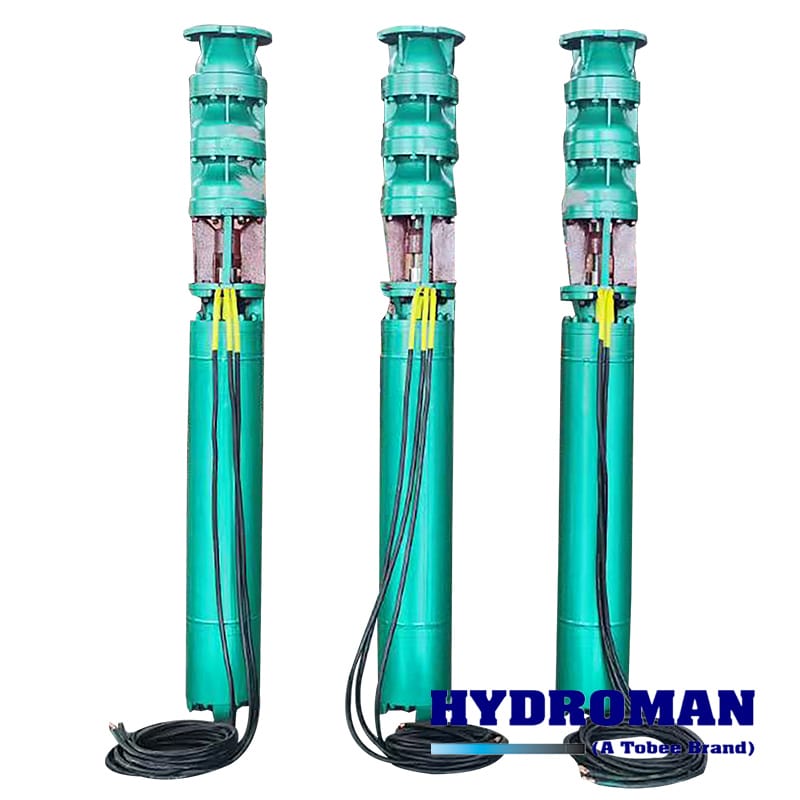
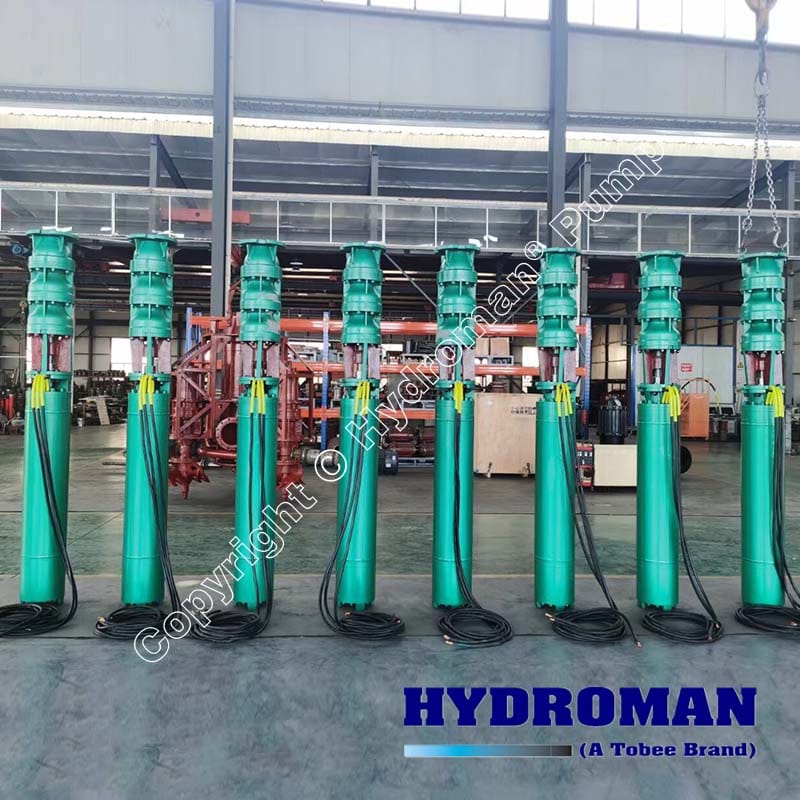
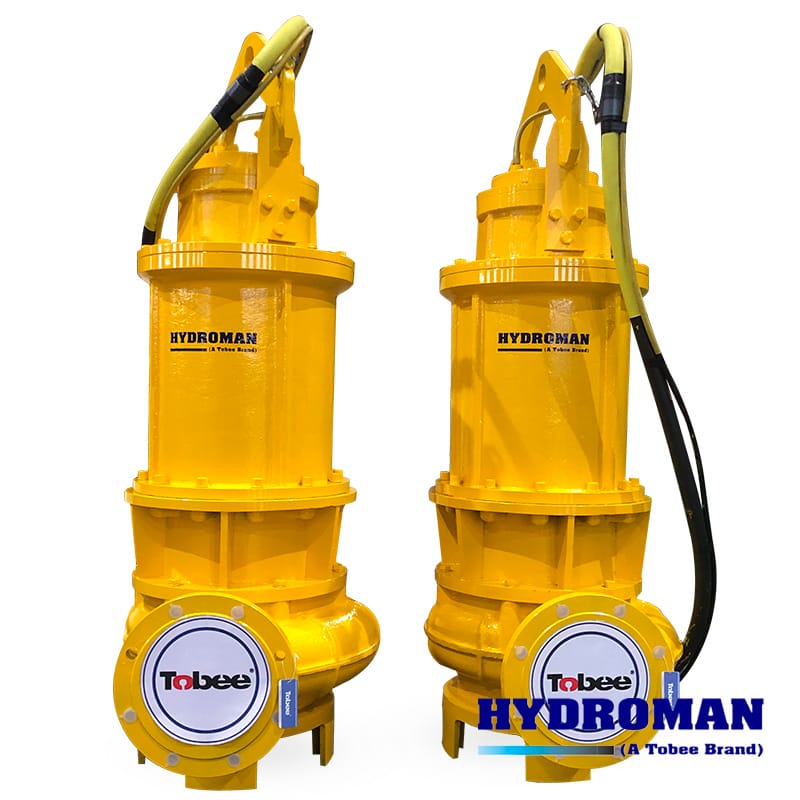
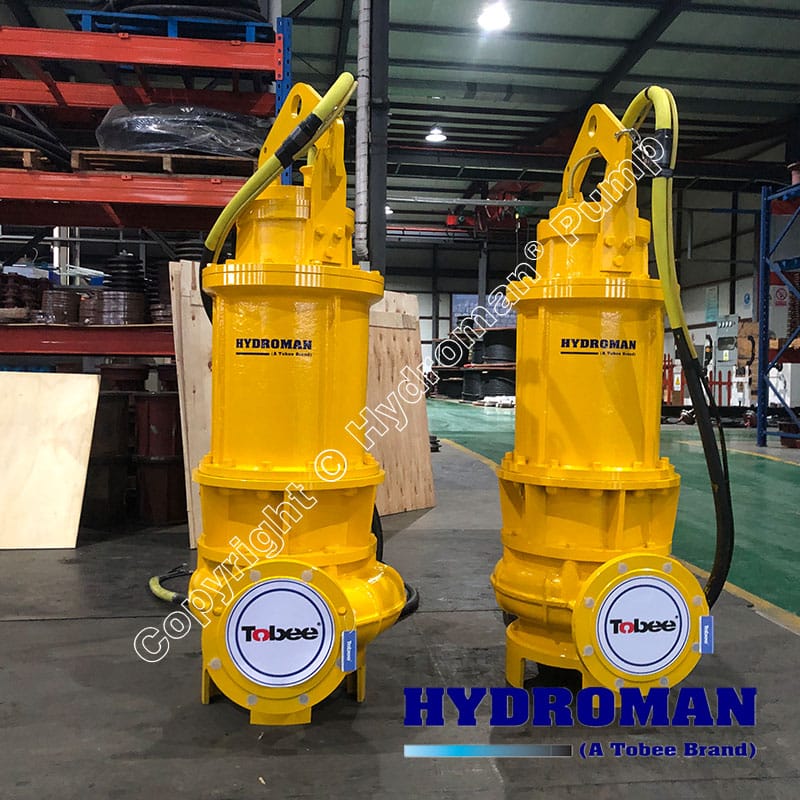
Yes. Submersible solids pumps rated to IP68 are available for installation in the slurry pit section of the TBM or in launch shaft sumps. These units are designed for continuous immersed operation and can be retrieved for maintenance without dewatering the pit, which is a significant operational advantage on tight construction schedules.
What maintenance intervals should I plan for on a major metro project?
Impeller wear life in abrasive slurry service depends heavily on slurry abrasivity (quantified by the SAR index or Miller Number) and operating speed. In typical metro tunneling conditions with sandy-alluvial slurries, high-chrome impellers on Hydroman® centrifugal pumps achieve 1,500–3,000 operating hours between replacements. Liner life is typically 1.5–2× impeller life. We recommend establishing a condition-monitoring programme — tracking differential pressure and vibration signature — rather than fixed-interval replacement.
Do you supply pumps for microtunneling and small tunnel boring machine projects as well?
Absolutely yes. Hydroman® covers the full bore-diameter spectrum, from microtunneling machines operating at 200 mm through large-diameter TBMs exceeding 14 m. Smaller-bore projects typically need compact hydraulic slurry pumps or smaller centrifugal units in the 10–200 m³/h range; the same engineering principles apply, scaled appropriately to the excavation volume.
 |  |  |
Are Hydroman® TBM slurry pumps available with ATEX / explosion-proof certification?
Yes. For underground boring machine applications in gas-risk environments — particularly in mining tunnels or urban drives passing through contaminated ground — explosion-proof motor configurations (Ex d IIB T4, IECEx/ATEX) are available on most models. Full certification documentation for project compliance is provided as standard.
How much does a Tunnel Boring Machine slurry pump cost?
Pricing depends on pump size, flow rate, discharge head, drive type, and material configuration. Contact Hydroman® for a customized quotation.
How quickly can pumps be delivered?
Standard models are typically available within several weeks, while customized configurations may require additional manufacturing time.
Are spare parts available?
Yes. Impellers, liners, agitators, shafts, seals, and other wear components are available for long-term maintenance support.
Do you provide technical support for international projects?
Yes. Hydroman® supports tunnel construction projects worldwide with pump selection assistance, technical documentation, and after-sales service.
Send us your project details — bore diameter, anticipated ground conditions, slurry circuit length, and flow targets — and our engineering team will come back to you with a formal pump selection and quotation within 48 hours.
Hydroman® is a professional manufacturer of heavy-duty slurry pumps, dredging pumps, sludge pumps, and solids handling pumping systems for mining, tunneling, dredging, wastewater treatment, and industrial applications. With extensive experience in handling abrasive and high-density slurries, Hydroman® provides reliable pumping solutions designed for demanding industrial environments.
 Sara Liang
 +86 189 3110 6396 (Whatsapp/Wechat)
 Inquiry@tobeepump.com
Submitted successfully
Your submission has been received. Thanks for your time

 FR(EUR)
 CN(CNY)
 GB(GBP)
 AU(AUD)





Reviews
0%
0%
0%
0%
0%
Share your thoughts with other customers
Write a Review