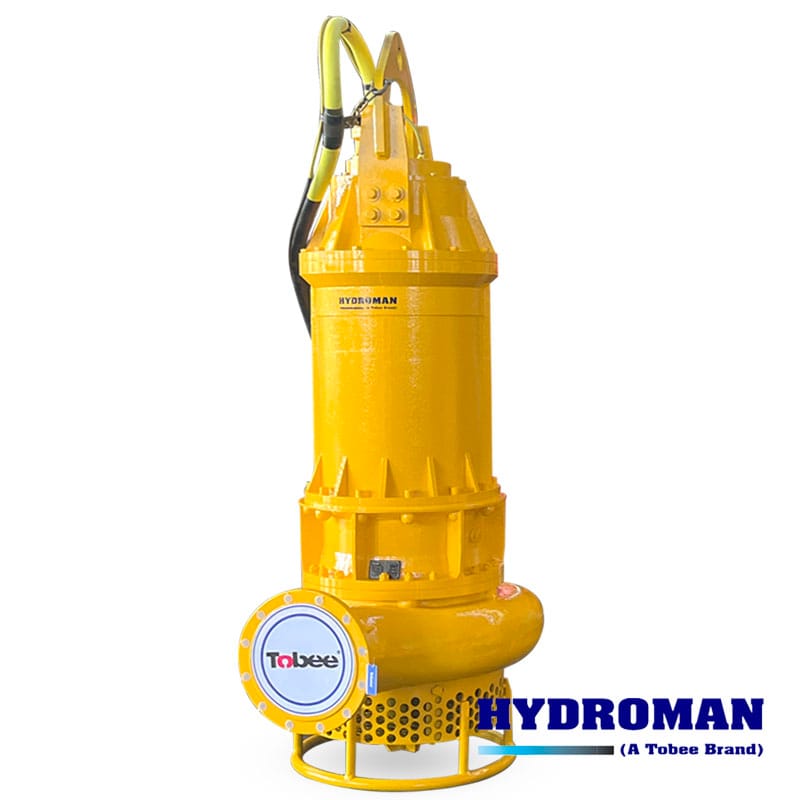
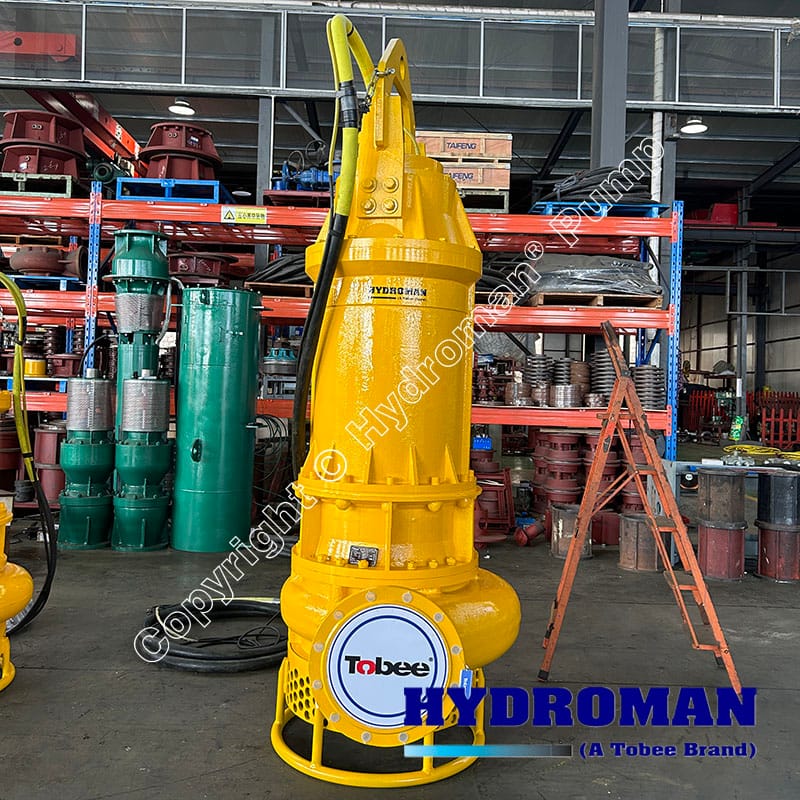
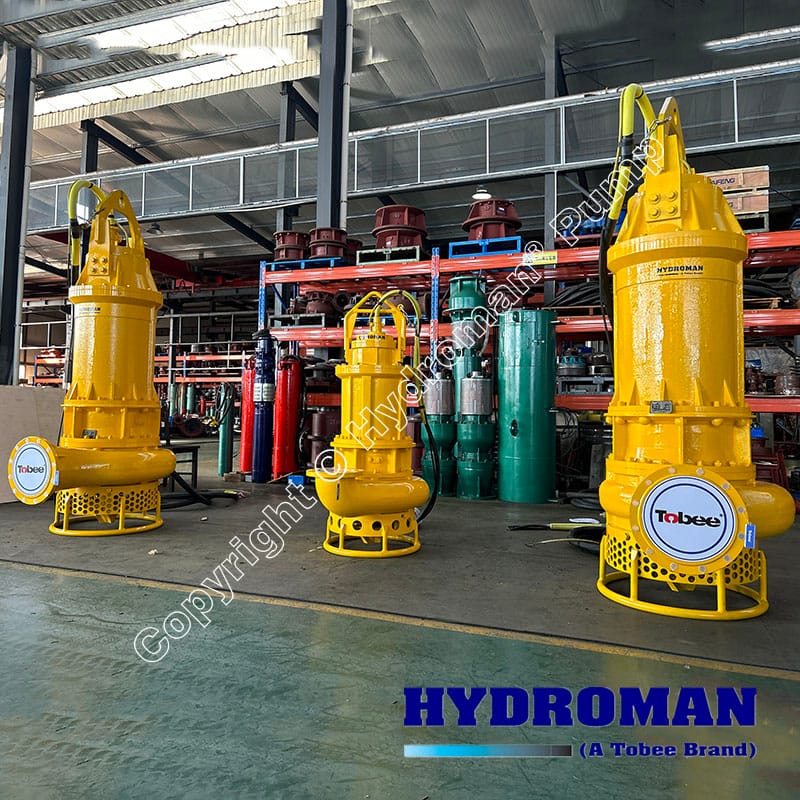
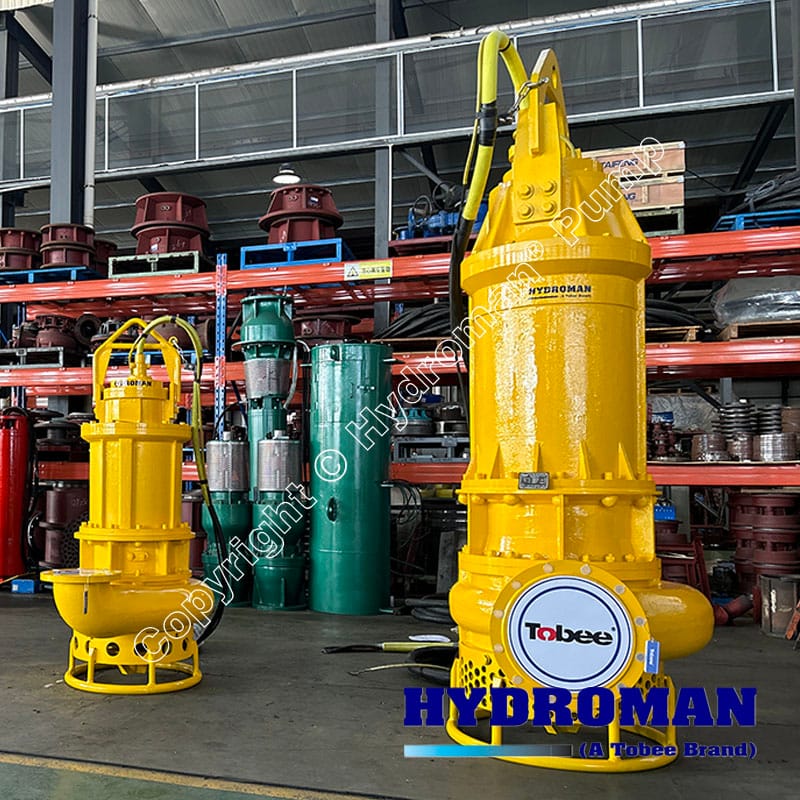

When sand, silt and heavy sediment settle inside inclined steel piles, on a riverbed, or at the bottom of a construction pit, you need a pump that can go where the problem actually is — underwater, into tight spaces, and directly into abrasive, high-solids media. That is exactly what a Hydroman® submersible dredging pump is built for. Instead of relying on surface suction lines, priming systems and long horizontal runs, you lower the pump straight into the sand, mud or slurry and let it do the work at the source.
This page walks you through how submersible dredging pumps work underwater, why they are the practical choice for sand removal inside inclined driven piles, and how to select the right configuration — including agitator and cutter head options — from Hydroman's TJQ Series.
A submersible dredging pump does not sit on the bank waiting to suck material through a long intake hose. The pump itself — motor, impeller and inlet — goes down into the water or directly into the sediment. Once submerged, the electric motor drives the impeller, which draws in the surrounding sand-water or slurry-water mixture through an inlet positioned close to the bed. The mixed slurry is then pushed up through a discharge pipe to a settling tank, barge, or disposal point on the surface.
Because the intake sits right on top of the deposit rather than several meters away through a suction hose, a submersible dredging pump handles higher solids concentrations with less risk of losing prime, air-locking, or clogging — problems that are common with dry-mounted centrifugal pumps working through long suction lines. This is also why submersible pump dredging is the standard approach for sites where a dry pump station simply cannot be installed close enough to the material: flooded pile interiors, deep pits, riverbeds and harbor floors.
Inclined driven steel piles are common in marine platforms, jetties, bridge foundations and offshore support structures. Over time — during driving, tidal exchange, or extended exposure before final grouting — sand, silt and fine sediment accumulate inside the pile shaft. Left in place, this buildup reduces usable internal space, interferes with grouting or inspection, and can compromise the following construction steps.
Because an inclined pile is narrow, angled, and usually flooded, there is no practical way to run a dry pump down to the bottom. A submersible sand pump lowered on a cable and guide line can be positioned at the low point of the incline, right where sand naturally collects, and pump the sand-water mixture directly out through a discharge hose run up and over the pile head. Depending on the sand layer thickness and how compacted it is, the pump can be fitted with an agitator to loosen the deposit before it enters the suction inlet — this is where sand removal pump selection starts to matter, because a plain pump-only unit struggles once the sand has settled and compacted at the bottom of the shaft.
This application — narrow diameter, steep angle, submerged, abrasive sand — is precisely the profile Hydroman's TJQ Series submersible pumps for dredging were engineered around.
A general-purpose submersible pump built for clean or lightly turbid water is not the same product as a submersible dredging pump. Dredging duty means the pump body, impeller, and wear plates are exposed to continuous abrasive contact, not occasional particulate. A properly specified submersible sand dredging pump is expected to handle:
| Medium | Typical characteristic |
|---|---|
| Sand | Fine to coarse, highly abrasive, common in riverbed and pile dredging |
| Silt | Fine-grained, easily suspended, common in ponds and reservoirs |
| Sediment | Mixed organic and mineral deposits, variable density |
| Sludge | High water content, semi-liquid, common in settling basins |
| Mud | Cohesive, can compact and resist suction without agitation |
| Water-sand mixtures | Variable solids concentration, the most common dredging condition |
| Other abrasive solids | Gravel fines, mineral tailings, construction debris fines |
Handling this range reliably comes down to hard-wearing wet-end materials, a robust impeller design, and a motor sized with margin for intermittent solids loading — not just a higher-horsepower motor bolted onto a standard water pump casing.
Sand that has been sitting at the bottom of a pile, pit or pond for any length of time is not loose — it settles, compacts, and in some cases partially cements with fine particles binding it together. A pump inlet alone often cannot break that layer apart, which is where a submersible sand pump agitator earns its place in the configuration.
The agitator sits at the pump inlet and mechanically stirs the compacted material into suspension before it reaches the impeller. In practical terms, this does three things for you:
For sand removal inside an inclined pile shaft, or for cleaning the base of a settling pond, an agitator-equipped pump typically clears compacted deposits significantly faster than a bare pump working the same material, because it is not waiting for gravity and flow turbulence alone to break the deposit loose.
An agitator is usually enough for loose to moderately compacted sand and sediment. Some sites present tougher material — consolidated clay, dense cohesive silt, or sediment that has partially hardened after long-term settlement. In these conditions, a submersible dredge pump with cutter head is the more reliable configuration.
The cutter head is a rotating cutting mechanism mounted at the suction inlet, designed to actively break up dense or bonded material before it enters the pump chamber, rather than relying on suction and stirring alone. It is the right tool for:
That said, a cutter head is not a default upgrade for every job. For loose sand, clean silt, or general sludge removal, a cutter head adds cost and mechanical complexity without a meaningful performance gain — an agitator or a bare high-solids pump handles that material efficiently on its own. Matching the cutting configuration to the actual bed condition, rather than over-specifying, is part of getting the selection right.
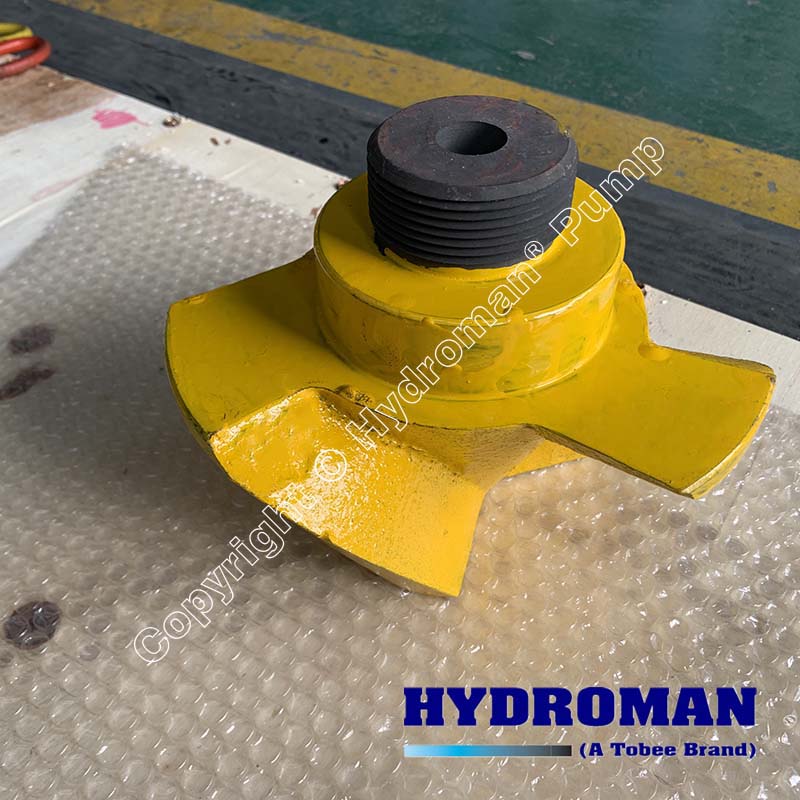 | 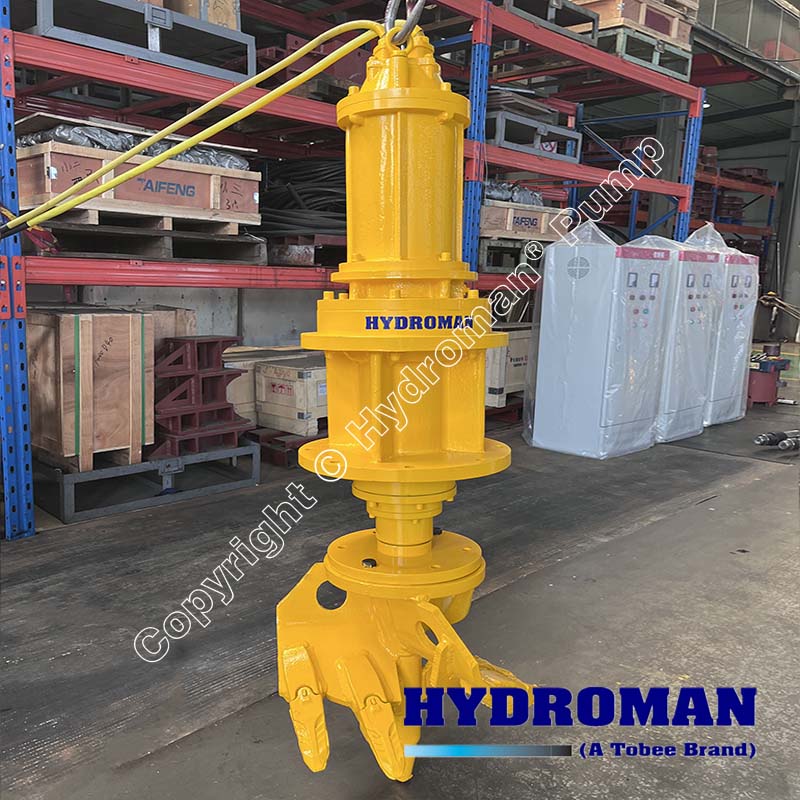 |
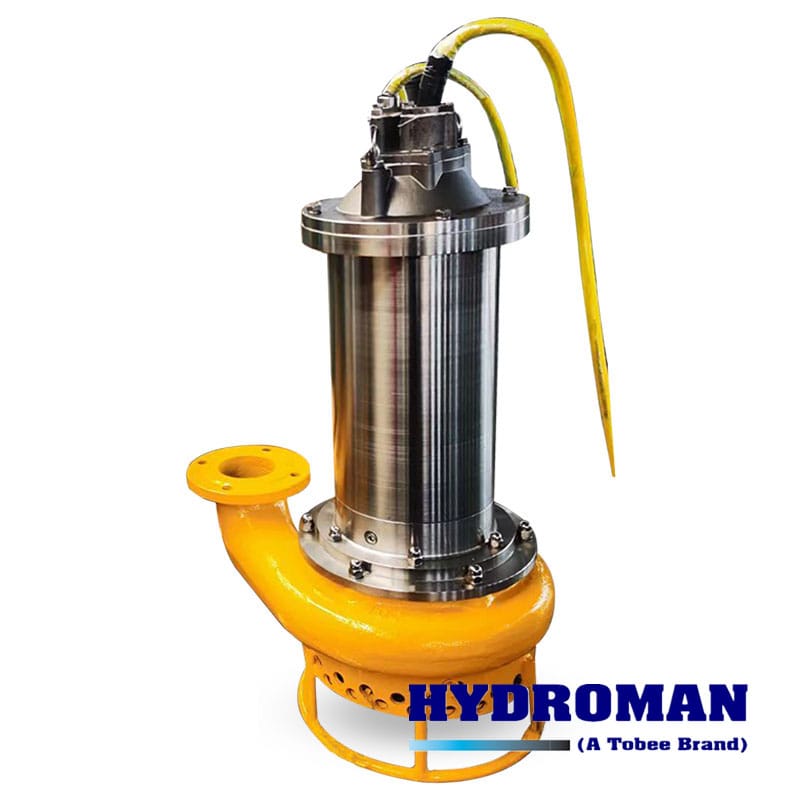
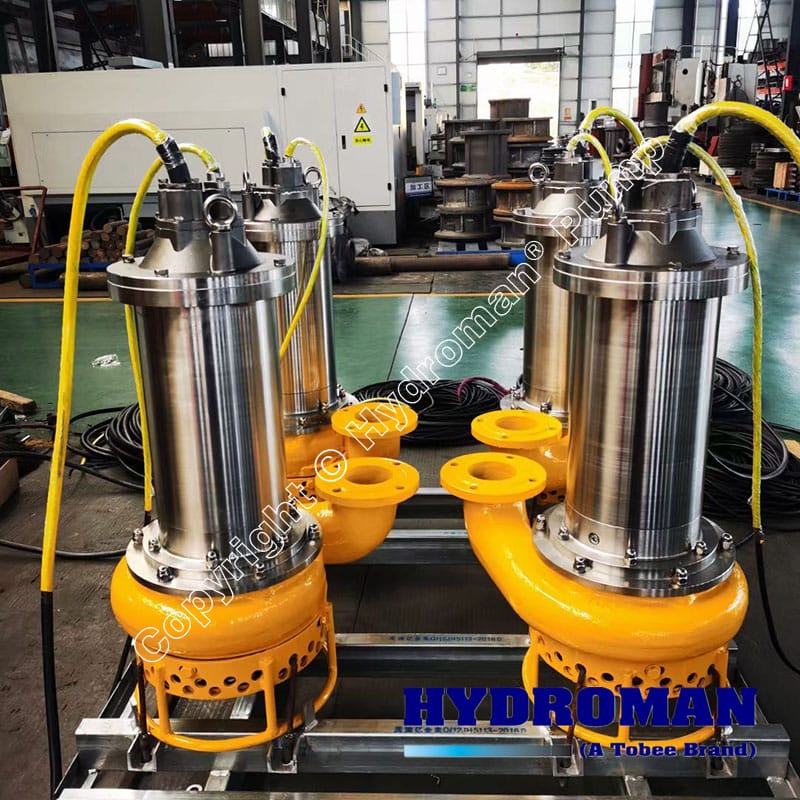
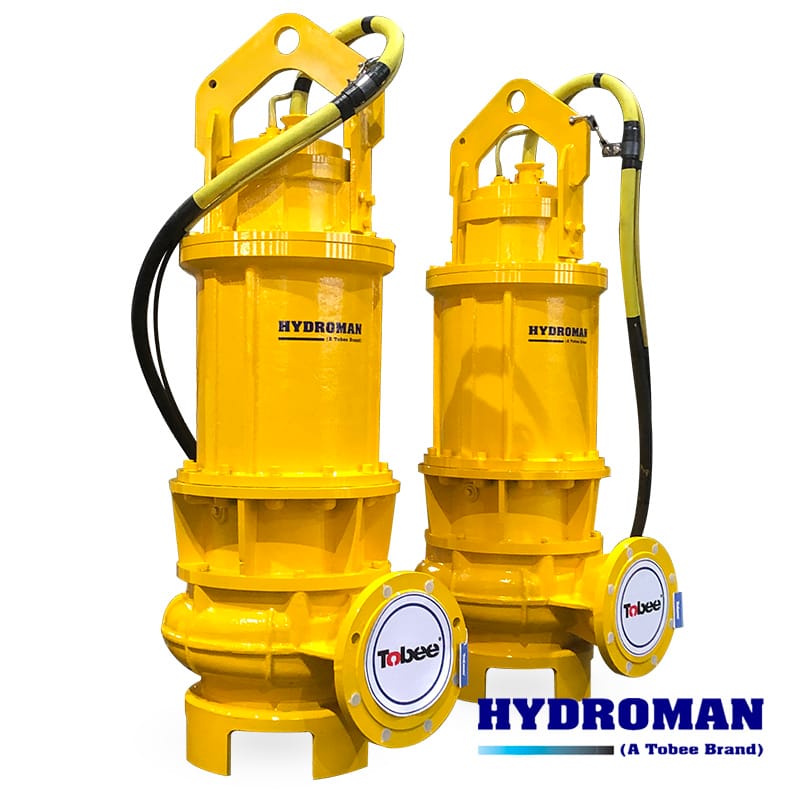
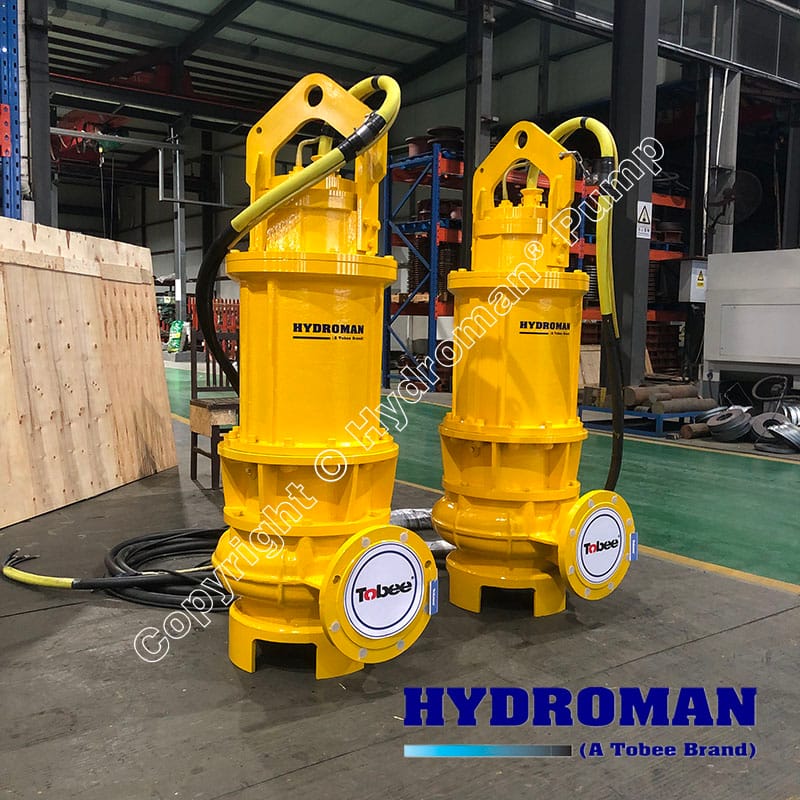
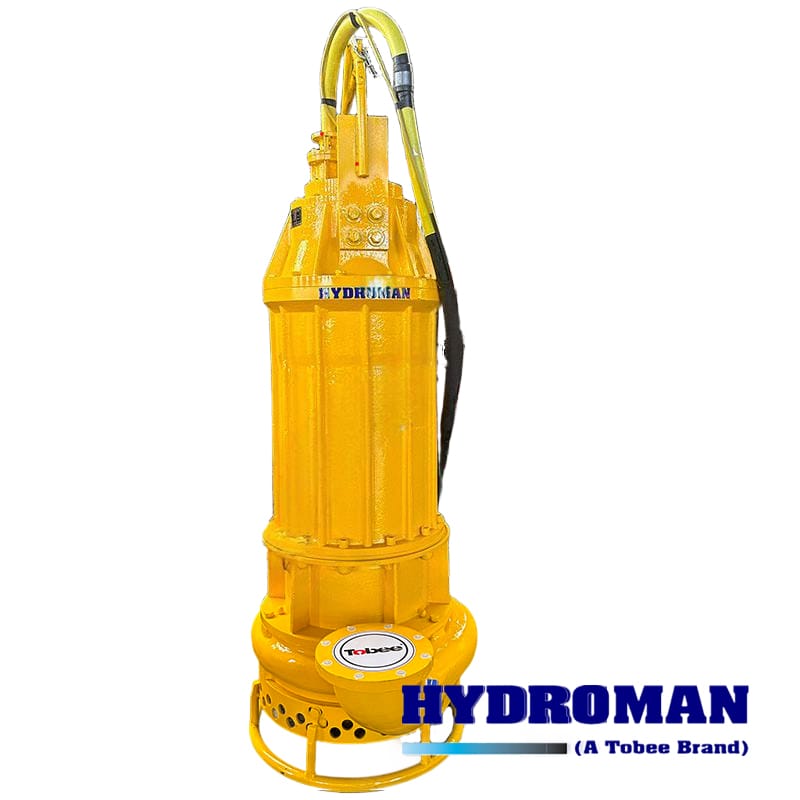
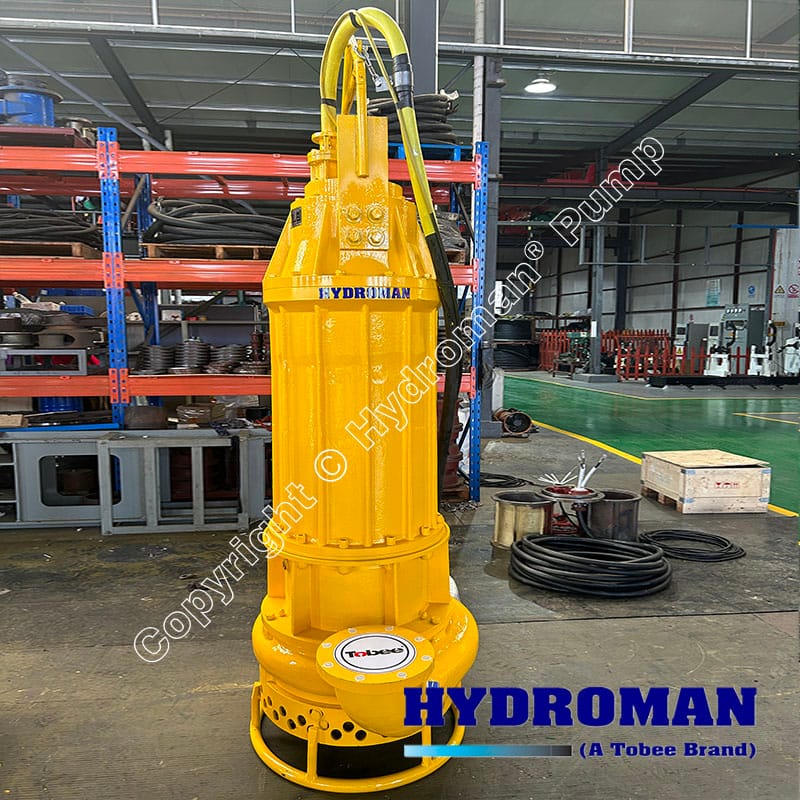
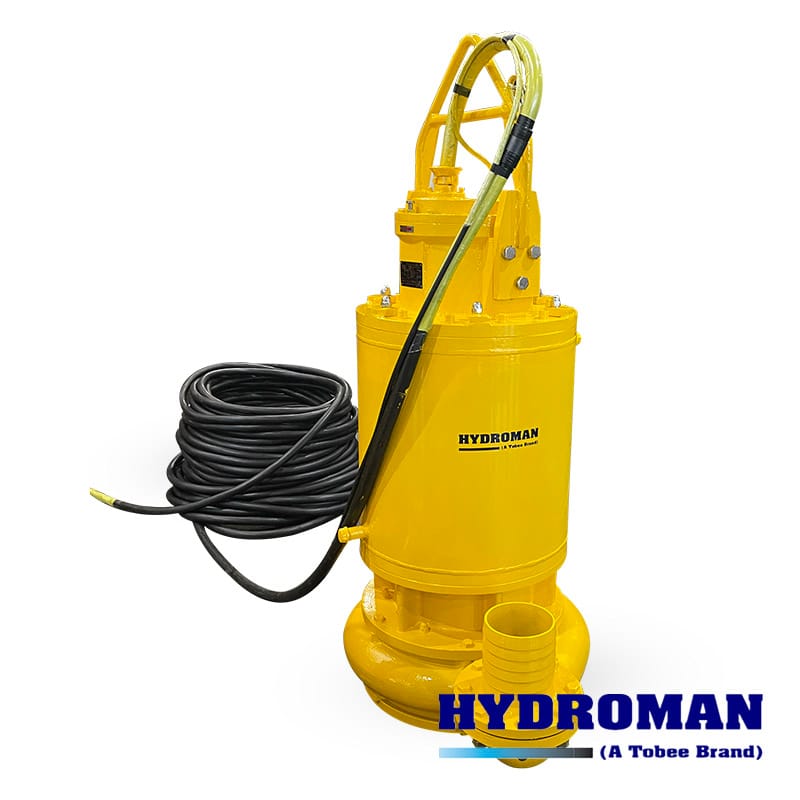
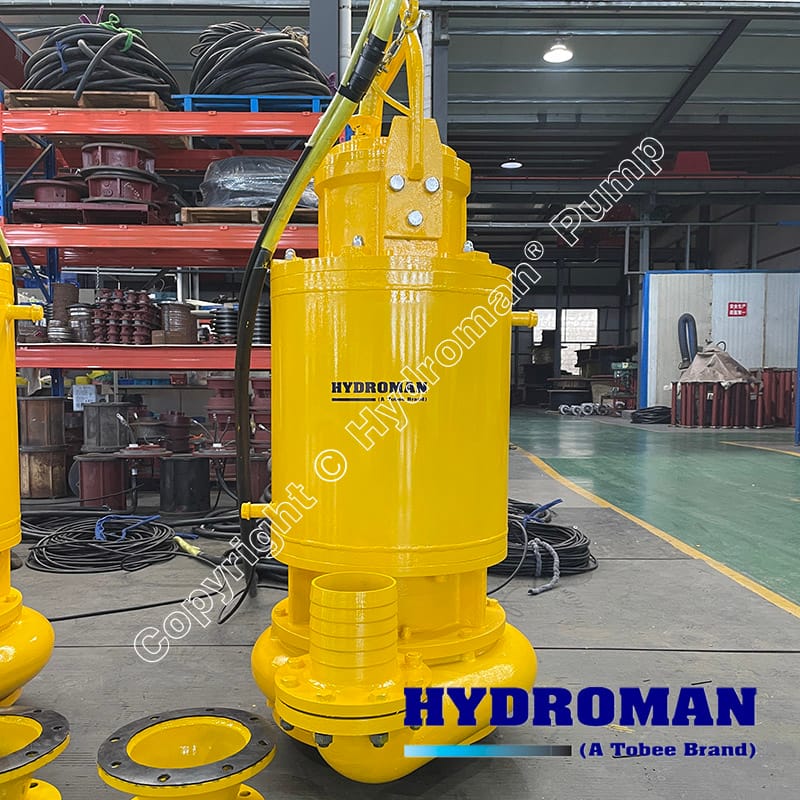
Hydroman®'s TJQ Series submersible dredge pump is the heavy-duty platform built around exactly the working conditions described above — electric-driven, fully submersible, and configured for sand, slurry, sludge and sediment handling rather than clean-water transfer.
Core characteristics of the TJQ Series include:
| Feature | What it means for your project |
|---|---|
| Electric submersible drive | No separate prime mover on a barge or bank; the motor is sealed and runs submerged next to the pump |
| High-solids wet end | Wear-resistant impeller and casing options for continuous sand and sediment contact |
| Optional agitator | For loosening and suspending settled sand ahead of the intake |
| Optional cutter head | For consolidated, cohesive or hardened sediment |
| Optional control cabinet / soft starter / VFD | Controlled starting current and adjustable flow to match site power supply and pumping conditions |
| Extended submersible cable | For deep water, remote pits, or pile depths beyond standard reach |
As a submersible dredging pump manufacturer, Hydroman configures each TJQ unit to the job rather than shipping a single fixed specification — which is the practical reason to talk through your flow, head and solids data before ordering rather than picking a model number off a generic list. If you are comparing a submersible sand pump for sale from multiple suppliers, ask specifically what wear materials are used in the impeller and casing, since this is usually the biggest factor in service life under continuous sand duty, more so than headline horsepower.
Selecting a dredge pump is a matching exercise, not a matter of picking the biggest available unit. Before requesting a quote, it helps to have answers — even approximate ones — for the following:
| Selection factor | Why it matters |
|---|---|
| Required flow rate (m³/h) | Determines pump size and motor power needed to clear the volume within your working window |
| Required head (m) | Vertical lift plus friction losses over the discharge pipe run; undersized head means the slurry never reaches the disposal point |
| Sand concentration / solids content (%) | Higher solids loading changes impeller wear rate and effective flow capacity |
| Maximum particle size (mm) | Must be within the pump's solids passage to avoid clogging |
| Pumping distance (m) | Longer discharge runs increase friction head and may require a larger discharge diameter |
| Water depth (m) | Affects cable length, pump housing pressure rating, and installation method |
| Pile or working-space dimensions | Narrow inclined piles need a pump body diameter that physically fits and can be maneuvered into position |
| Agitator or cutter head requirement | Set by bed material condition — loose sand vs. compacted or cohesive sediment |
| Discharge pipe diameter | Must match pump outlet to avoid unnecessary friction loss or velocity that drops solids out of suspension |
| Power supply available on site | Voltage and available current determine motor sizing and whether a soft starter or VFD is needed |
Working through this list before ordering is what separates the best submersible dredging pump for your specific site from a unit that is simply well-reviewed in general.
The table below summarizes the general specification framework for Hydroman® TJQ Series submersible dredge pumps. Exact figures vary by model and configuration — treat this as a reference structure to use when requesting a formal quotation.
| Parameter | Specification |
|---|---|
| Pump Type | Submersible Dredging Pump |
| Series | TJQ Series |
| Drive | Electric, submersible motor |
| Application | Sand and sediment removal, underwater dredging |
| Medium | Sand, sludge, silt, sediment, water-sand mixtures |
| Flow rate range | Approx. 50–3,000 m³/h depending on model |
| Total head range | Approx. 5–40 m depending on model |
| Motor power range | Approx. 2.2 kW–315 kW depending on model |
| Max solids passage | Up to approx. 80–100 mm depending on model |
| Solids concentration handling | Configurable for moderate to high-solids duty |
| Discharge size | Depending on model, matched to flow and distance requirements |
| Agitator | Optional, for sand and sediment suspension |
| Cutter head | Optional, for consolidated or cohesive material |
| Cable length | Optional extended length for deep or remote operation |
| Control | Control cabinet, soft starter, or VFD available |
These flow, head and power ranges reflect the general band that submersible slurry and dredge pumps in this duty class are commonly built to across the industry, and give you a realistic starting point for sizing — final selection is always confirmed against your specific site data.
Beyond the base pump, most of the value in a dredging pump order sits in matching the configuration to the job:
The core application this page is built around: clearing accumulated sand and sediment from inside driven steel piles, including inclined piles on marine and offshore foundation structures, ahead of grouting, inspection, or further construction stages.
Beyond pile interiors, submersible dredging pumps support pile cleaning before casting, foundation excavation dewatering and desilting, and general sediment removal from excavation support works where a dry pump cannot be positioned close enough to the material.
Rivers, harbors, ponds, reservoirs and general construction sites accumulate sediment that restricts water flow, reduces storage capacity, or blocks planned works — all areas where a submersible dredge pump can be deployed without draining the site first.
In mining and processing operations, the same pump class supports sand recovery, mineral processing slurry transfer, and general industrial sediment handling where abrasive, high-solids media rules out a standard clean-water pump.
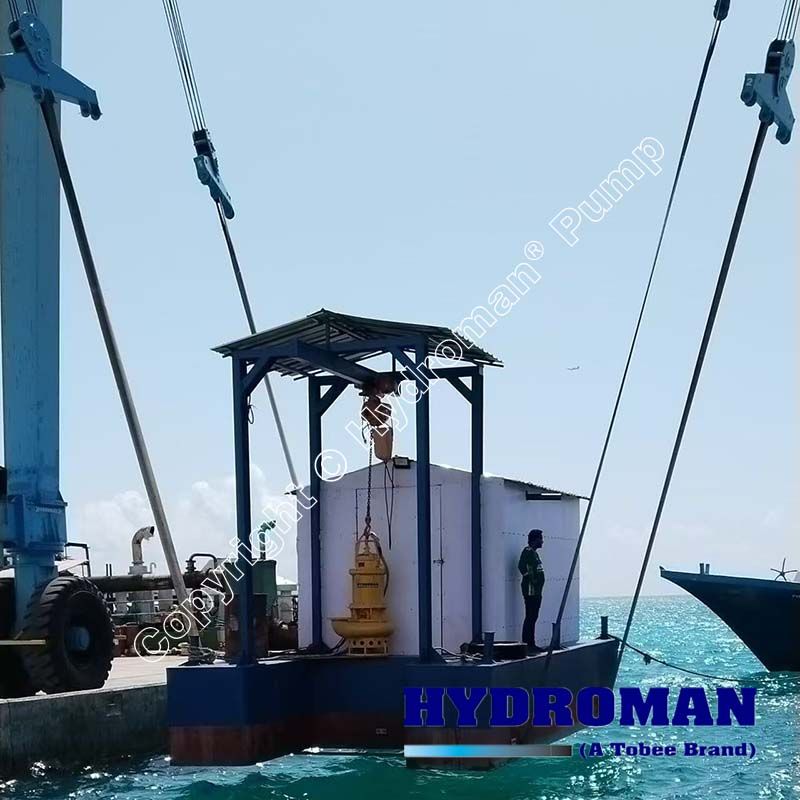 | 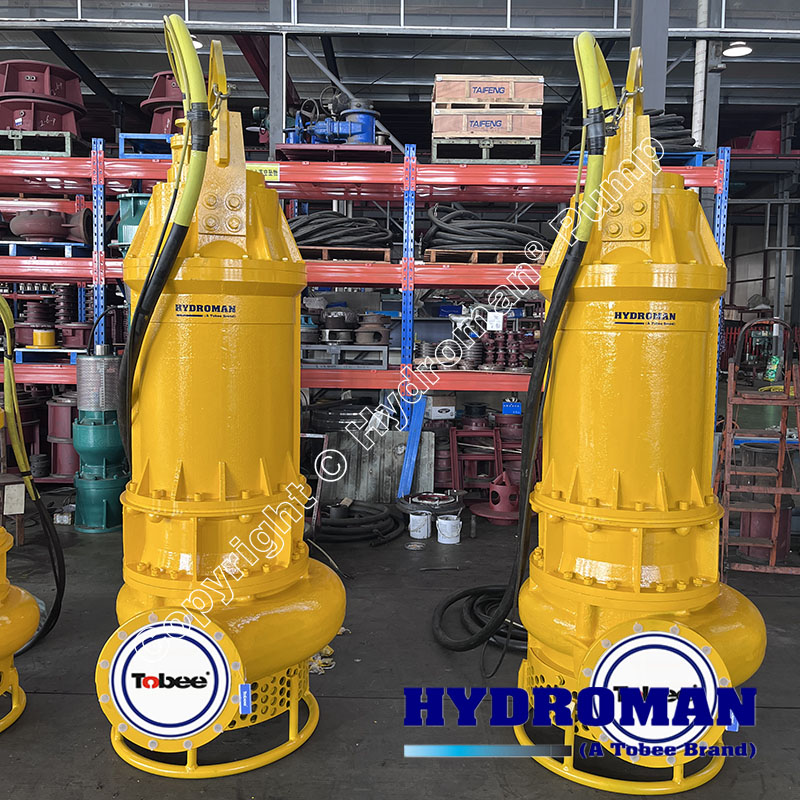 |
The core process for sand removal — whether inside a pile, at a pond bottom, or along a riverbed — follows the same five steps.
Confirm water depth, sand layer depth and compaction, pile or working-space dimensions, discharge routing, and on-site safety conditions before selecting equipment.
Match the pump to required flow, head, solids concentration and maximum particle size, and decide whether an agitator or cutter head is needed based on how compacted or cohesive the material is.
Lower the pump to the sediment accumulation point — typically the low side of an inclined pile, or the deepest point of a pit or pond — and connect the discharge pipeline securely before startup.
Start the motor so the pump draws in the surrounding sand, water and sediment as a pumpable mixture and delivers it through the discharge line to the disposal or settling point.
Track discharge flow, motor current and vibration, and watch for changes in sediment output that indicate the accessible material is exhausted or the pump position needs adjusting.
Sand and sediment are abrasive by nature. Hydroman® builds the TJQ Series wet end with wear-resistant materials specifically because standard pump components erode quickly under continuous sand contact — the difference shows up in service intervals, not in day-one performance.
Because the pump works fully submerged, you avoid the priming issues, suction lift limitations, and long horizontal intake runs that come with dry-mounted pumps — a meaningful advantage in flooded pile shafts and deep pits where a surface pump station simply is not an option.
Agitator, cutter head, control cabinet, cable length and discharge sizing are all selected per project rather than fixed at the factory, so the pump you receive is built for your sediment type and site layout, not a generic average.
Hydroman's selection process works from your actual flow, head, solids content, particle size and application — not from a catalog page number — which is the more reliable way to land on a pump that performs for the full length of the project rather than only in initial testing.
There is no single fixed submersible dredging pump price that applies across projects, because the cost is driven by the specific configuration your site needs rather than a flat catalog rate. The main factors that move the price up or down include:
| Cost factor | Effect on price |
|---|---|
| Pump power (kW) | Higher motor power for larger flow or higher head increases base cost |
| Flow and head requirement | Larger duty points require larger pump bodies and motors |
| Discharge size | Larger discharge diameters generally mean a larger, higher-cost pump |
| Agitator configuration | Adds mechanical components and drive requirements |
| Cutter configuration | Higher cost than agitator-only due to the cutting drive mechanism |
| Materials | Higher wear-resistance grades cost more upfront but extend service life in abrasive duty |
| Cable length | Extended cable for deep or remote operation adds cost |
| Control cabinet | Soft starter or VFD options add to total system cost but improve motor protection and flow control |
| Quantity | Multi-unit orders typically improve per-unit pricing |
| Shipping destination | Freight and logistics vary significantly by region and port access |
If you are comparing a sand dredge pump for sale or a submersible dredging pump for sale from different suppliers, ask each one to quote against the same flow, head, solids and particle size figures — otherwise you are not actually comparing the same pump.
Contact Hydroman® for a pump recommendation based on your flow, head, sand concentration, particle size and application conditions.
 Sara Liang
 +86 189 3110 6396 (Whatsapp/Wechat)
 Inquiry@tobeepump.com
A submersible dredging pump is an electric pump designed to operate fully submerged in water, sand, silt or sediment, drawing the mixture in at the source and discharging it through a pipeline to a disposal or settling point, rather than pulling material through a long suction line from a dry-mounted unit.
Yes, provided it is built for high-solids duty. A standard clean-water submersible pump will wear out quickly under continuous sand contact — a purpose-built submersible sand dredging pump uses wear-resistant impeller and casing materials for this exact condition.
The pump inlet is positioned at or near the sediment layer, and the impeller draws the sand-water mixture into the pump body and pushes it out through the discharge line. Where sediment is compacted, an agitator or cutter head at the inlet loosens the material first.
Yes. The pump is lowered into the pile shaft on a cable to the low point of the incline where sand collects, with the discharge hose routed up and over the pile head — this is one of the primary applications for Hydroman's TJQ Series.
If the sand or sediment has settled and compacted, an agitator will noticeably improve intake efficiency by loosening the material before it reaches the pump. For loose, freshly deposited sand, a bare pump may be sufficient.
A cutter head is recommended for consolidated, cohesive or hardened sediment — dense clay layers or long-settled deposits that an agitator cannot fully break up. It is not necessary for loose sand or general silt and sludge removal.
Sand, silt, sediment, sludge, mud, water-sand mixtures and other abrasive fines. Maximum particle size and solids concentration depend on the specific model and configuration.
Start with your required flow rate, head, sand concentration, maximum particle size, pumping distance, water depth, working-space dimensions, and whether the sediment is loose or compacted — this determines pump size, agitator or cutter head requirement, and discharge sizing.
Price depends on motor power, flow and head requirement, discharge size, agitator or cutter configuration, wear-resistant materials, cable length, control system, and order quantity. There is no single fixed price across all configurations.
Yes. Hydroman® supplies TJQ Series submersible dredging pumps configured to your flow, head, solids content, particle size and application, with optional agitator, cutter head, cable length, and control cabinet.
Submitted successfully
Your submission has been received. Thanks for your time

 FR(EUR)
 CN(CNY)
 GB(GBP)
 AU(AUD)





Reviews
0%
0%
0%
0%
0%
Share your thoughts with other customers
Write a Review