FR(EUR)
 CN(CNY)
 GB(GBP)
 AU(AUD)
Water Suction Pump Guide: Types, Uses, Working Principles & How to Choose the Right One
Whether you're clearing a flooded basement, dewatering an excavation pit, or moving sand-laden water out of a mine sump, the pump you choose decides whether the job gets done in an hour or drags on for a day. Here's what you need to know before you buy.
A water suction pump is one of those tools you don't think about until you desperately need one — a storm knocks out power to your sump, a job site excavation fills overnight, or a mine sump backs up faster than your crew can respond. This guide walks you through how these pumps actually work, which type fits your situation, and how to keep one running for years instead of months. Along the way we'll point to real engineering standards and government data, not just marketing claims, so you can make a decision you're confident in.
1. What Is a Water Suction Pump?
A water suction pump is any pump that lifts or moves water by drawing it in through a suction inlet and forcing it out through a discharge outlet — the pump doesn't just "push" water, it creates a pressure difference that lets the surrounding atmosphere or submerged water do the work of moving into the pump casing. You'll sometimes see the term used loosely to describe almost any water pump, but strictly speaking, a "suction" pump is one working against a suction lift — meaning the water source sits below the pump's impeller, as opposed to a flooded-suction or fully submersible arrangement where the pump sits in or below the water.
Every pump has two sides: the suction side, where water enters, and the discharge side, where it exits under pressure. How efficiently a pump handles the suction side — how far below it the water sits, how clean or dirty that water is, how much air might sneak into the line — determines almost everything about performance in the field.
How Does a Water Suction Pump Work?
The process happens in four stages:
- Water intake — water enters the pump through the suction pipe or inlet, pulled in as the rotating impeller creates a low-pressure zone at the eye of the impeller.
- Impeller rotation — the spinning impeller flings water outward using centrifugal force, converting mechanical energy from the motor into kinetic energy in the fluid.
- Pressure generation — as water moves through the volute or diffuser casing, that velocity converts into pressure (head).
- Water discharge — pressurized water exits through the discharge outlet and travels through the discharge hose or pipe to its destination.
The physics you can't get around: when a pump is mounted above the water source, it's not "sucking" water up in any active sense — atmospheric pressure is pushing water up the suction pipe to fill the low-pressure zone the pump creates. At sea level, standard atmospheric pressure can support a column of water roughly 10.3 meters (33.9 feet) high — that's the absolute theoretical ceiling for suction lift, and it's the same for every centrifugal pump on earth, regardless of horsepower. In real installations, friction losses, water temperature and the pump's own NPSH requirement bring the practical usable suction lift down to somewhere around 4–7 meters for clean cold water at sea level. (Engineering ToolBox, NPSH reference)
This is exactly why heavy-duty dewatering jobs so often move to submersible pumps instead of surface-mounted suction pumps — put the pump under the water and you eliminate the suction-lift limit entirely, since the pump is now working on flooded suction rather than fighting atmospheric pressure.
Water Suction Pump vs. Water Transfer Pump
A water transfer pump is usually a lighter-duty, general-purpose pump designed to move relatively clean water from point A to point B — refilling a tank, transferring between containers, light irrigation. A suction pump, in industrial usage, more often implies a pump engineered specifically to lift water from below its own mounting point, frequently with self-priming capability and a more robust suction-side design. In practice, the terms overlap a great deal; what really separates them is the installation condition (is the water above or below the pump?) and the duty cycle the pump is rated for.
Water Suction Pump vs. Sump Pump
A sump pump is a specific application of a submersible (or occasionally pedestal) pump, built to sit in a sump pit and switch on automatically — usually via a float switch — when water rises to a set level. It's designed for basement and crawl space drainage, not for continuous industrial duty. A general water suction pump covers a much broader range: tanks, ponds, construction pits, flooded fields, and anywhere else water needs to be relocated, often on demand rather than automatically.
2. How Water Suction Pumps Work
Beyond the basic four-stage cycle above, several site conditions determine how well a suction pump actually performs once it's installed:
| Factor | Effect on performance |
|---|---|
| Suction lift (vertical distance) | Every additional meter of lift eats into available NPSH and reduces achievable flow |
| Suction pipe diameter | Undersized pipe increases velocity and friction loss, choking flow before it reaches the pump |
| Pipe length & number of bends | Each fitting adds equivalent length and friction — long runs with many elbows can cost several meters of head |
| Air leakage at joints | Even a pinhole leak on the suction side lets air in, breaking the vacuum and causing loss of prime |
| Water temperature | Hotter water has higher vapor pressure, which shrinks the available suction lift — a jump from 20°C to 80°C can remove nearly 5 m of usable lift |
| Water level / submergence | Too little submergence at the intake causes vortexing and air entrainment, leading to cavitation |
These variables are exactly why two pumps with identical horsepower ratings can perform completely differently on two different job sites. It's also why serious suppliers ask about total dynamic head and suction lift before recommending a model — not just "how many gallons per minute do you need."
3. What Can Water Pumps Be Powered By?
Choosing a power source is often as important as choosing pump type, especially for remote, mobile, or emergency applications.
Electric Water Suction Pumps
The most common option for fixed installations and anywhere reliable power is available. Single-phase motors typically cover smaller pumps up to a few horsepower; three-phase motors dominate industrial and heavy-duty submersible pumps because they deliver smoother torque, better efficiency, and easier speed control through variable frequency drives.
Hydraulic Water Pumps
Driven by a hydraulic power pack or an excavator's auxiliary hydraulic circuit, these pumps are common on mobile equipment and mining sites where running electrical cable isn't practical. They're compact for their output and can be submerged without any concern about motor windings.
Engine-Driven Pumps
Gasoline or diesel engine-driven pumps are the default choice for portable dewatering and emergency response where grid power isn't an option — flood response, remote farmland, or job sites still awaiting utility connection.
Water Suction Pumps Without Electricity
When electricity truly isn't available, your realistic options are manual hand pumps (low flow, emergency-only), engine-driven pumps, or hydraulic-drive pumps run off other equipment. Manual pumping is fine for a few gallons; it's not a serious option once you're dealing with hundreds of gallons per minute.
4. Types of Suction Pumps for Water
Centrifugal Pumps
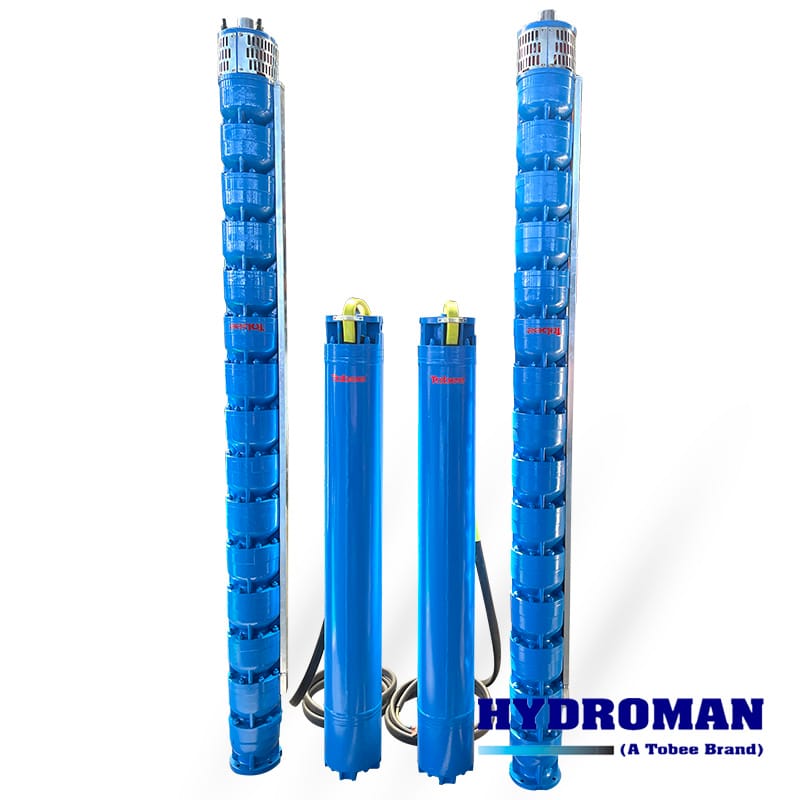
The workhorse of the pump world. A centrifugal pump uses a rotating impeller to convert motor energy into flow and pressure — simple, reliable, and available in an enormous range of sizes. Centrifugal pumps deliver high flow at moderate head and perform best when operated near their Best Efficiency Point (BEP), the flow rate at which the pump was designed to run most efficiently. Operating far above or below BEP increases vibration, accelerates wear, and shortens service life — a relationship well documented in the Hydraulic Institute's ANSI/HI 9.6.3 allowable operating region standard, the reference most manufacturers design against. |  |
 | Submersible Pumps
Submersible pumps are built with a sealed, hermetic motor coupled directly to the pump end, designed to operate fully underwater. Because the entire unit sits below the water surface, it works on flooded suction rather than suction lift — this removes the 10.3 m atmospheric limit entirely and makes submersibles the natural choice for deep pits, sumps, and any application where priming a surface pump would be a hassle. They also tend to run quieter and cooler than surface units, since the surrounding water helps dissipate motor heat. |
Sump Pumps
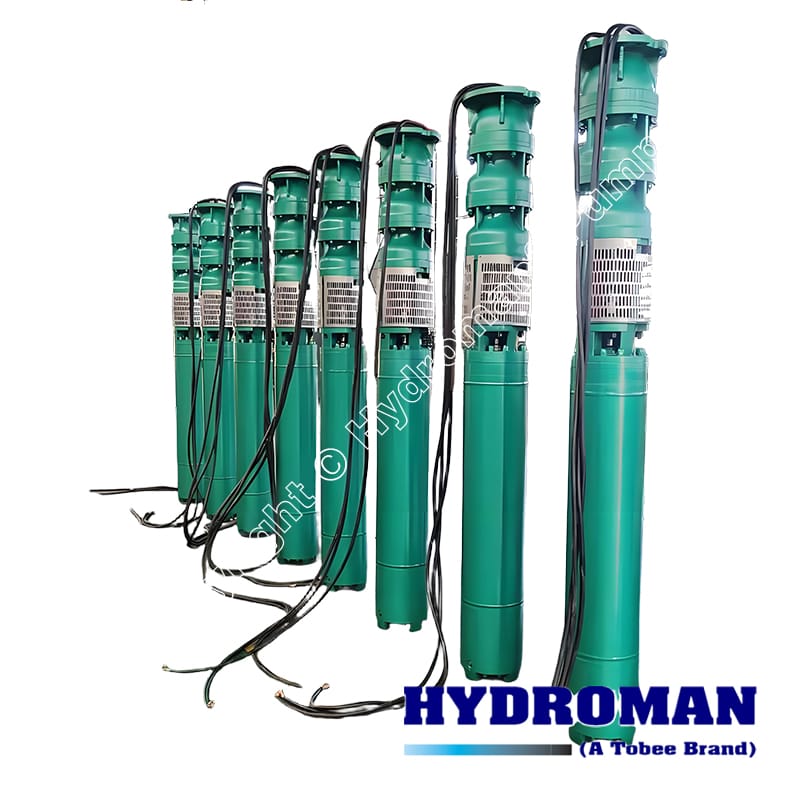
A submersible sump pump sits in a basement or crawl space sump pit and activates automatically via a float switch. These are sized for relatively low, intermittent flow — enough to keep a residential basement dry — and are not intended for continuous heavy-duty operation or solids-laden water. | 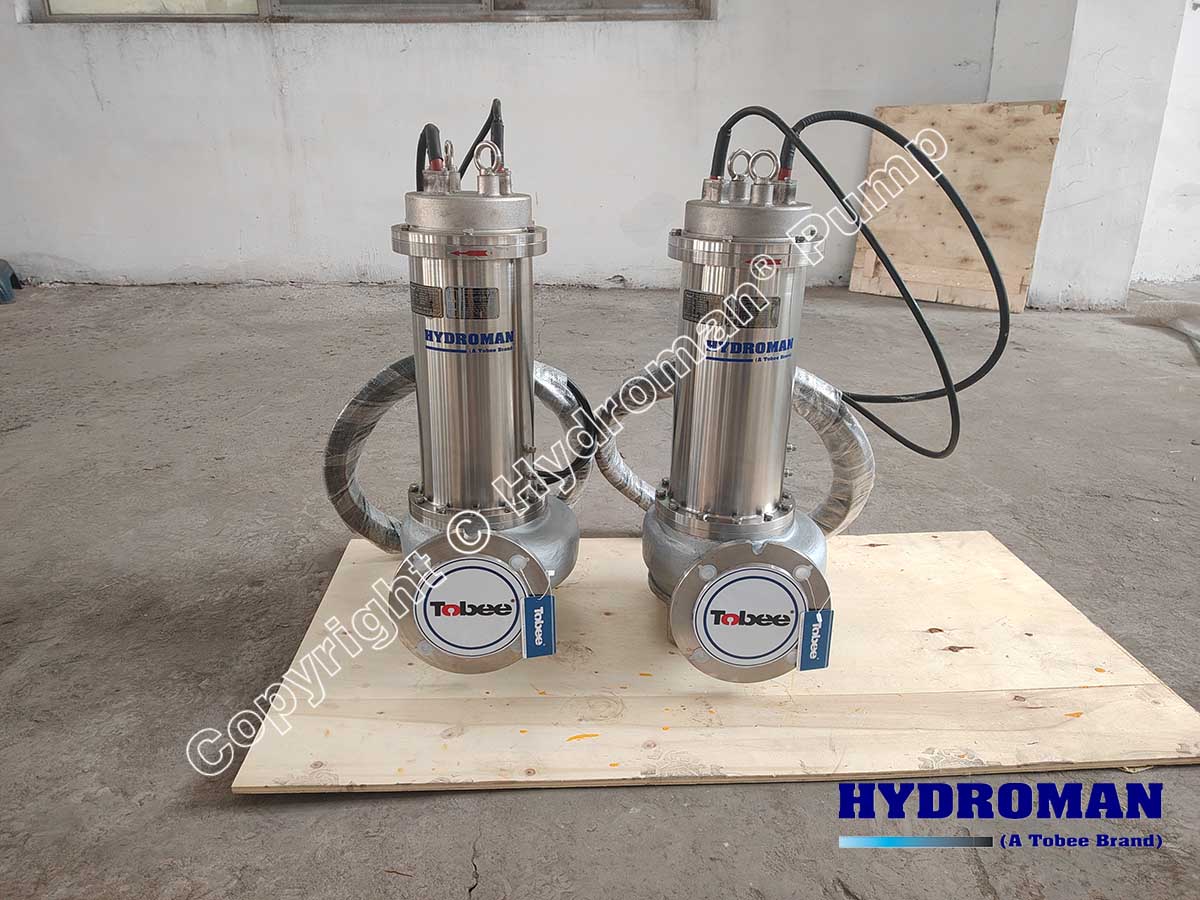 |
Submersible Jet Pumps
A jet pump variant uses a venturi effect to boost suction lift capability, often used for deep well applications where a standard centrifugal pump can't reach. Submersible jet pumps combine the reliability of underwater operation with the extra lift assist of the jet mechanism, useful where water sits well below grade.
Booster Pumps
Booster pumps don't create suction lift in the traditional sense — they take water that's already flowing (typically from a municipal line or storage tank) and increase its pressure for irrigation systems, multi-story buildings, or pressure-sensitive processes. They're often paired with pressure switches or VFDs to maintain a constant output pressure regardless of demand fluctuation.
 | Self-Priming Pumps
A self-priming centrifugal pump retains enough water in its casing to re-establish prime after being shut off, even with an empty suction line, by recirculating that retained water to evacuate air from the suction pipe. This makes them well suited to construction dewatering, where the suction line is frequently disconnected and reconnected as the pump is relocated around a site. |
Trash Pumps
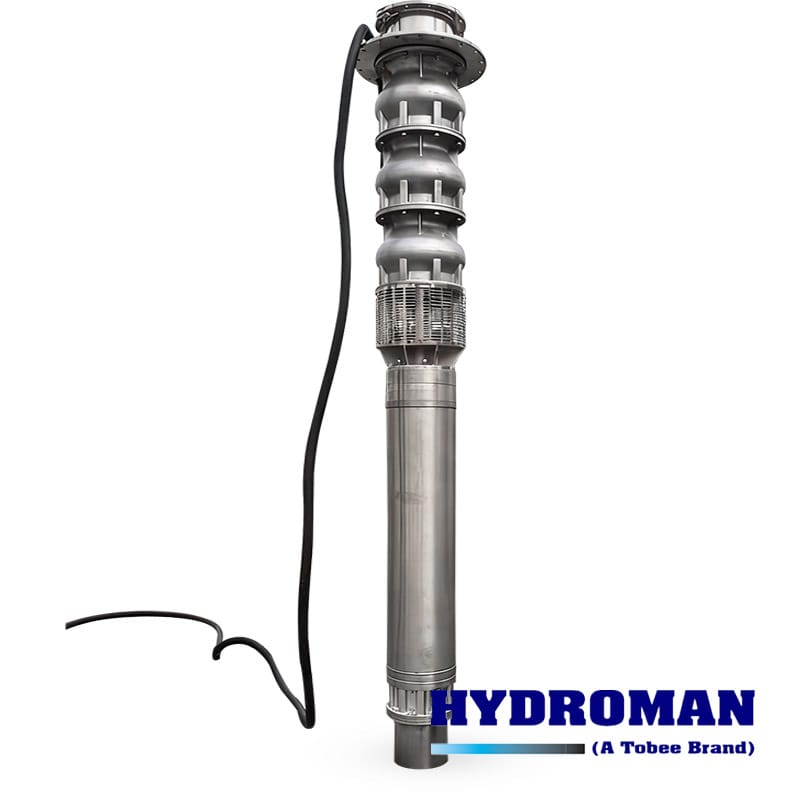
Trash pumps are centrifugal or submersible pumps engineered with wider impeller passages and non-clog or vortex impeller designs, so they can pass leaves, twigs, gravel, and other solids without jamming. Electric and engine-driven trash pumps are staples on construction sites and in flood response, where the water being moved is anything but clean. |  |
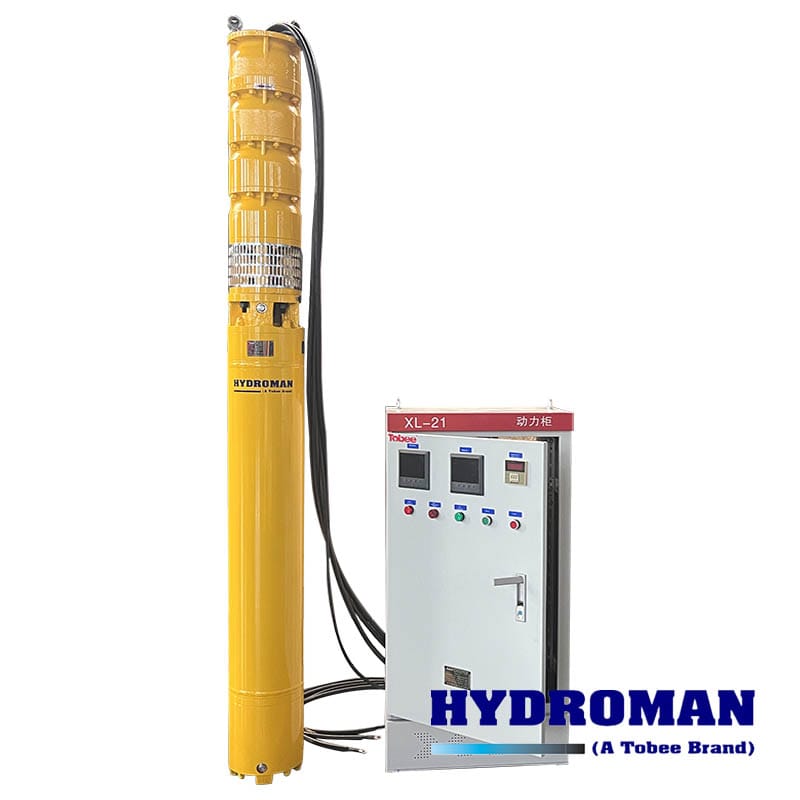
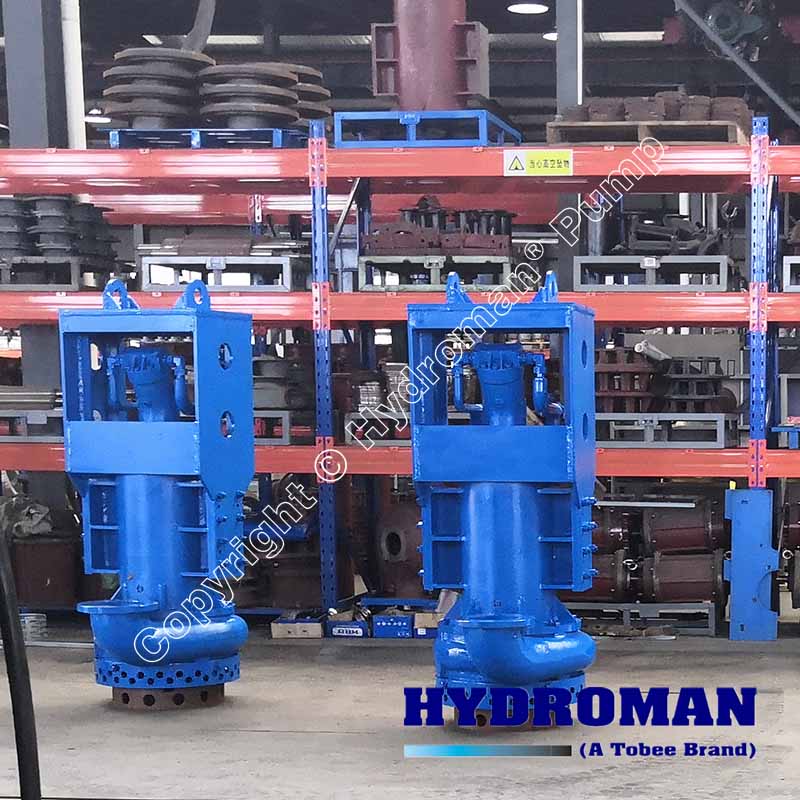
 | Heavy-Duty / Slurry PumpsBuilt for abrasive water containing high concentrations of sand, sediment, or tailings, heavy-duty slurry pumps use hardened materials — commonly high-chrome white iron in the 600+ Brinell hardness range — for the impeller, wear plate, and casing liner. Industry benchmarks put typical heavy-duty submersible slurry pump flow rates at roughly 50–2,000+ GPM, heads of 10–100 ft, and solids handling up to around 3 inches (80 mm), with some large-format units passing solids over 10 inches and running to 7,000+ GPM in dredging and mining service. (Industry slurry pump specification data) These are the pumps you reach for in mining sumps, quarry dewatering, and dredging — applications where a standard cast-iron centrifugal pump would wear out in weeks. |
5. Water Pumps for Your Home, Basement, and Garden
For residential and light commercial use, you're usually choosing between a few familiar categories:
- Basement or crawl space drainage — a submersible sump pump with an automatic float switch, ideally backed by a battery or water-powered backup in case the storm that's flooding your basement also knocks out your power.
- Well or deep-source water supply — a submersible well pump or jet pump, sized to your well depth and household demand.
- Garden and irrigation — a small centrifugal or booster pump, sized to your sprinkler zone's flow and pressure requirements.
- Pond and water feature circulation — a low-head submersible pump matched to the pond's volume for adequate turnover.
- Pool draining and maintenance — a portable submersible utility pump capable of drawing water down to within a fraction of an inch of the floor.
Don't underestimate what's at stake here: according to FEMA and National Flood Insurance Program cost modeling, just one inch of water in a typical home can cause roughly $25,000–$27,000 in damage, and that figure nearly doubles once water reaches six inches. (FEMA/NFIP-based flood cost data) A properly sized, well-maintained sump pump is genuinely cheap insurance against that outcome.
6. Industrial, Construction & Agricultural Uses
Construction Site Dewatering
Excavation pits, foundation footings, and tunnel workings fill with groundwater and rainwater fast, and work can't safely continue until it's cleared. Self-priming and submersible trash pumps dominate here because they tolerate the sediment, mud, and debris that inevitably end up in the water. It's worth knowing that in the U.S., discharging that water isn't a free-for-all: EPA's Construction General Permit requires sites over one acre to control sediment before discharge, and sites near sensitive waters must monitor discharge turbidity against a benchmark of 50 Nephelometric Turbidity Units (NTU). (EPA NPDES Construction General Permit) Pairing your dewatering pump with basic sediment control (settling tanks, filter bags) isn't just good practice — it's often a permit requirement.
Flood Water Removal
Around 90% of U.S. natural disasters involve flooding in some form, according to National Flood Insurance Program data, and flood damage nationally runs well over $180 billion a year. (FEMA/NFIP flood statistics) When water is rising, flow rate matters more than almost anything else — high-capacity submersible or trash pumps capable of several hundred to several thousand GPM are what separates a controlled evacuation of water from a race you're losing.
Mining and Industrial Dewatering
Underground sumps, open-pit perimeters, and process water systems all depend on dewatering pumps that can run around the clock against abrasive, sediment-heavy water. A realistic mid-size mine sump duty point looks something like 2,000 GPM at 120 ft of total dynamic head, with water carrying roughly 25% solids by weight — a job that calls for a submersible slurry pump in the 150–250 HP range with a semi-open, high-chrome impeller and double mechanical seal. This is precisely the segment where Hydroman's heavy-duty submersible pumps are built to work.
Agriculture, Irrigation & Large Properties
Irrigation remains one of the largest single uses of fresh water in the United States — U.S. Geological Survey data puts irrigation withdrawals at roughly 118 billion gallons per day, accounting for about 42% of all freshwater withdrawals nationally (and a far higher share once you exclude thermoelectric power cooling). (USGS, Estimated Use of Water in the United States) On large properties and farms, that demand is met with a mix of centrifugal transfer pumps for surface water sources and submersible turbine pumps for wells — sized against seasonal peak demand, not average use, since irrigation windows are often narrow.
Pond, Tank & Reservoir Water Transfer
Water tank cleaning, pond drawdown, and reservoir transfer all share a common requirement: the ability to pull water down close to empty without losing prime, and to tolerate whatever sediment has settled on the bottom. Submersible pumps with a low-profile intake, or self-priming trash pumps for above-ground tanks, are the standard tools for this work.
7. Which Water Pump Do You Need?
Use this as a starting point — your specific flow, head, and solids content will refine the final selection, but it'll point you toward the right category fast.
| Application | Recommended pump type |
|---|---|
| Clean water transfer | Centrifugal water pump |
| Basement / crawl space drainage | Submersible sump pump |
| Deep pit drainage | Submersible water pump |
| Construction site dewatering | Self-priming or submersible dewatering pump |
| Flood water removal | Submersible or trash pump (high flow) |
| Water containing debris | Trash pump (non-clog / vortex impeller) |
| Sand and sediment-heavy water | Heavy-duty solids-handling / slurry pump |
| Mine or quarry sump dewatering | Heavy-duty submersible slurry pump |
| Industrial water transfer | Electric centrifugal transfer pump |
| Agricultural irrigation | Centrifugal or submersible turbine pump |
| High-pressure water supply / booster | Multistage or booster pump |
| Deep well water supply | Submersible well or jet pump |
8. 4 Key Factors for Selecting the Perfect Water Pump
Every pump specification sheet boils down to four questions worth answering before you buy.
1. What flow rate and head do you actually need?
Flow rate (measured in m³/h, L/s, or GPM) tells you how fast water needs to move. Total head — the vertical lift plus friction losses through pipe, fittings, and valves — tells you how hard the pump has to work to get there. Undersize either one and you'll be disappointed on site; oversize by too much and you're wasting energy and money on a pump running far from its best efficiency point.
2. How far is the suction lift, and does it need to be a lift at all?
If your water source sits more than a few meters below the pump, remember the atmospheric ceiling discussed earlier — beyond roughly 7–8 meters of practical suction lift at sea level, a surface-mounted centrifugal pump starts fighting physics it can't win. At that point, a submersible pump on flooded suction is almost always the better engineering choice.
3. What's actually in the water?
Clean water, water carrying occasional debris, and water loaded with sand or sediment call for three completely different pump designs — a mismatch here is the single most common cause of premature pump failure. Trash pumps and slurry pumps exist specifically because standard centrifugal impellers clog or wear through quickly when fed water they weren't designed for.
4. What are your power and installation constraints?
Electric power availability, whether the site allows submersible installation, and whether the pump needs to be portable all narrow your options fast. A remote job site with no grid power rules out most electric pumps immediately, regardless of how well they'd otherwise fit the job.
9. Basic Water Pump Maintenance for Longevity
A well-maintained industrial pump routinely outlasts a neglected one by years, not months. A basic maintenance rhythm should include:
- Regular visual inspection of the casing, impeller, shaft, bearings, and mechanical seal for wear, corrosion, or unusual play.
- Piping checks for blockage, leakage at joints, corrosion, and vibration that suggests misalignment or cavitation.
- Electrical inspection of the motor, power cable insulation, control panel, and overload protection — especially on submersible units, where a compromised cable jacket is a common failure point.
- Wear-part tracking — impellers, wear plates, and liners on slurry and dewatering pumps wear on a predictable schedule; industry data for high-chrome slurry components suggests roughly a 6–12 month wear life under typical mining duty, shorter under higher solids concentration.
Service frequency should track actual operating hours, water quality, and solids concentration rather than a fixed calendar — a pump running continuously in 25% solids needs far more frequent attention than one running an hour a week on clean water.
10. Troubleshooting Common Problems
| Symptom | Likely causes |
|---|---|
| Pump won't draw water | Insufficient priming, air leak in suction line, blocked suction inlet, or suction lift exceeding the pump's rated capability |
| Low or falling flow | Undersized piping, partially clogged impeller, excessive head, or worn wear rings/impeller |
| Pump overheating | Insufficient cooling flow, motor overload, running with too low a liquid level, or a mechanical fault |
| Excessive noise or vibration | Cavitation, worn bearings, impeller damage, or improper installation/alignment |
| Pump wearing out too fast | Abrasive sand content, high solids concentration, or a pump material mismatched to the application |
Most of these trace back to one of two root causes: the pump was undersized or mismatched for the job in the first place, or maintenance intervals slipped. Both are preventable with a proper selection process up front.
11. Safety Tips for Using Suction Pumps
- Electrical safety — ensure proper grounding, use waterproof electrical connections rated for wet environments, and inspect cables for cuts or abrasion before every use, especially on submersible units.
- Operating safety — never run a pump outside its rated operating range, avoid dry running (which destroys mechanical seals within seconds on many models), and maintain the minimum liquid level specified by the manufacturer.
- Suction and discharge safety — secure hoses and pipes against whip under pressure, keep suction inlets clear of hands and loose clothing, and control discharge pressure to avoid hose failure.
- Maintenance safety — always disconnect power before servicing, release any trapped pressure, and allow rotating components to come to a complete stop before opening the casing.
12. Environmental Considerations
Pump selection has environmental consequences beyond the job site. Correctly sized pumps running near their best efficiency point use significantly less energy over their service life than oversized pumps running throttled or off their curve — this is a large part of why the Hydraulic Institute's efficiency standards exist in the first place.
(U.S. Department of Energy / Hydraulic Institute) On the discharge side, dewatering and construction runoff frequently carries sediment that can harm receiving waters if discharged untreated — which is exactly what EPA's turbidity benchmark and sediment-control requirements are designed to prevent. Choosing wear-resistant materials for abrasive applications also reduces the volume of worn parts sent to landfill and cuts the embodied energy and materials wasted on premature replacement.
13. The Future of Suction Pump Technology
A few trends are reshaping how water suction pumps are specified and operated:
- Energy-efficient electric motors, including IE3/IE4-class premium efficiency motors, reducing lifetime energy cost.
- Variable Frequency Drive (VFD) control, letting pumps match output to real demand instead of running full-speed and throttling with a valve.
- Smart pump monitoring, using vibration, temperature, and current sensors to flag developing faults before they cause failure.
- Automatic level control, using ultrasonic or pressure-based sensing rather than mechanical floats for more reliable start/stop control in sumps and tanks.
- More wear-resistant materials, with continued development of high-chrome alloys and engineered ceramics extending service life in abrasive slurry applications.
- Integrated, intelligent dewatering systems, where multiple pumps coordinate automatically across a site based on real-time water levels.
These aren't distant concepts — they're already standard on the heavy-duty end of the market, where uptime and total cost of ownership matter more than sticker price.
Why Choose Hydroman Water Suction Pumps?
Hydroman builds heavy-duty submersible pumps for exactly the conditions described throughout this guide — abrasive water, deep pits, continuous-duty industrial and mining service, and everything in between.
- Heavy-duty construction — designed for the demanding flow, head, and duty-cycle requirements of mining, construction, and industrial drainage, not scaled-up consumer pumps.
- Submersible-first solutions — direct installation in pits and sumps removes suction-side priming problems entirely and puts the pump exactly where the water is.
- Abrasion-resistant materials — high-chrome, wear-resistant components engineered specifically for sand, sediment, and other abrasive solids.
- Wide application range — mining, construction dewatering, industrial drainage, wastewater handling, and sediment removal, all covered by one product line.
- Customized configurations — flow rate, head, motor power, wetted materials, discharge size, and power supply all matched to your specific duty point, not a one-size-fits-all catalog spec.
14. Frequently Asked Questions About Water Suction Pumps
What is a water suction pump used for?
Water suction pumps remove or transfer water in drainage, dewatering, flood response, irrigation, tank cleaning, pool maintenance, mining, and industrial process applications — essentially anywhere water needs to move from a lower point to a higher one, or out of a confined space.
What's the difference between a suction pump and a submersible pump?
A suction pump is typically mounted above the water and lifts it against atmospheric pressure, limited to roughly 7–8 meters of practical lift. A submersible pump is installed directly in the water and pushes it out on flooded suction, with no suction-lift limitation at all.
Can a water suction pump remove dirty water?
Yes, provided it's the right type — a trash pump or submersible dewatering pump with a non-clog or vortex impeller handles debris and sediment that would jam a standard clean-water centrifugal pump.
Can a water suction pump handle sand?
Standard pumps wear out quickly on sandy or abrasive water. A heavy-duty slurry pump, built with high-chrome wear-resistant components, is designed specifically for this duty and will far outlast a general-purpose pump in the same conditions.
What's the best pump for flood water removal?
High-flow submersible or trash pumps, sized for the volume of water rather than head, since most flood scenarios involve moderate lift but a very large volume of water that needs to be cleared quickly.
What type of pump is best for construction dewatering?
Self-priming centrifugal pumps for above-ground, frequently relocated setups, or submersible dewatering pumps for pits and excavations — both are standard choices, with the decision often coming down to how often the pump needs to move around the site.
Can a water suction pump work without electricity?
Yes — engine-driven (gasoline or diesel) and hydraulic-drive pumps both operate without grid power, making them the standard choice for remote sites and emergency response.
How high can a water suction pump lift water?
The theoretical limit at sea level is about 10.3 meters, set by atmospheric pressure, but the practical usable limit for clean cold water is closer to 4–8 meters once friction losses and NPSH requirements are factored in. Warmer water and higher altitude both reduce that further.
How do I choose the right water suction pump?
Start with flow rate and total head, check your suction lift against the atmospheric limit, assess what's actually in the water (clean, debris, or abrasive solids), then match power supply and installation type to your site conditions.
How can I prevent a water suction pump from clogging?
Match the pump's impeller design and solids-passage size to the water you're actually pumping, use an intake strainer where appropriate, and inspect the impeller regularly if the water carries any debris at all.
15. Conclusion
Every water suction pump does the same basic job — moving water from where it is to where you need it — but the right pump for that job depends entirely on your flow requirement, total head, suction lift, and above all, what's actually in the water. For ordinary clean water transfer, a centrifugal or transfer pump usually does the job well. For deep pits, flooding, and general dewatering, a submersible pump removes the suction-lift limitation and simplifies the whole installation. And for sand, sludge, tailings, and other abrasive media, only a heavy-duty pump built with wear-resistant materials will hold up over time.
If you're not sure which category fits your situation, that's exactly what a pump selection conversation is for — get in touch with Hydroman's team with your flow, head, water quality, and site conditions, and we'll help match you to a pump built for the job, or configure a custom solution around your specific duty point.
Get help selecting the right pump
Send us your flow rate, head, and water conditions and our engineers will recommend the right Hydroman pump — or build a custom configuration around your project.
 Sara Liang
 +86 189 3110 6396 (Whatsapp/Wechat)
 Inquiry@tobeepump.com
Sources referenced in this guide: U.S. Environmental Protection Agency (EPA) NPDES Construction General Permit; Federal Emergency Management Agency (FEMA) / National Flood Insurance Program flood cost data; U.S. Geological Survey (USGS), Estimated Use of Water in the United States; Hydraulic Institute (ANSI/HI) pump standards, via U.S. Department of Energy; Engineering ToolBox.