FR(EUR)
 CN(CNY)
 GB(GBP)
 AU(AUD)
How to Choose the Right Pump Impeller: Types, Benefits and Key Considerations
Get the impeller wrong and you'll feel it within weeks — a clogged volute, a pump that trips on overload, an efficiency curve that quietly slides sideways. Get it right, and the same pump can run a full season on abrasive slurry without a single unplanned teardown. This guide walks you through how pump impellers actually work, the differences between open, semi-open, closed, vortex and non-clogging designs, and how to match an impeller to your fluid, solids and duty cycle — with real numbers you can use in a spec sheet, not just theory.
Before you get into impeller geometry, it helps to know what the industry actually measures. The Hydraulic Institute — the standards body that publishes ANSI/HI 12.1-12.6, the reference standard for rotodynamic slurry pumps — frames impeller selection around a handful of variables that never change: solids concentration by volume (Cv), particle specific gravity (Ss), average particle size, and how those factors shift the head ratio and efficiency ratio of a given impeller design. Everything below builds on that same logic, just translated into terms you can use when you're actually picking a pump for a dredge, a sump, or a tailings line.
What Is an Impeller?
Impeller Definition
A pump impeller is the rotating component inside a centrifugal pump that converts the mechanical energy from the motor shaft into kinetic energy in the fluid. It sits inside the pump casing, keyed or splined to the shaft, and spins at whatever speed the motor and drivetrain deliver — typically 960 to 1750 RPM for medium and large submersible slurry pumps, higher for smaller clean-water units. Everything else in the pump — the volute, the wear plate, the seal chamber — is built around getting fluid into and out of this one part efficiently.
How Is an Impeller Used in a Centrifugal Pump?
The energy path through a centrifugal pump is straightforward: motor drives the shaft, the shaft drives the impeller, the impeller accelerates the fluid, and the casing converts that velocity into pressure at the discharge. A centrifugal pump impeller is the only moving part in direct contact with the pumped fluid, which is exactly why impeller selection — open impeller, semi-open impeller, or closed impeller — has more influence on wear life and clog resistance than almost any other design decision you'll make.
How Do Pump Impellers Work?
The Working Principle of a Pump Impeller
Fluid enters at the impeller eye, near the center of rotation, where velocity is lowest and pressure is lowest. As the impeller spins, centrifugal force throws the fluid outward along the vanes toward the impeller's outer diameter. By the time the fluid leaves the vane tips, most of the energy the motor put in has been converted into velocity; the volute casing then slows that fluid back down in a controlled way, converting velocity into pressure head at the discharge flange. It's a simple energy conversion, but small changes in vane angle, blade count, and passage width shift the whole performance curve.
The Impact of Impeller Diameter
Impeller diameter is the single easiest variable to change in the field, and it has an outsized effect on performance. Pump affinity laws tell you flow scales linearly with diameter, head scales with the square of diameter, and absorbed power scales with the cube of diameter — so trimming an impeller by even 10% can cut power draw by roughly 27%, at the cost of proportionally lower head and flow. That's why pump curves show a family of trim lines rather than a single line: manufacturers give you room to match the impeller to the actual system curve instead of over- or under-sizing the motor. On slurry duty, though, diameter isn't the only lever — vane profile and passage width matter just as much once solids and viscosity enter the picture, which is where impeller type becomes the more important decision.
Types of Pump Impellers
1. Open ImpellerAn open impeller design has vanes attached directly to the hub with no shroud, or cover plate, on either side. Fluid — and whatever is suspended in it — passes freely across the full width of the vane, with only a small running clearance against the pump's wear plate controlling internal leakage. That open geometry is exactly what makes an open impeller pump the default choice for slurry, wastewater, and any fluid carrying suspended solids or fibrous material: there's simply nowhere for debris to lodge. Open type impeller centrifugal pumps trade a few points of hydraulic efficiency for something more valuable in solids-handling service — reliability. Because there's no shroud to trap rags or stringy material against, an open impeller centrifugal pump keeps running in conditions that would clog a closed design within hours. |  |
Open impeller applications center on mining slurry, dredged sand and sediment, sewage with rags and fibrous solids, and any fluid where particle content is unpredictable. In an open centrifugal pump, that tolerance for variability is the whole point.
Advantages of open impeller uses: better solids handling, lower clogging risk, simpler and faster field maintenance, and better tolerance of contaminated or variable fluid.
Disadvantages: somewhat lower hydraulic efficiency than a closed impeller on clean water, and — depending on material selection — potentially higher wear under highly abrasive conditions if the alloy isn't matched to the duty.
 | 2. Semi-Open ImpellerA semi-open impeller sits structurally between open and closed: it has a shroud, or backplate, on one side of the vanes but leaves the front open. This semi-open type impeller geometry gives you back some of the hydraulic efficiency an open design gives up, while still leaving enough clearance to pass moderate solids loads without immediate blockage. You'll sometimes see it called a semi-closed impeller — same part, same idea, different name depending on the manufacturer. |
Semi-open impeller applications sit in the middle ground: wastewater with moderate solids content, slurry that isn't heavily abrasive, and medium-viscosity fluids where you need more head per stage than an open impeller pump delivers, but where a fully closed impeller would clog too easily. A centrifugal pump semi-open impeller design is common in municipal lift stations and industrial process pumps handling fluids with fine to medium suspended solids.
Semi-open impeller design requires tighter control of the front clearance — the gap between the vane tips and the wear plate — because that clearance is now the only leakage path on the open side, and it directly governs both efficiency and how large a particle the impeller can actually pass.
3. Closed ImpellerA closed impeller has shrouds on both sides of the vanes, fully enclosing the flow passage. That enclosure is what gives closed impellers the highest hydraulic efficiency of the three designs — commonly 8 to 15 percentage points higher than an equivalent open impeller on clean water, according to pump industry efficiency-prediction data — because there's far less internal recirculation and disk friction loss. The tradeoff is exactly what you'd expect: closed impellers are the most sensitive to clogging and require the tightest, most consistent solids control to run reliably. |  |
Open vs Semi-Open vs Closed Impellers
| Feature | Open Impeller | Semi-Open Impeller | Closed Impeller |
|---|---|---|---|
| Solids handling | Excellent | Good | Limited |
| Clogging resistance | High | Medium–High | Lower |
| Typical hydraulic efficiency | Medium | Medium–High | High |
| Abrasive slurry duty | Excellent | Good | Application-dependent |
| Clean liquids | Good | Excellent | Excellent |
| Maintenance | Easy — external clearance adjustment | Moderate | More demanding — internal wear parts |
 | 4. Vortex ImpellerA vortex impeller is recessed into the casing so it barely touches the fluid stream directly — instead, it spins a vortex that carries solids through the pump largely by the motion of the fluid itself, not by direct vane contact. That geometry makes it one of the most effective non-clogging impeller options for wastewater carrying rags, wood, or other fibrous debris, at the cost of noticeably lower efficiency than an open or closed design of the same size. |
5. Cutter Impeller
A cutter impeller pairs the pumping vanes with hardened cutting edges that shear stringy or fibrous solids down to a size the pump can pass. It's the right call for raw sewage, wastewater with heavy fibrous content, and any duty where the alternative is a pump that ragged-up and stalled within a day.
Non-Clogging and Large-Passage Impellers
What Is a Non-Clogging Impeller?A non clog type impeller is designed around one priority: keeping large solids, fibers, rags and stringy debris moving through the pump instead of building up on the vanes or in the eye. It's less a single geometry and more a design philosophy — you'll find non-clogging principles applied to open, vortex, and specially profiled semi-open impellers alike, all sharing wide, smooth, low-turbulence flow passages with no sharp corners for debris to catch on. |  |
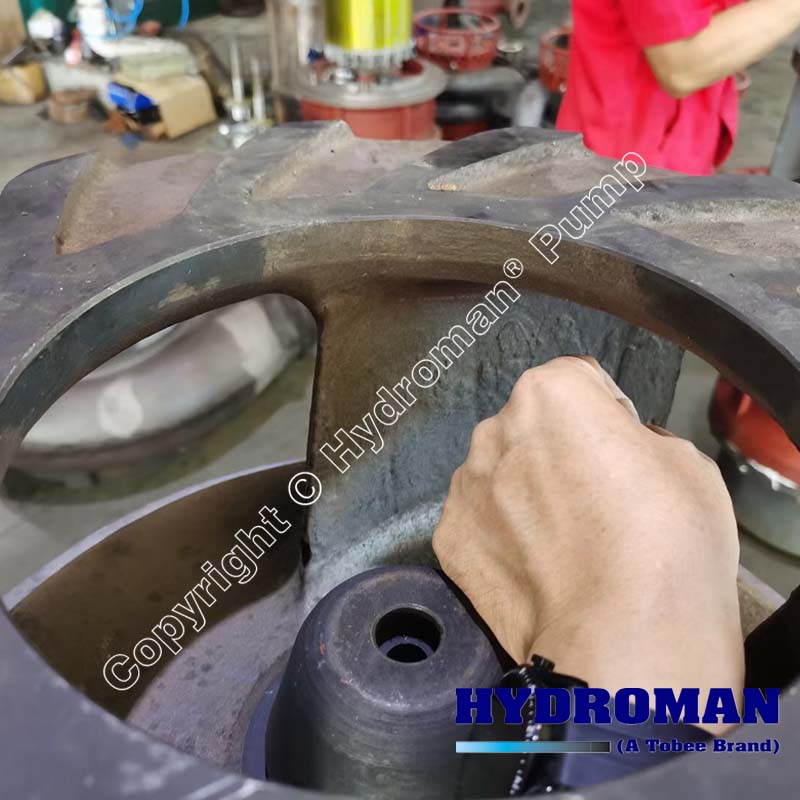 | Large Passage ImpellerA large passage impeller takes that idea further by maximizing the physical opening solids have to pass through — the "spherical solids passage," in pump-spec terms. This is where the difference between a catalog pump and a purpose-built slurry pump really shows up. Standard open impellers on general-duty submersible pumps typically pass solids in the 25–50 mm (1–2 in) range; a genuine large flow channel impeller, built for heavy-duty slurry and dredging service, extends that to 80–100 mm (3–4 in) and beyond, depending on pump size — the difference between a pump that survives a gravel-laden slurry line and one that doesn't. |
Impeller for Large Pieces and Big Solids
An impeller for large pieces or big solids needs generously radiused, open flow channels combined with wear-resistant vane edges, because every large solid that passes through is also an abrasion event. This is exactly the profile behind Hydroman's large-passage impeller: it's built specifically to move rocks, sludge chunks, and wastewater debris that would jam a standard open impeller, which is why it's the impeller of choice inside Hydroman's heavy-duty submersible slurry pumps and hydraulic dredge pumps working sand, gravel, and tailings.
Impellers for High-Viscosity and Heavy Fluids
Impeller for High-Viscosity Fluids
Viscosity changes centrifugal pump behavior more than most operators expect. Published viscosity-correction methods (the Hydraulic Institute's own correction charts among them) show that once a fluid's viscosity climbs past roughly 100–200 centistokes, head, flow and efficiency all fall off measurably from the water-test curve, and by 1,000+ cSt — typical of heavy sludge, thick slurry, or concentrated mud — that drop-off becomes severe unless the impeller and volute geometry are specifically sized for it. An impeller for high viscosity fluids needs wider flow passages and fewer, thicker vanes than a clean-water design, simply to reduce internal friction losses in fluid that no longer behaves like water.
Impeller for Thick and Heavy Mixtures
Thick slurry, high-solids sludge, and concentrated tailings mixtures combine two problems at once — high viscosity and high solids loading — so an impeller for thick heavy mixtures has to solve both simultaneously: large flow channels to pass solids, wide vane spacing to reduce viscous drag, and wear-resistant materials to survive the combination. This is a different design brief than a standard open impeller pump built only for clear or lightly loaded water, and it's the specific niche Hydroman's large-passage impellers are engineered around.
Impellers for Submersible Pumps
Impeller for Submersible Pump
An impeller for a submersible pump works fully underwater, inside a sealed motor and pump housing, often at the bottom of a pit, pond, or dredge cut where solids concentration is at its highest and maintenance access is at its worst. That combination — high solids, difficult access — is exactly why submersible slurry pump impellers are built to a higher tolerance for abuse than dry-mounted equivalents.
Open Impeller Submersible Pump
An open impeller submersible pump is the standard configuration for sand pumping, mud pumping, wastewater handling and general solids handling in submerged service, because an open impeller type pump tolerates the debris load that comes standard with submerged operation — tramp rocks, roots, silt, and whatever else settles to the bottom of a pond or pit. Hydroman builds its submersible slurry and sand pump ranges around exactly this configuration, sized up to large-passage geometry for the heaviest-duty units.
Impeller Materials for Different Pumping Applications
High-Chrome Alloy Impellers
High-chrome white iron (commonly 25–27% Cr) is the standard material for abrasive slurry — sand, mining slurry, mineral processing tailings — because its hardness (typically 550–650 HB) resists the sliding and impact wear that softer metals can't survive under continuous solids loading.
Rubber-Lined Impellers
Natural or synthetic rubber linings excel with fine particles and less aggressive slurry, where the elastomer's resilience absorbs impact from small particles better than a hard metal surface would.
Stainless Steel Impellers
Stainless steel is the right choice for corrosive liquids and chemical process applications, or for clean-to-mildly-abrasive fluids where corrosion resistance matters more than raw abrasion resistance.
How to Choose the Right Impeller
Five Key Factors to Consider
1. Fluid characteristics. Viscosity, density, temperature and chemical properties all shape which impeller geometry and material will actually survive the duty.
2. Solid particle size. Maximum particle size, solids concentration by volume, and particle shape determine whether you need a standard open impeller or a genuine large passage impeller.
3. Abrasiveness. Sharp, hard particles at high concentration point you toward high-chrome alloy and heavier wall sections, regardless of impeller type.
4. Required flow and head. Flow rate, system head, and available motor power set the impeller diameter and vane geometry you're working within.
5. Clogging risk. Fibers, rags, large solids and debris push the decision toward a non-clogging, open, vortex, cutter or large-passage impeller over anything closed.
When to Choose Each Impeller Type
| Pumping Condition | Recommended Impeller |
|---|---|
| Clean water | Closed impeller |
| Small suspended solids | Semi-open impeller |
| Abrasive slurry | Open / heavy-duty impeller, high-chrome alloy |
| Large solids | Large-passage impeller |
| Fibrous wastewater | Non-clogging / vortex impeller |
| High-viscosity fluids | Open / specially profiled impeller |
| Thick slurry or heavy mixtures | Large-passage impeller |
| Submersible slurry pumping | Open / non-clogging impeller |
Open vs Semi-Open vs Closed Impeller: Which One Should You Choose?
Open Impeller vs Closed Impeller
An open impeller handles solids and abrasive slurry better and is far easier to maintain — clearance is adjustable from outside the casing without a full teardown. A closed impeller is more efficient on clean or near-clean fluids and generates more stable head at a given diameter, but is harder to service and less forgiving of clogging.
Semi-Open vs Closed Impeller
A semi-open impeller gives up some efficiency relative to a closed design but handles moderate solids far more reliably, with wear concentrated on an adjustable front clearance rather than internal passages you can't easily inspect.
Open vs Semi-Open Impeller
Between the two, it mostly comes down to solids severity: open impellers handle heavier, more variable solids loading and fibrous material with fewer problems, while semi-open impellers recover some efficiency where solids content is lighter and more consistent.
Applications of Pump Impellers
Impeller selection shows up differently across industries.
- In mining and mineral processing, open and large-passage impellers in high-chrome alloy move ore slurry, concentrates and tailings around the clock.
- In sand and dredging work, open impeller submersible pumps with large-passage geometry handle sand, sediment and mud at high solids concentration — often the exact niche Hydroman's dredge pump impellers are built for.
- Wastewater treatment leans on non-clogging, vortex and cutter impellers to deal with sewage, sludge and fibrous solids without constant ragging-up.
- Construction sites push mud, cement slurry and sediment through open and semi-open impellers.
- And industrial processing plants rely on impellers purpose-built for high-viscosity fluids, heavy mixtures and abrasive liquids that a standard catalog pump was never designed to handle.
Advantages of Choosing the Right Pump Impeller
The right impeller shows up on your bottom line, not just your maintenance log: better pump efficiency and lower energy cost per ton or per gallon moved; reliable solids handling with fewer nuisance clogs; measurably lower wear rate and longer service life on wear parts; fewer callouts and lower total maintenance spend; and more stable pump performance across a full operating shift instead of a curve that degrades hour by hour.
Common Pump Impeller Problems and Maintenance Tips
Most impeller failures trace back to one of four causes: abrasive wear from sand or high solids concentration eroding vane edges; clogging from large solids, fibers, rags or debris that the impeller type simply wasn't designed to pass; mechanical damage from foreign objects or cavitation; and reduced performance from a worn impeller, incorrect impeller diameter, or clearance that's opened up beyond the design tolerance — typically 1–2 mm on general-duty pumps, tighter on high-pressure or fire-service units.
Keeping ahead of those failure modes comes down to routine habits: inspect regularly, check vane and shroud wear against original dimensions, clear blockages before they become clog-induced overload trips, verify impeller-to-wear-plate clearance rather than assuming it, monitor vibration for early signs of imbalance or wear, inspect mechanical seals on schedule, replace worn components before they take other parts down with them, and match wear-resistant material to the actual abrasiveness of the fluid rather than defaulting to whatever came standard.
How Hydroman Helps You Choose the Right Pump Impeller
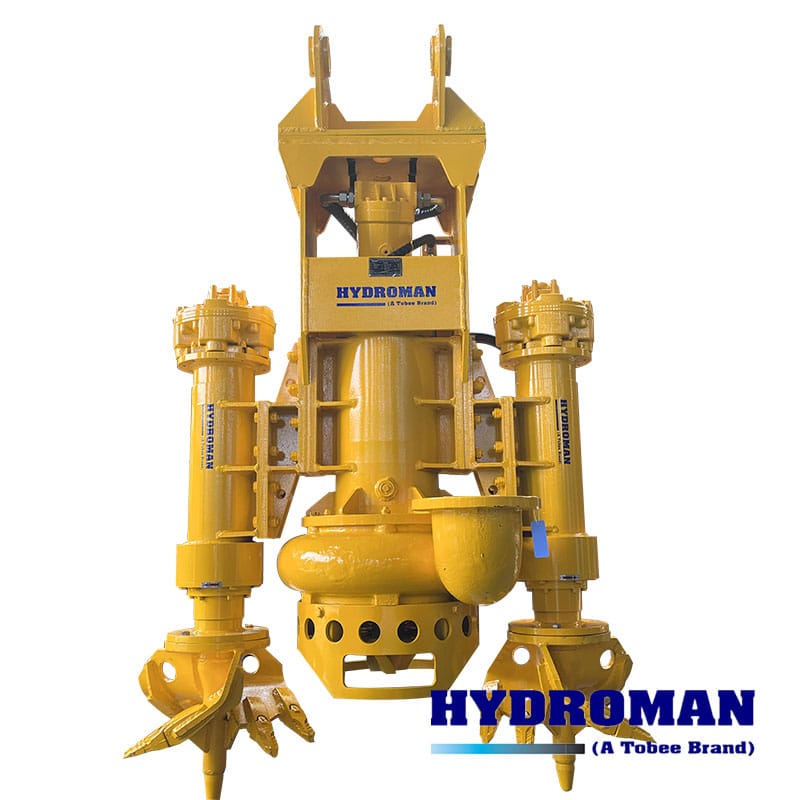
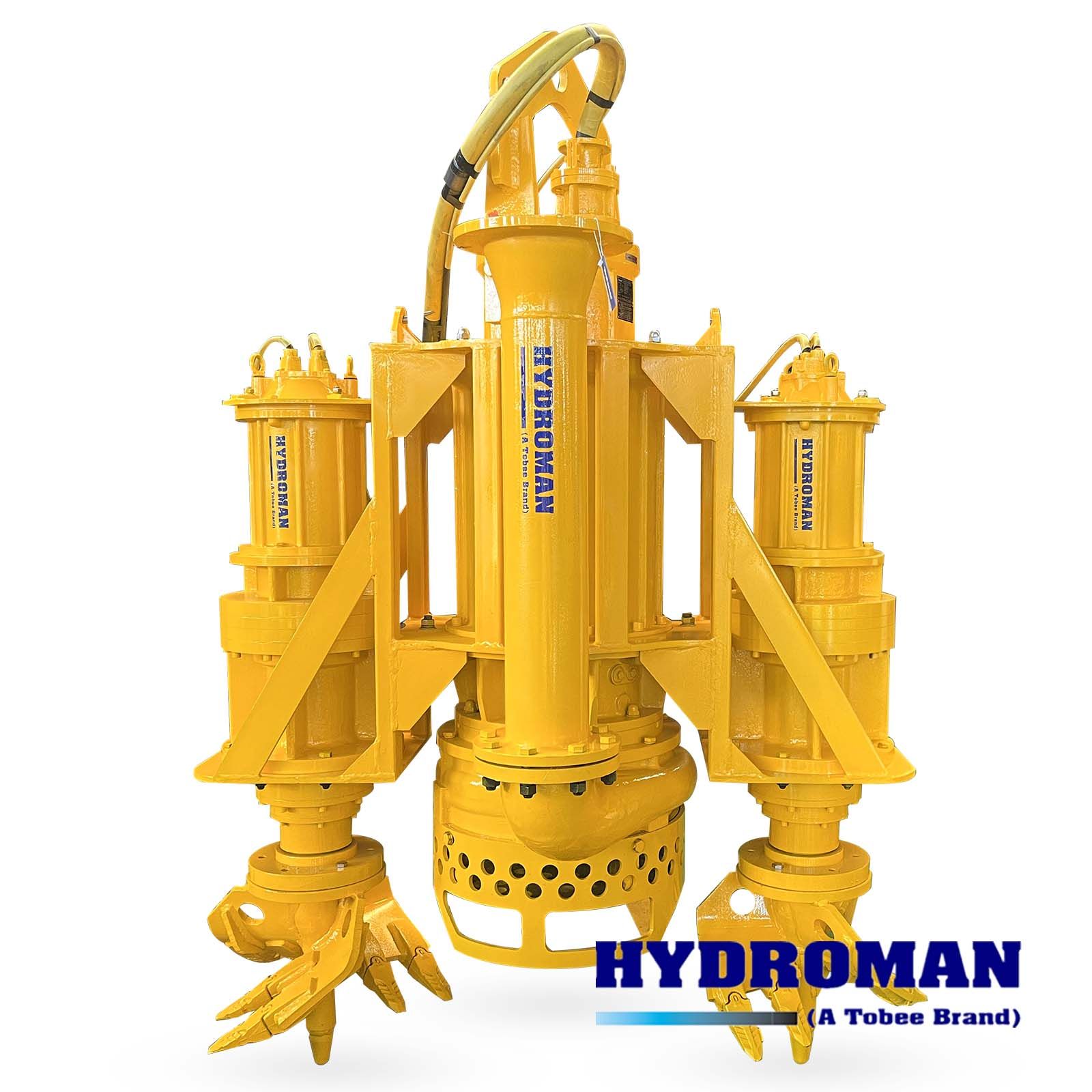
Hydroman Heavy Duty Submersible PumpHydroman builds submersible slurry pumps, submersible sand pumps, sludge pumps and hydraulic dredge pumps around exactly the impeller philosophy this guide has walked through: open and large-passage geometry as standard, not an upcharge option, because heavy-duty slurry and dredging work doesn't leave room for a pump that clogs on the first oversized rock or stringy root ball it meets. |  |
 | Hydroman High Flow Impeller PumpWhat sets Hydroman's impeller apart is passage size combined with fluid tolerance at the same time. Where a typical open impeller submersible pump tops out around 25–50 mm spherical solids passage, Hydroman's large flow channel impeller is engineered to pass significantly larger solids while still handling thick, high-viscosity slurry — the combination that makes it a fit for heavy-duty submersible slurry pumps moving mining tailings and mineral concentrate, and for hydraulic dredge pumps working sand, gravel and sediment at high solids concentration. The impeller is paired with high-chrome alloy wet-end materials as standard, so passage size and wear resistance are solving the abrasion problem together rather than one covering for a weakness in the other. |
If you're specifying a pump for a new dredging project, a tailings line, or a sludge application that's been chewing through standard impellers, send Hydroman your flow rate, head, slurry concentration, particle size and fluid characteristics — that's enough for their engineering team to recommend a pump and impeller combination sized to the actual duty, not a generic catalog match.
Frequently Asked Questions
What is the best type of impeller for slurry?
For most slurry duty, an open impeller — or a large-passage variant for coarse, heavy-duty slurry — outperforms closed and semi-open designs because it tolerates the widest range of particle size and concentration without clogging.
What is an open impeller used for?
Open impellers are used wherever fluid carries suspended solids, fibrous material or variable debris: slurry, wastewater, sand and sediment pumping, and general dirty-water service.
What is the difference between open and closed impellers?
Open impellers have no shroud covering the vanes and handle solids well but run slightly less efficiently; closed impellers are fully shrouded on both sides, run more efficiently on clean fluid, and clog more easily.
What is a semi-open impeller?
A semi-open impeller has a shroud on one side of the vanes only, balancing some of the efficiency of a closed impeller with some of the solids tolerance of an open one.
What is a non-clogging impeller?
A non-clogging impeller is designed with wide, smooth flow passages — often in an open, vortex or cutter configuration — specifically to pass large solids, fibers and debris without building up blockages.
Which impeller is best for large solids?
A large-passage impeller, built with a wide spherical solids passage and generously radiused flow channels, is the right choice for large pieces and big solids that a standard open impeller can't clear.
Which impeller is suitable for high-viscosity fluids?
An impeller purpose-built for high-viscosity fluids — with wider passages and fewer, thicker vanes than a standard clean-water impeller — is needed once viscosity climbs into the hundreds or thousands of centistokes.
What is a large-passage impeller?
A large-passage, or large flow channel, impeller maximizes the physical opening solids have to pass through the pump, extending typical spherical solids passage well beyond what a standard open impeller allows.
Which impeller is used in a submersible pump?
Open impellers are the standard choice in submersible pumps handling slurry, sand, mud and wastewater, since submerged service typically brings the highest and most unpredictable solids loading.
How does impeller diameter affect pump performance?
By the pump affinity laws, flow scales linearly with impeller diameter, head scales with diameter squared, and absorbed power scales with diameter cubed — so even small diameter changes shift the whole performance curve.
Conclusion
Choosing the right pump impeller isn't just about matching flow and head on a curve — it's about fluid properties, viscosity, solids size, solids concentration, abrasiveness and clogging risk all pulling in the same direction as your hydraulic requirements. Once you've mapped your actual operating conditions against that list, the choice between open impeller, semi-open impeller, closed impeller, vortex impeller, cutter impeller, large-passage impeller and non-clogging impeller stops being a guess and starts being a spec.
If your application involves heavy solids, high viscosity, or the kind of debris that's already clogged one pump this year, Hydroman's large-passage submersible slurry and hydraulic dredge pumps are built for exactly that duty — reach out with your operating parameters and get a pump and impeller recommendation sized to your actual job, not a generic one.