
 FR(EUR)
 CN(CNY)
 GB(GBP)
 AU(AUD)
Blog
Hydroman Submersible Vortex Pump for Activated Carbon Transfer
- Sep.09, 2026 14:11:44
- 0 Comments
If you run a gold CIP or CIL circuit, you already know that activated carbon is not a cheap, disposable material. A tonne of coconut-shell carbon loaded with gold cyanide complex is worth protecting all the way from the adsorption tanks to the elution column, and one of the easiest places to lose that value is inside the pump you use to move it. When a pump batters carbon between an impeller and a volute wall, you end up with fines that block screens, drift out of your circuit, and quietly eat into recovery. That is exactly the problem a submersible vortex pump is built to avoid.
Below, you will find out how a vortex impeller actually works, why ordinary pumping conditions are hard on activated carbon, and why the Hydroman submersible vortex pump — like the TJQ25-15-5.5 submersible slurry pump — has become a practical choice for carbon slurry transfer, carbon recovery, and general wastewater duty where large solids and fibrous debris are part of the job.
What Is a Submersible Vortex Pump?
A submersible vortex pump is a pump whose motor and hydraulic end are sealed together and lowered directly into the liquid — a tank, sump, pit, or leach vessel — rather than sitting on a dry pad and drawing liquid up through suction piping. Because the whole unit works underwater, you avoid priming problems and you can install it in tight spaces where a dry-mounted pump simply will not fit. The part that makes it a "vortex" pump is the impeller design, and that is worth walking through on its own.
What Is a Vortex Impeller?
A vortex impeller is recessed well back into the pump casing, out of the main flow path, instead of sitting directly in the throat of the volute the way a conventional closed or semi-open impeller does. When you look at a cutaway drawing, you will notice a wide, open cavity between the impeller and the pump inlet — this is the free passage that lets large solids, rags, and fibrous material travel through the pump almost unobstructed.
Because the impeller sits recessed rather than in the direct flow stream, most of the liquid and solids never actually touch a vane. Instead, the spinning impeller drives the fluid immediately around it into rotation, and that rotating mass — the vortex — does the work of carrying solids across the pump chamber and out through the discharge. This is the core distinction people are asking about when they search for what is a vortex impeller or compare a vortex pump impeller against a standard closed impeller: less direct contact, more free passage, and a flow path that tolerates irregular solids far better than a tightly-clearanced conventional design.
How Does a Vortex Pump Work?
Liquid enters the pump through the suction cover and reaches the recessed impeller chamber. The impeller spins and, because it sits off to one side of the main bore, it imparts rotational energy to the fluid around it rather than pushing solids directly between vane and casing. That rotating column of liquid — the vortex — carries suspended particles, fibers, and even fairly large solids across the open cavity and into the discharge passage.
This is also the short answer to how does a submersible pump work in the vortex configuration specifically: the motor, sealed and cooled by the surrounding liquid, drives a shaft connected to the recessed impeller; rotation builds the vortex; the vortex does most of the solids conveying; and the impeller itself never has to grind against every particle that passes through. That reduced contact is the entire reason vortex hydraulics get chosen for carbon slurry, sewage with rags, and other "dirty" duties where a tight-clearance impeller would jam or shred the solids it is trying to move.
Why Is Activated Carbon Transfer Challenging?
Why Can Conventional Pumping Damage Activated Carbon?
Activated carbon used in gold recovery is not an inert grain of sand — it is a porous, somewhat brittle particle whose entire value depends on its internal surface area staying intact. Coconut-shell carbon graded for CIP/CIL duty typically scores in the high nineties on ball-pan hardness, but that hardness rating is measured under controlled conditions, not inside a pump volute. A.A.R.L. attrition testing, which is designed to simulate the repeated tank-to-tank pumping a carbon particle actually experiences in a working circuit, allows only around 1–2% attrition loss for standard-to-mid grade carbon. In a real circuit where carbon is transferred through six to eight tanks in series, operators report cumulative carbon losses in the low single digits per cycle purely from mechanical wear — and pumping is one of the biggest contributors alongside screen wear and elution handling.
Every time a particle is struck directly by an impeller vane, dragged through a tight clearance, or slammed against a casing wall, you risk knocking off a piece of it. Carbon particle breakage matters for two separate reasons: fine carbon is lost through your interstage screens and never reaches elution, and the fines that do stay in the circuit clog screens and cause bypass, which hurts your gold recovery in a way that is much harder to see on a daily basis than a mechanical breakdown. To be precise about the terminology here — this is a discussion of carbon particles breaking apart mechanically, not a chemical reaction involving carbon molecules. The concern is physical attrition, not chemistry.
What Pumping Conditions Should Be Considered?
Before you specify any pump for carbon duty, it helps to have a clear picture of the operating conditions you are actually designing around.
| Parameter | Typical Range / Consideration |
|---|---|
| Activated carbon particle size | 6×12 mesh (about 1.70–3.35 mm) is the industry standard for CIP/CIL; 6×16 or 8×16 mesh is used where faster gold loading kinetics are needed |
| Slurry concentration | Carbon-in-pulp slurries commonly run in the range of a few percent solids by weight, with carbon concentration in the tanks separately controlled by inter-stage screens |
| Flow rate | Sized to the tank retention time and inter-stage transfer schedule of your circuit |
| Pump speed | Lower rotational speed generally means less kinetic energy transferred to each particle on contact |
| Total head | Vertical lift between tanks plus pipeline friction losses |
| Solids content | Carbon bulk density typically falls between roughly 480–550 kg/m³, which affects settling behaviour and required carrying velocity |
| Pipe diameter | Sized to keep velocity high enough to prevent settling but not so high that it increases particle-to-wall impact |
| Pump operating point | Running near the pump's best efficiency point avoids the extra turbulence and recirculation that occurs at off-duty conditions |
Why Is the Non-Clogging Vortex Pump Popular in Activated Carbon Applications?
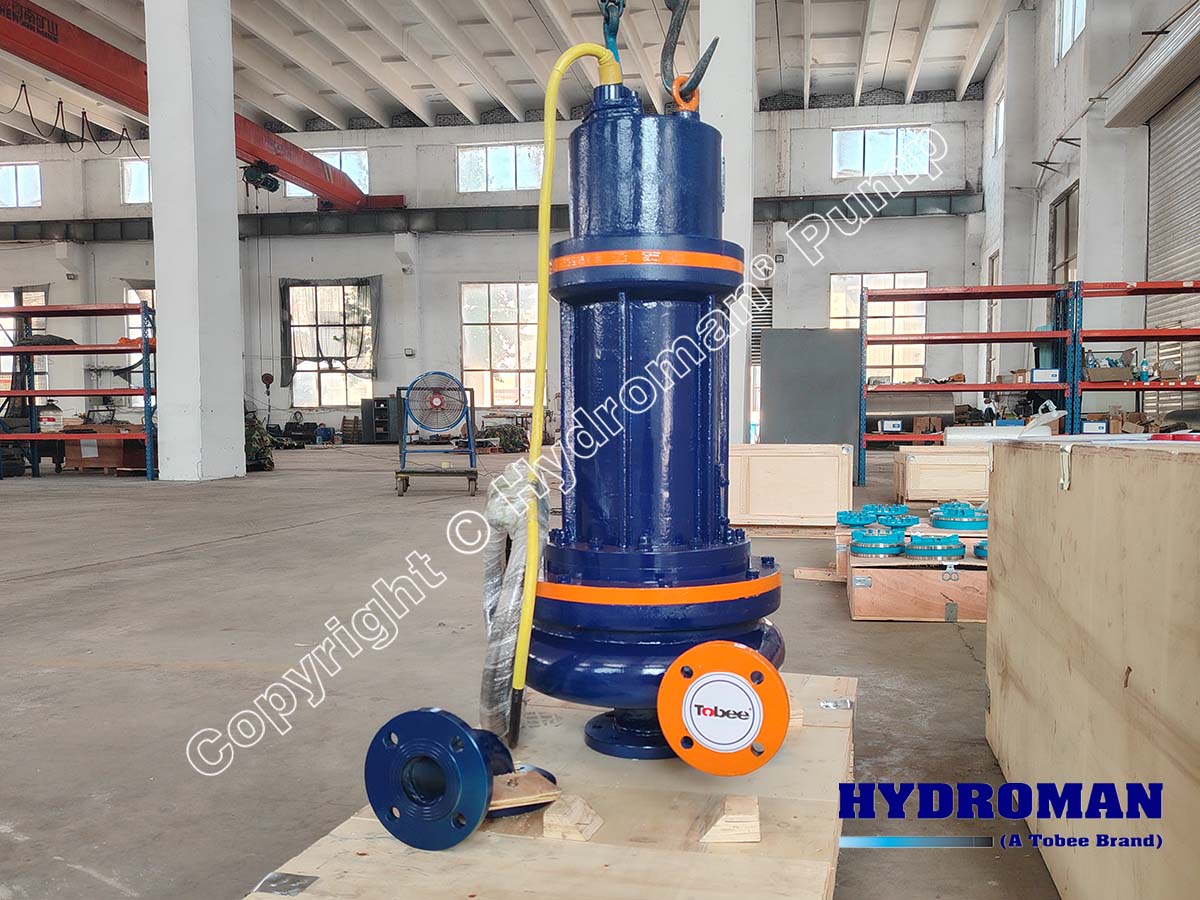
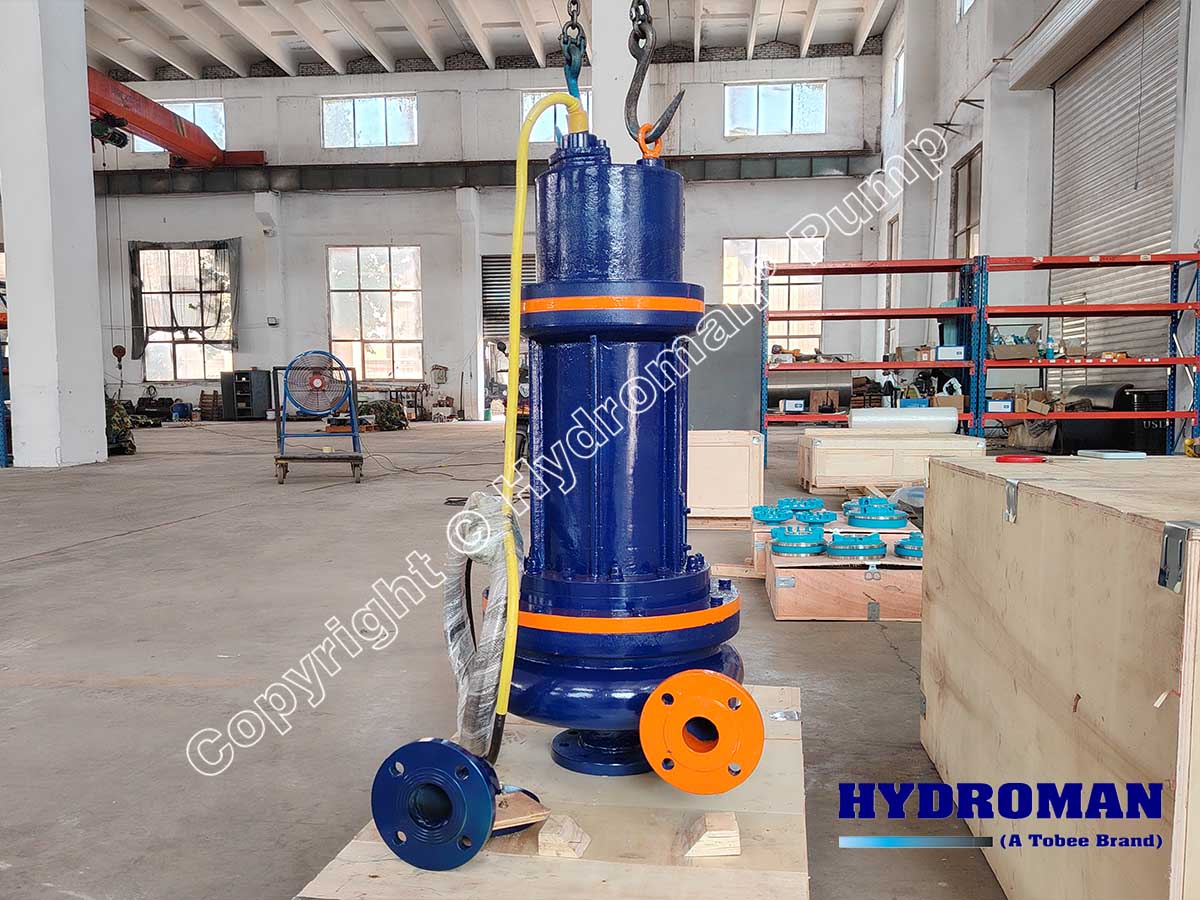
This is where the hydraulic design choices described above turn into a practical, measurable benefit for a plant. Hydroman's non-clogging submersible vortex pump — the compact TJQ25-15-5.5 submersible slurry pump belongs to — is specified into carbon transfer duty for four connected reasons.
1. Low Shear Pumping to Protect Carbon Particles
Because the vortex impeller sits recessed and out of the main flow path, activated carbon travels through the pump largely inside the moving liquid vortex rather than being caught between a spinning vane and a stationary casing. That lower-contact design is what allows Hydroman to say it helps minimize carbon particle breakage — it is a meaningful reduction in mechanical stress, not a claim that any pump can move abrasive solids with zero shear. If you need particle integrity to matter this much, this is precisely the low shear pumping characteristic you are looking for in a submersible vortex pump.
2. Excellent Solids Handling, Less Clogging
The open flow passage behind a vortex impeller was originally developed for raw and municipal sewage, where rags, wipes, and stringy debris routinely jam conventional pumps. That same generous free passage is what lets a vortex sewage pump earn its "non-clogging" reputation, and it carries over directly into carbon slurry duty: coarse 6×12 mesh carbon, occasional tramp oversize, and the odd bit of fibrous debris from screens or launders pass through without building up inside the casing. In other words, the same hydraulic geometry that makes a submersible vortex sewage pump reliable in a wastewater lift station is what makes it forgiving in a carbon transfer line too.
3. Lower Wear and Reliable Operation
Less direct particle-to-impeller contact does not just protect the carbon — it protects the pump. Wear in a slurry pump is driven largely by repeated particle impact on wetted surfaces, so a hydraulic design that reduces that contact naturally slows the wear curve on the impeller and casing. Combined with a submersible arrangement that removes the need for above-ground suction piping, priming systems, or a dry-pit installation, this makes the pump straightforward to deploy in mining and mineral processing environments where space around the tanks is often tight and civil works are expensive to add later.
4. Lower Operating Costs, Better Efficiency
Fewer clogging events mean fewer unplanned shutdowns, and slower wear means longer intervals between impeller and liner replacement — both of which lower your maintenance spend over the life of the pump. It is worth being direct about one thing: a vortex impeller is not automatically the most hydraulically efficient impeller geometry on a pump curve, and it should not be marketed that way. The real financial case for a vortex pump in activated carbon transfer is system-level — less downtime, less carbon loss, and fewer maintenance interventions — rather than a raw efficiency number on a datasheet. Matching pump capacity and motor power to your actual duty point, instead of oversizing "just in case," is what keeps that operating-cost advantage real.

Where Are Submersible Vortex Pumps Used for Carbon Transfer?
Gold CIP and CIL Processing
Carbon-in-Pulp and Carbon-in-Leach circuits are the classic home for this pump type. Loaded carbon needs to move between adsorption tanks, over screens, and eventually to the acid-wash and elution stages, and barren carbon needs to be returned after regeneration. A submersible vortex pump handles this carbon-containing slurry while helping minimize carbon particle breakage along the transfer route — which is exactly the requirement that shaped the TJQ design in the first place.
Precious Metal Recovery
Beyond a standard CIP/CIL flowsheet, the same hydraulic characteristics apply to gold and silver recovery circuits generally, including hydrometallurgical processing where activated carbon adsorption is one stage among several. Anywhere carbon-laden slurry has to move between vessels without excessive attrition, the same low-shear, non-clogging case applies.
Activated Carbon Recovery and Regeneration
Spent carbon headed to regeneration, and regenerated carbon returning to service, both pass through wet transfer stages where a vortex submersible pump is a natural fit — particularly where the carbon is mixed with fines, grit, or residual process water.
Industrial Water and Wastewater Treatment
Activated carbon is also used in water and wastewater treatment for adsorption duty, and slurry transfer there shares the same underlying requirement: move a solids-laden stream without excessive clogging. Suitability always depends on your specific carbon type, particle size, and slurry characteristics, so it is worth confirming your duty point rather than assuming one pump size fits every plant.
Hydroman Submersible Vortex Pump for Activated Carbon Transfer
Vortex Impeller Design
At the heart of the pump is the non-clogging vortex impeller itself: an open flow passage, strong solids-handling capability, and the low-shear pumping characteristics described above. This is the same impeller family behind Hydroman's electric vortex impeller pump and vortex impeller submersible pump ranges, sized differently depending on flow and head requirements.
Submersible Construction
Because the pump installs directly in the tank, pit, or sump, there is no need for complex priming systems or above-ground suction runs. That is a real advantage in a carbon circuit where tank layouts are already crowded with agitators, screens, and launders — you are not trying to find extra floor space for a separate pump house.
Heavy-Duty Construction for Industrial Applications
Wetted components are built from wear-resistant alloys, the pump casing is a heavy-section design rather than a thin stamped shell, and the motor is rated for continuous submerged duty. A mechanical seal protects the motor chamber from ingress, and the cable entry is sealed against moisture — details that matter more in a mineral processing plant running 24/7 than they do on a datasheet. Depending on your slurry chemistry, Hydroman also offers alternate wetted materials and seal configurations.
Pump Selection for Activated Carbon Transfer
| Parameter | What to Consider |
|---|---|
| Flow Rate | Required carbon slurry transfer capacity between tanks or stages |
| Head | Vertical lift plus pipeline losses across the transfer route |
| Carbon Particle Size | Maximum particle size, typically referenced against your mesh grade (e.g. 6×12, 6×16) |
| Solids Concentration | Carbon and total slurry concentration in the transfer line |
| Pump Speed | Important for particle protection — lower speed generally means gentler handling |
| Discharge Size | Matched to the transfer pipeline to maintain suitable carrying velocity |
| Material | Selected according to slurry abrasiveness and chemistry (cast iron, high-chrome alloy, stainless steel) |
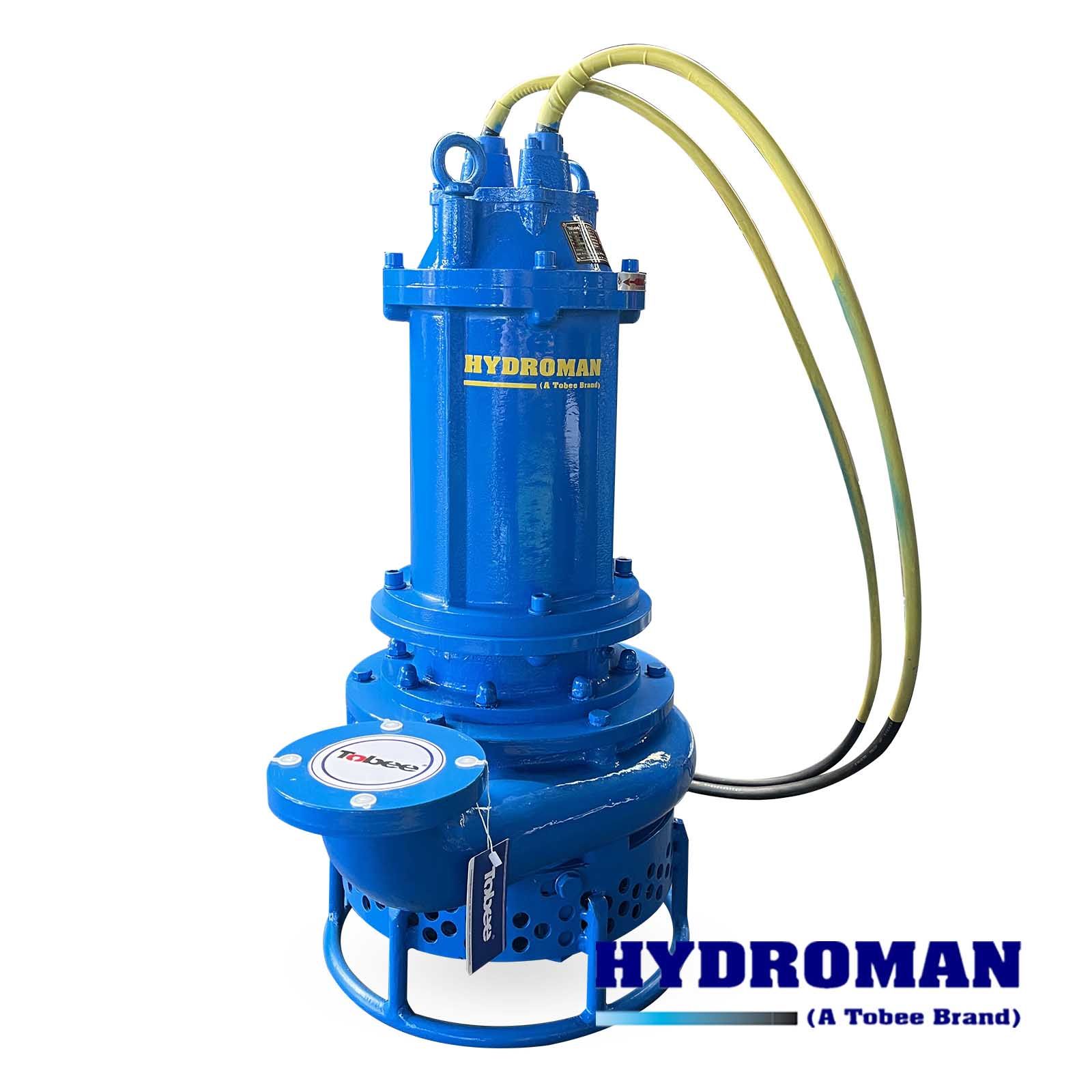
As one concrete reference point, the Hydroman TJQ25-15-5.5 submersible slurry pump is built around roughly 25 m³/h of flow, about 15 metres of head, and a 5.5 kW submerged motor — a size that fits comfortably into smaller CIP tank transfers, pilot-scale circuits, and satellite carbon recovery points where you need vortex hydraulics without the footprint of a large mine-dewatering unit.
How to Choose a Submersible Vortex Pump for Carbon Transfer?
Determine Required Flow and Head
Start with the basics: how much carbon slurry needs to move per hour, and how much vertical lift plus pipeline friction stands between the source tank and the destination. These two numbers set the shape of every other decision that follows.
Check Carbon Particle Size and Slurry Concentration
Confirm your carbon's mesh grade, its approximate specific gravity, the solids concentration you expect in the transfer stream, and how viscous the slurry gets at that concentration. A 6×12 mesh carbon behaves very differently in a pipeline than a finer 12×30 grade, and your pump and pipe sizing should reflect that.
Consider Pump Speed and Shear
It is worth repeating plainly: lower shear does not mean zero shear. No pump, vortex or otherwise, moves abrasive solids with no mechanical stress at all. What you are doing when you select pump speed and impeller geometry is minimizing that stress relative to your actual carbon characteristics — its hardness, its mesh grade, and how many transfer stages it has already been through in the circuit.
Confirm Materials and Wear Protection
Depending on your slurry's abrasiveness and chemistry, Hydroman can configure wetted parts in cast iron, high-chrome alloy, or stainless steel, along with rubber-lined options where available for the model you select, and an appropriate mechanical seal arrangement for the duty.

Submersible Vortex Pump vs. Conventional Centrifugal Pump
| Feature | Vortex Pump | Conventional Centrifugal Pump |
|---|---|---|
| Impeller Type | Vortex / open, recessed | Closed / semi-open |
| Solids Handling | Excellent, including large and fibrous solids | Application dependent |
| Clogging Resistance | High, thanks to the wide free passage | Moderate |
| Carbon Particle Protection | Better suited to low-shear transfer | Depends on clearances and design |
| Wear from Solids | Generally reduced impeller contact | More direct particle contact |
| Typical Applications | Slurry, sewage with rags/fibres, carbon transfer | Clean water, general process fluids, moderate slurry |
This is also where a submersible centrifugal pump fits into the conversation: a standard submersible centrifugal design with a closed impeller can be an excellent, efficient choice for clear or lightly-loaded liquids, but once your stream includes large or fragile solids, the vortex impeller submersible pump generally wins on reliability even if it gives up a little hydraulic efficiency in exchange. For heavier, high-density slurries such as tailings or thickened sludge rather than carbon, a vertical slurry pump with a closed or semi-open impeller may actually be the better match — the right choice always comes back to your specific solids, not a blanket rule.
Maintenance Tips for a Submersible Vortex Pump
Inspect the Vortex Impeller Regularly
Check for erosion on the vane tips and any buildup inside the recessed cavity that could reduce the free passage over time.
Check Mechanical Seals and Bearings
Seal failure is usually the first sign of trouble in a submersible unit — monitor any moisture-detection sensor fitted to the pump and schedule seal inspections on a fixed interval rather than waiting for a failure.
Monitor Vibration, Noise, and Motor Current
A rising current draw or new vibration signature often points to impeller wear, bearing wear, or a partial blockage well before the pump actually stops working.
Prevent Dry Running and Excessive Solids Accumulation
Keep the pump properly submerged at all times and avoid letting settled solids build up around the intake, which increases start-up load and accelerates wear.
Inspect the Discharge Pipeline for Blockage
Even a non-clogging impeller can be undermined by a partially blocked discharge line — check pipeline condition on the same schedule as the pump itself.
FAQs about Vortex Pump
How does a vortex pump work?
A recessed vortex impeller spins the liquid around it into a rotating vortex, and that vortex carries both liquid and suspended solids across the pump chamber and out through the discharge, without most of the solids needing to pass directly between the impeller vanes and the casing.
What are the advantages of using a vortex pump?
The main advantages are excellent solids handling for large or fibrous material, reduced clogging thanks to the open flow passage, low-shear characteristics that suit fragile media like activated carbon, reduced impeller contact with solids that slows wear, and generally reliable long-term operation in demanding slurry duty.
How do you maintain a vortex pump?
Routine maintenance covers impeller inspection for wear or buildup, mechanical seal inspection, motor and cable condition checks, vibration monitoring, and periodic inspection of the discharge pipeline for partial blockage.
How do you minimize noise and vibration from a vortex pump?
Correct pump sizing for the duty, proper installation and anchoring, avoiding dry running, keeping the pump fully submerged, preventing pipeline blockage, checking impeller balance, inspecting bearings on schedule, and operating as close as practical to the pump's recommended duty point all help keep noise and vibration under control.
Conclusion
Activated carbon transfer is not just a pumping task — it is a task that requires careful control of particle damage, because every fine you generate in the pipeline is value you do not recover downstream. Vortex impeller technology gives you a practical way to combine strong solids handling with genuinely lower-shear pumping characteristics, and that combination is why the Hydroman submersible vortex pump, in sizes ranging up to large mine-duty units and down to compact models like the TJQ25-15-5.5, has become a suitable solution for carbon slurry transfer in mineral processing and gold recovery circuits.
Looking for a reliable submersible vortex pump for activated carbon transfer? Contact Hydroman for pump selection based on your flow rate, head, carbon particle size, and slurry concentration.
 Sara Liang
 +86 189 3110 6396 (Whatsapp/Wechat)
 Inquiry@tobeepump.com
Related Articles:
Suction Dredge Systems Explained: Slurry Pump Technology, Efficiency, and Applications
Submersible Slurry Pumps Explained: A Complete Guide for Industrial Applications
Everything You Need to Know About Vertical Inline Pumps
Sewage Pumps 101: Types, Design, Working Principles and Maintenance Guide
Water Suction Pump Guide: Types, Uses, Working Principles & Selection
How to Choose the Right Pump Impeller: Types, Benefits and Key Considerations Septic Pumps Guide: Types, Applications, and How to Choose the Right Pump
Post Comment
Your email address will not be published.Required fields are marked. *
Popular Articles
- Suction Dredge Systems Explained: Slurry Pump Technology, Efficiency, and Applications
- Submersible Slurry Pumps Explained: A Complete Guide for Industrial Applications
- Everything You Need to Know About Vertical Inline Pumps
- Sewage Pumps 101: Types, Design, Working Principles and Maintenance Guide
- Water Suction Pump Guide: Types, Uses, Working Principles & Selection
You May Like
-
Stainless Steel Submersible Sludge Pump for Handling Salt and Acid Slurries
$30,599.00 $33,688.00

-
Submersible Electric Slurry Pump to Remove Silt from Water Catchment for Small Dams
$17,129.00 $18,536.00
-
Hydroman Submersible Electric Dewatering Pump for Slurry Sludge Handling
$16,588.00 $17,523.00
-
Hydroman Submersible Slurry Pump with Jet Ring for Ocean Projects
$16,877.00 $19,533.00





Donna
取消
取消